A reader asks:
On a recent episode of Animal Spirits, Ben mentioned he bought bonds for the first time in his career. Can we hear more on this? I’m 38 and 100% of my investments are in broad-based index funds. It has served me well up to this point. But lately I’ve been bond-curious. How did you decide what type of bonds to buy?
A lot of investors have more or less given up on bonds as an asset class.
It’s been a strange cycle for fixed income.
You had a 40 year bond bull market that followed the extremely high interest rates of the early-1980s. High starting yields and falling interest rates in a disinflationary environment are very good for bond returns.
Yields were ultra low for a number of years coming out of the Great Financial Crisis. Then they went even lower during the pandemic panic.
You know what happened next — trillions in government spending, supply chain shocks, 9% inflation, an aggressive Fed rate hiking cycle and bonds got killed.
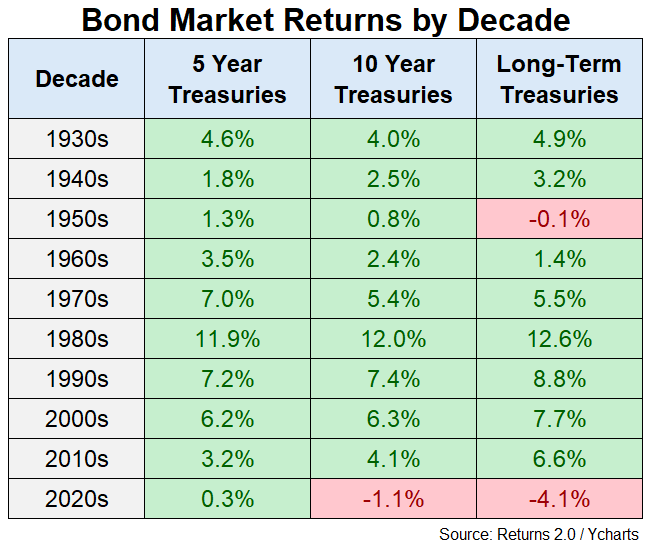
Starting rates were so low and yields moved up so quickly that bonds had their worst bear market in history.
Here are some updated numbers that show this has been the worst decade in modern financial market history for fixed income:
But now what?
Bond yields haven’t been this high since 2007:
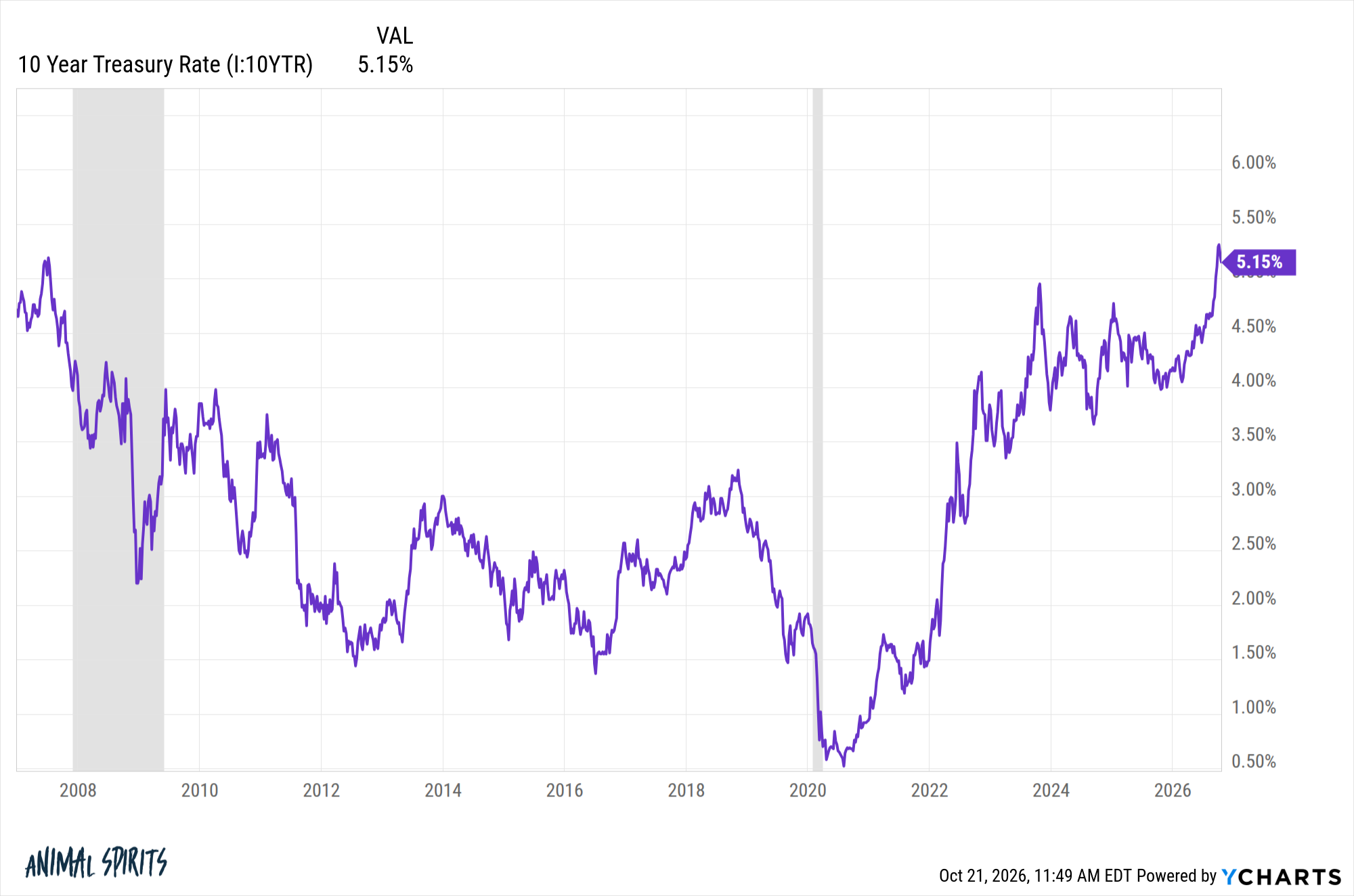
That’s essentially two decades of fixed income providing very little in the way of income. There is an entire generation of investors who have never seen bond yields this high before.
Bonds provided a wonderful hedge during the 2008 stock market crash. But I was still in my 20s when that happened. Bonds made no sense when I could put money into stocks at lower and lower prices.
So why do bonds make more sense to me now?
Let’s cover some of my general feelings about investing in bonds that help explain why.
These are the reasons you should own bonds in a portfolio:
- Bonds are a good hedge against deflation, disinflation and financial crises.
- Bonds are a good hedge against (most) stock market crashes.
- Bonds can act as a form of dry powder to buy stocks when they go on sale.
- Bonds can provide stability, volatility reduction and regular income to a portfolio.
- Bonds can act as an emotional hedge to the inherent craziness of the stock market.
You should take volatility only when you’re being paid a risk premium to do so.
For this reason, I’ve never been a fan of investing in long-term bonds.1 Long-term Treasuries are far too volatile for my taste.
Just look at the drawdown profile for TLT:
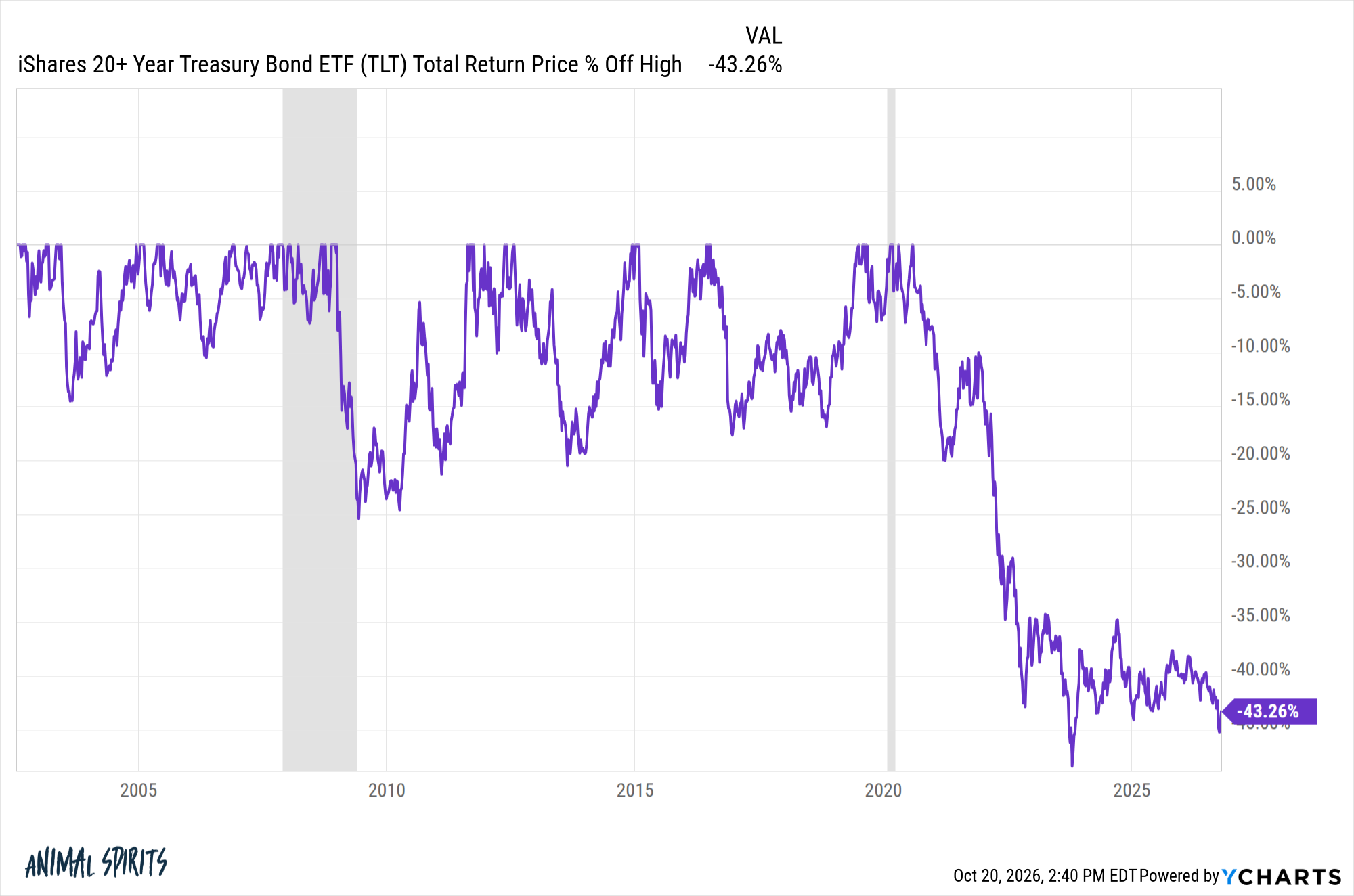
Even before the current monster crash there were multiple bear markets and corrections.
The reason for this is duration risk.
Duration is a finance word for interest rate sensitivity. The higher the duration of a bond, the more sensitive it is to changes in yields.
Duration more or less tells you the price move you can expect in a bond based on a 1% change in rates. A duration of 5 years would imply a 5% decrease in price for a 1% increase in rates (since yields and prices are inversely related).
TLT currently has a duration of around 15 years. A 1% increase in interest rates would imply a 15% decrease in prices. Of course, if interest rates fall you will experience a much bigger bang for your buck in long bonds.
I don’t like the idea of timing interest rate moves. I’m more comfortable with intermediate-term duration or lower, which means anything 5-6 years or shorter. How much duration risk I’m comfortable with depends on the current risk-reward relationship.
For most of the 2020s, taking any duration risk didn’t make a whole lot of sense. In the past few years with higher interest rates, I’m now more interested in a little duration.
There are a few reasons I’m more interested in bonds right now. One is that yields are much higher:
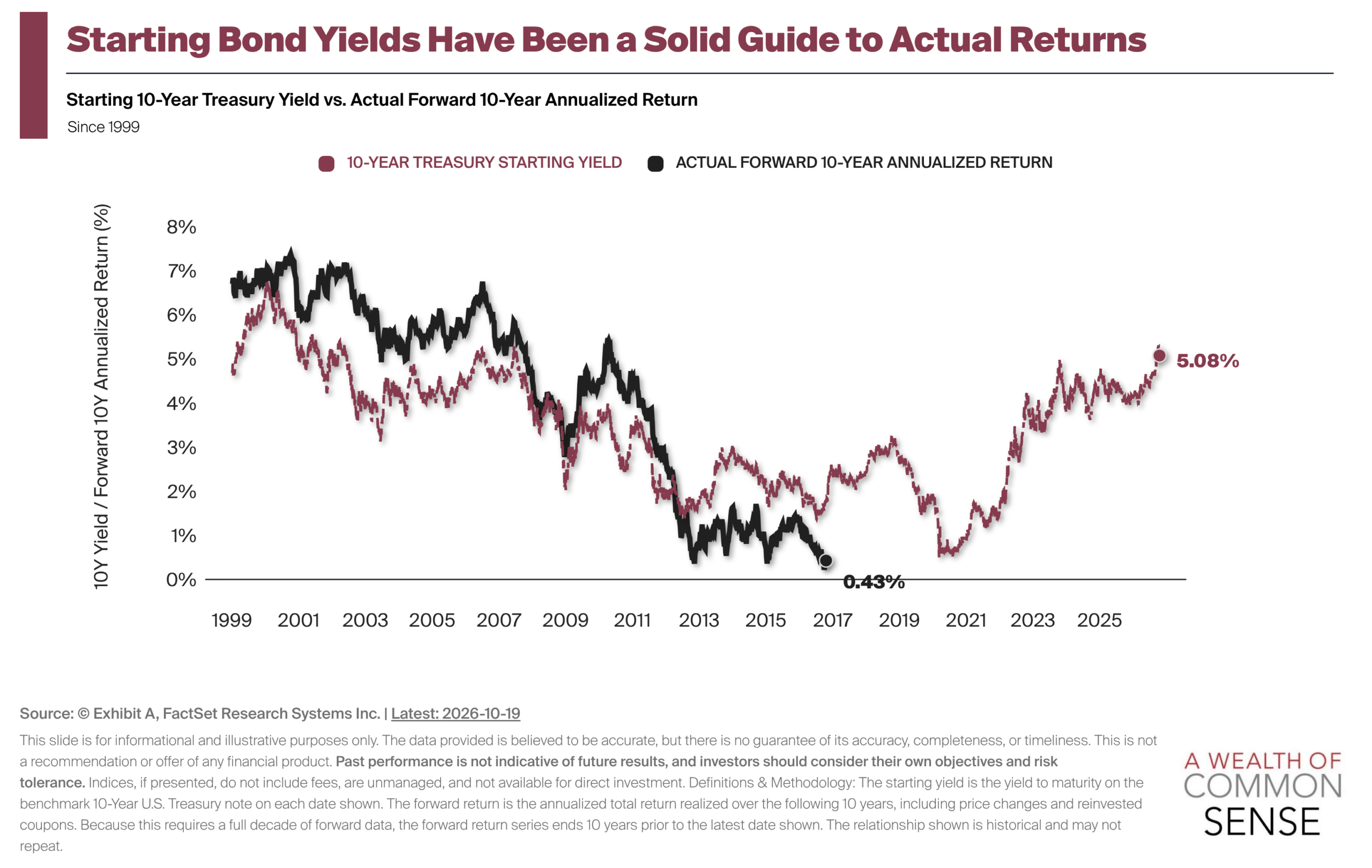
Bond returns tend to track starting bond yields. Expected returns for bonds are higher than they’ve been since Apple launched its first iPhone.
I’m also at a different stage in my life. I’m middle-aged. I have different goals.
I bought some tax-efficient bonds in my brokerage account.
Maybe I’ll use them to pay for an intermediate-term goal like a vacation or home renovation. Maybe I’ll use them as dry powder during the next stock market downturn. Or maybe I’ll just clip my 5.5% yield and be happy with that.
I still have a ton of equity risk in my retirement accounts. I still have plenty of equity risk in my brokerage account.
Owning bonds is simply a way to diversify some of that risk after one of the best 15 year runs in stock market history.
This doesn’t mean I’m predicting a stock market collapse. No, the bull market could continue.
This also doesn’t mean I’m predicting an interest rate collapse. Bond yields could absolutely move higher if inflation remains sticky, the government keeps spending and AI capex goes to the moon.
If yields rise my bond prices would fall in the short-run. But today’s higher yields offer a margin of safety that hasn’t existed in some time. And if yields do rise, that means even higher expected future returns once the dust settles.
I don’t know if this is a perfect time to rebalance your portfolio.
But I do know that responsible risk management shouldn’t rely on your ability to predict the future. Risk management wouldn’t be necessary if you knew what was going to happen.
Or maybe I’m just getting old and boring.
Either way, bond yields look attractive for the first time in a long time.
I answered this question on an all-new episode of Ask the Compound:
We also covered questions about paying off your mortgage vs. investing in bonds, why housing prices aren’t crashing, home country bias and some advice for a young investor.
Further Reading:
Is It Time to Rebalance Your Portfolio?
1Here are some older pieces I’ve written in the past about my aversion to long-term bonds:
A Bleak Future For Long-Term Bonds
Are Long-Term Bonds Worth the Risk?
What Kind of Returns Can Investors Expect in Long-Term Treasuries?