When interest rates were low in the 2010s and early-2020s, investors in search of a balanced portfolio had two choices.
You could either adjust your expectations for lower returns from the bond side of the portfolio or take more risk.
Many investors opted for option #2 and took more risk, either in the equity market or through other strategies with a higher risk profile than bonds.
I spoke with many investors who would have preferred a 60/40 portfolio who decided to shift into an 80/20 allocation. Some people went all in on the stock market.
Our research team created a simple chart that shows the return you would need from the stock market to achieve a 7% annual return in a 60/40 portfolio given different levels of interest rates for bonds: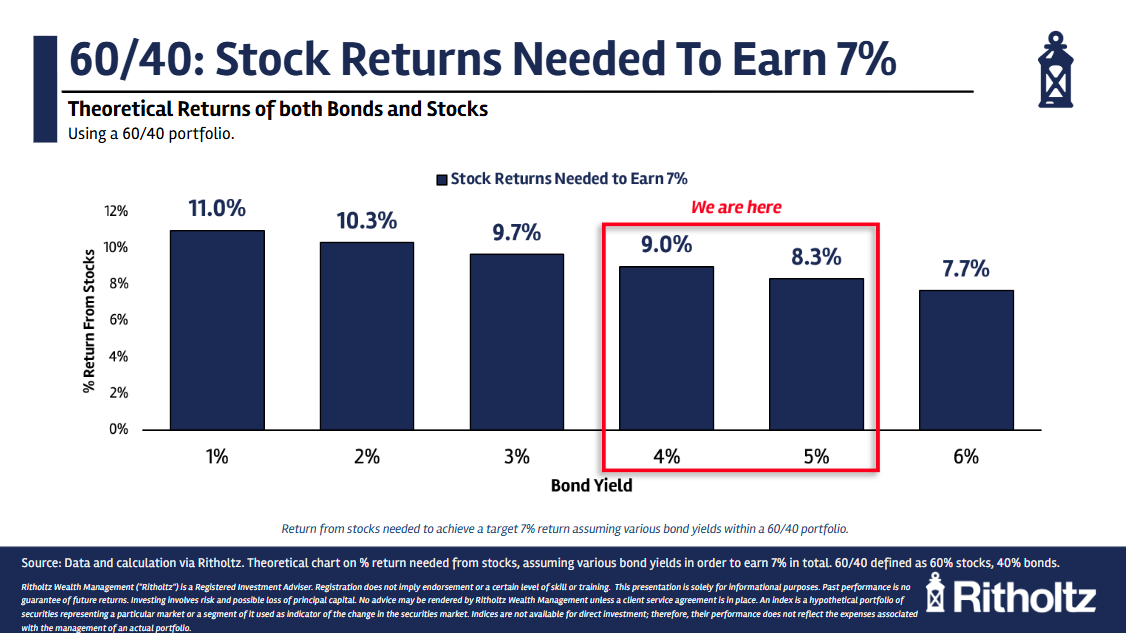
During the height of the pandemic in early-2020, bond yields were all the way to the left and you needed a very strong return from the stock market to hit a 7% bogey.
Lo and behold, bond returns have been terrible this decade but the stock market has more than picked up the slack.
Vanguard has a simple LifeStrategy 60/40 fund that’s up nearly 8% per year in the 2020s:
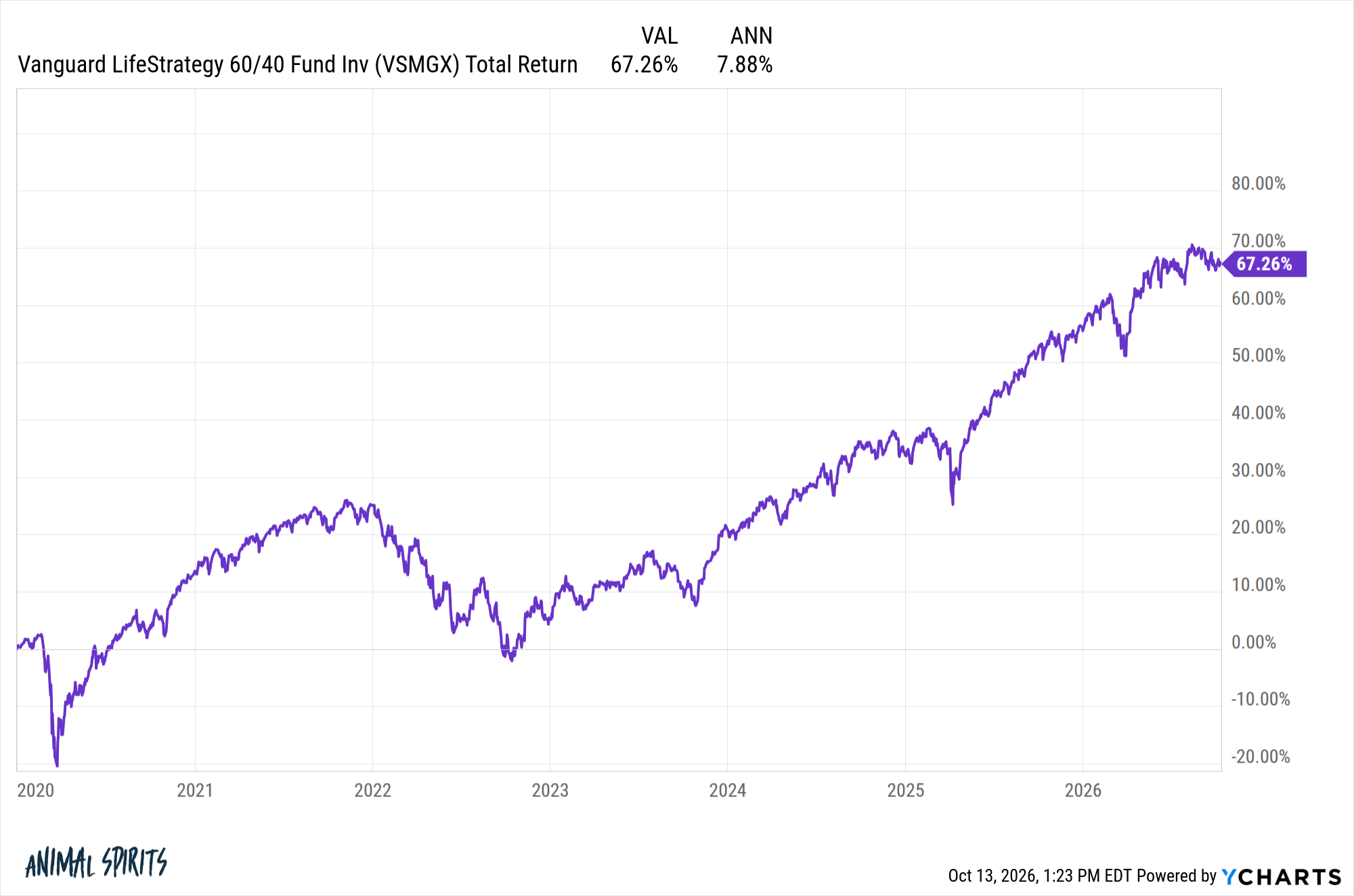
Contrary to popular belief, the 60/40 portfolio did not die this decade. Diversification worked. This time it was the stock market diversifying bonds.
The next time you need diversification it might come from the fixed income side of the portfolio.
High quality bonds are now yielding more than 5% for the first time in almost 20 years. There is an entire generation of new investors who have never invested in an environment with yields this high before. There are also investors with more mature portfolios looking to de-risk.
The good news is now you don’t need the stock market to knock it out of the park anymore to achieve a decent return in a balanced portfolio. Bonds are finally earning their keep.
It made sense to over-rebalance your portfolio in the first part of this decade because bond yields were so low. Now it probably makes sense to rebalance back to your target weights.
This is what would have happened to a hypothetical 60/40 portfolio at the outset of the 2020s in terms of style drift:
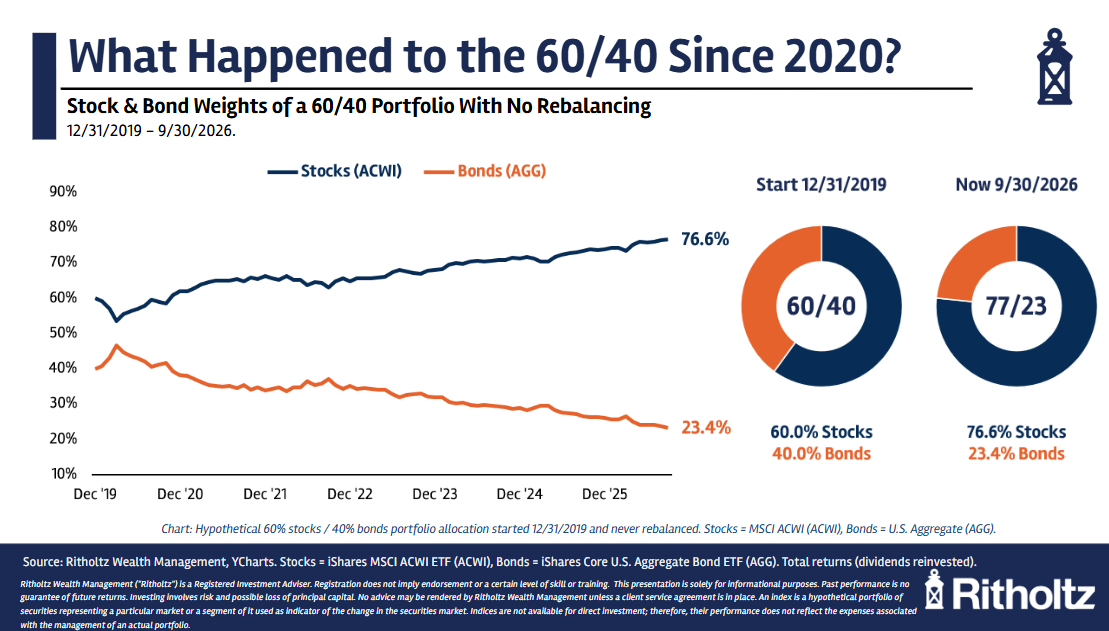
Left untouched, this 60/40 portfolio is now more like 77/23.
I don’t know how long this epic bull market will last. It’s already lasted longer than anyone thought was possible.
The AI buildout could extend this boom another 5 years. Maybe more.
Or maybe it comes to an end this year. Or we go into a recession. Or something else comes out of left field that completely changes the trajectory of the market.
The reason you diversify your portfolio is because no one knows what comes next. If you knew what was going to happen you wouldn’t need to diversify.
The process of diversification is done through the creation of a reasonable asset allocation. Your asset allocation should take into account your risk profile, time horizon and emotional disposition.
There is no perfect asset allocation but the idea is to minimize regret by balancing short-term spending needs with long-term financial goals.
Diversification doesn’t work if you don’t have an asset allocation in place. Asset allocation doesn’t work without a rebalancing policy.
You don’t need to do it all the time. You also have to let your winners run and consider taxes with your transactions.
But the whole point of creating allocation weights to different asset classes, geographies and investment strategies is because that is the portfolio you are comfortable with.
Rebalancing will never feel right during a bull market. Why would you ever sell your best performing holdings?
The reason you do this is because it is prudent risk management and one day your best performers will be your worst performers and vice versa.
I don’t know when rebalancing your asset allocation will pay off.
But it will at some point.
That’s how risk management works.
Further Reading:
Preparing Without Predicting