A reader asks:
Does Nick really think upper middle class goes up to $10 million?! That’s rich!
My colleague Nick Maggiulli has a great new book out called The Wealth Ladder.
Nick provides some advice around how your mindset and strategies change as you move up different rungs on the wealth ladder.
These are the levels he defines in the book:
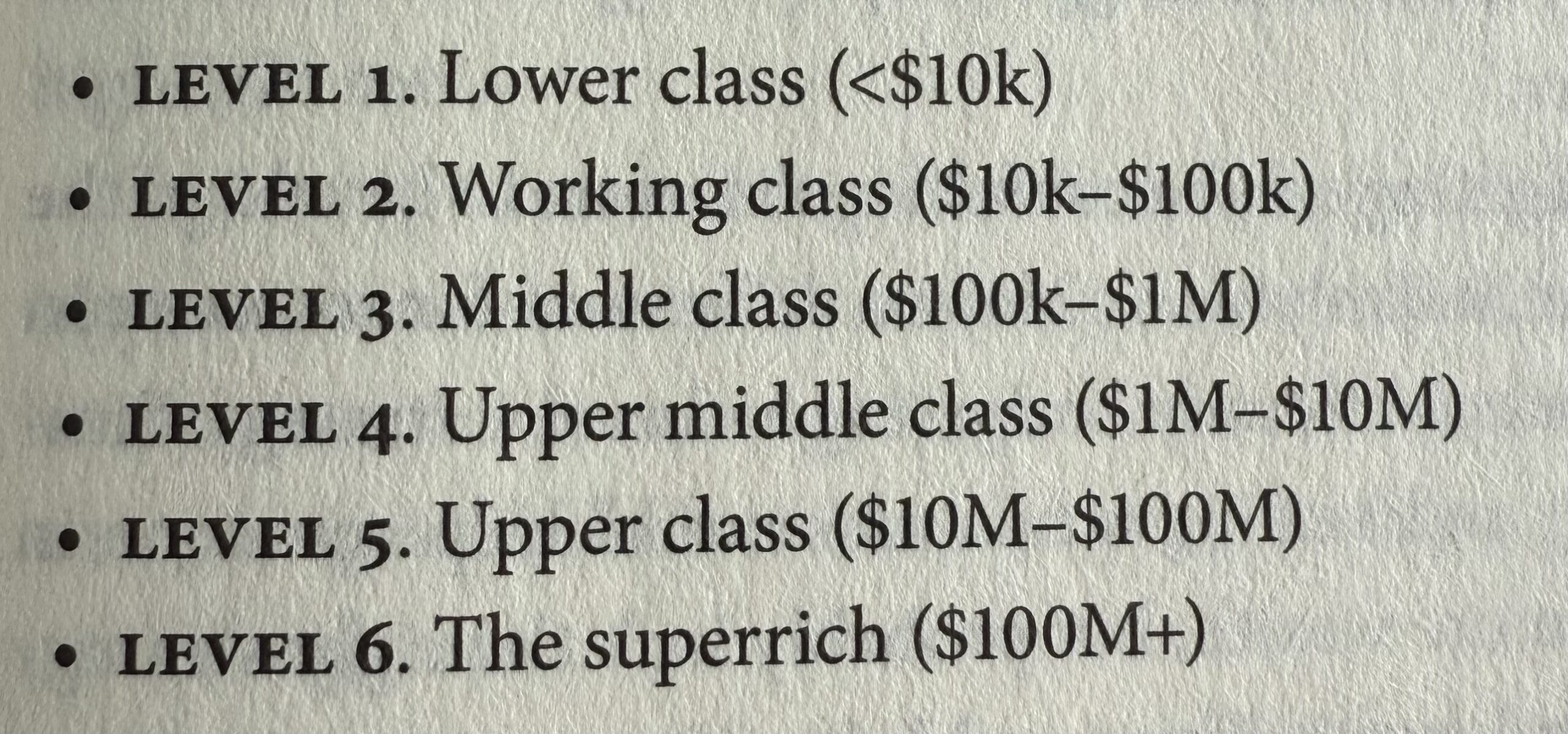
Quibble with the names if you’d like but Nick provides a lot more context and details about each level throughout the book. Plus the ranges are wide enough to offer some wiggle room depending on your cost of living.
Here’s another question we got this week that helps put this idea into perspective:
When Ben talked about the perfect level of wealth there is one huge factor that I’m having trouble quantifying: where you live. I live in a HCOL area and although I’m and doing really well by any imaginable metric ($2.5 million net worth in my mid-40s) I can’t help but get the sense that it’s not enough based on where I live. How do you think about wealth through the lens of where you live?
A net worth of $2.5 million in your mid-40s puts you in the 92nd percentile of American households. It also puts you in the 94th percentile of people your own age.
However, where you live can have a huge impact on your relative sense of wealth if there are lots of rich people who live near you.
In the show Fleishman is in Trouble, Toby Fleishman (Jesse Eisenberg) says to his wife (Claire Danes) in a money quarrel, “Excuse me, I make almost $300,000 a year. I am a rich man in every single culture except the 40 stupid square blocks that you insist we live within [Manhattan].”
The relative nature of wealth becomes apparent when the data is extended to include the rest of the world.
Nick breaks down each level into the number of people and the share of households in each group both around the globe and in the United States:
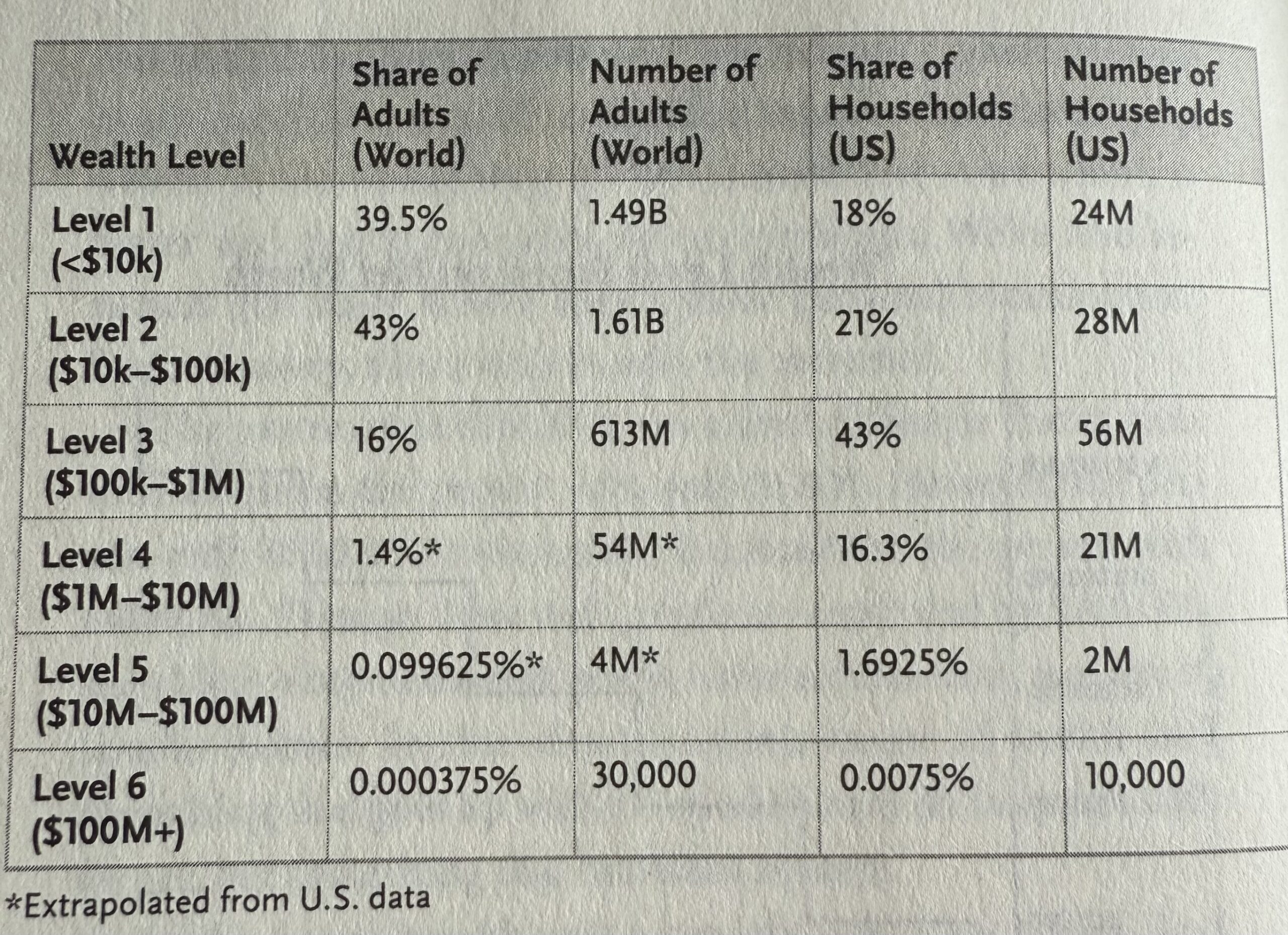
Less than 2% of the world’s population is millionaires, but around 20% of U.S. households find themselves in the two-comma club.
If you’re a millionaire, by almost any definition you’re rich but you might not feel rich.
I recently commented that one of the ways in which American exceptionalism shows itself is by the fact that we always buy the dip. What I mean here is that it’s ingrained in our collective psyche that things will get better.
Scott Galloway has a chart that shows the number of Americans who believe they’ll be wealthy grows at an exponential rate:
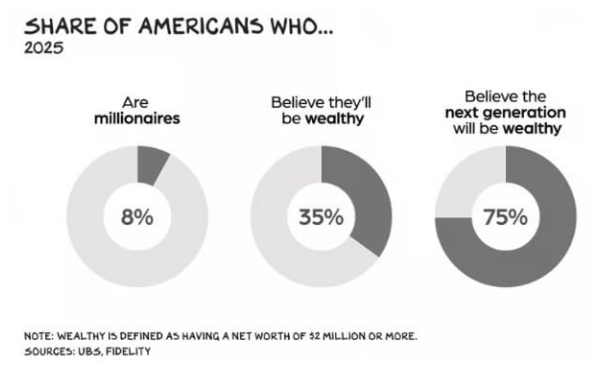
Everyone is an above-average driver and everyone will be worth $2 million or more.
This is both depressing and inspiring at the same time. We Americans are somewhat delusional, sometimes to a fault and sometimes to the benefit of society.
Look at the growth in business applications this decade alone:
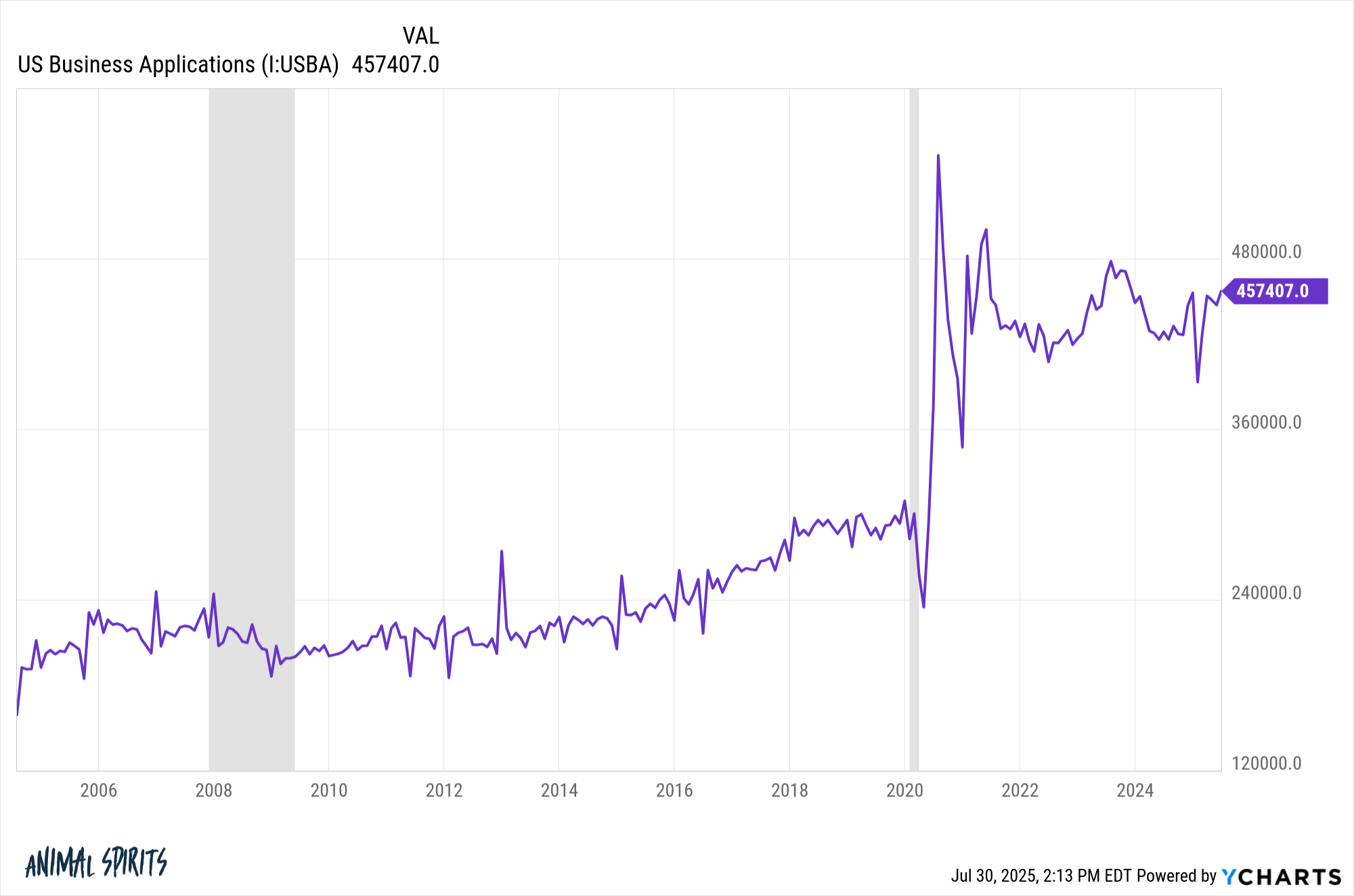
Most start-up businesses fail. That doesn’t stop us from trying!
Money is a strange benchmark because it will never be enough for some people. That can cause psychological problems at the individual household level but is a net positive for society as a whole as people try to strike it rich and keep getting richer.
People constantly striving to better their position in life and make more money help keep the economic machine functioning.
Nick joined us on Ask the Compound this week to discuss the different wealth levels he created along with a lot more data and ideas from the book:
We also answered questions about inflation-adjusted returns, HCOL cities vs. your wealth, retiring in your 40s with 100% in stocks and how much money you can save by moving out of NYC.
Further Reading:
The Perfect Level of Wealth