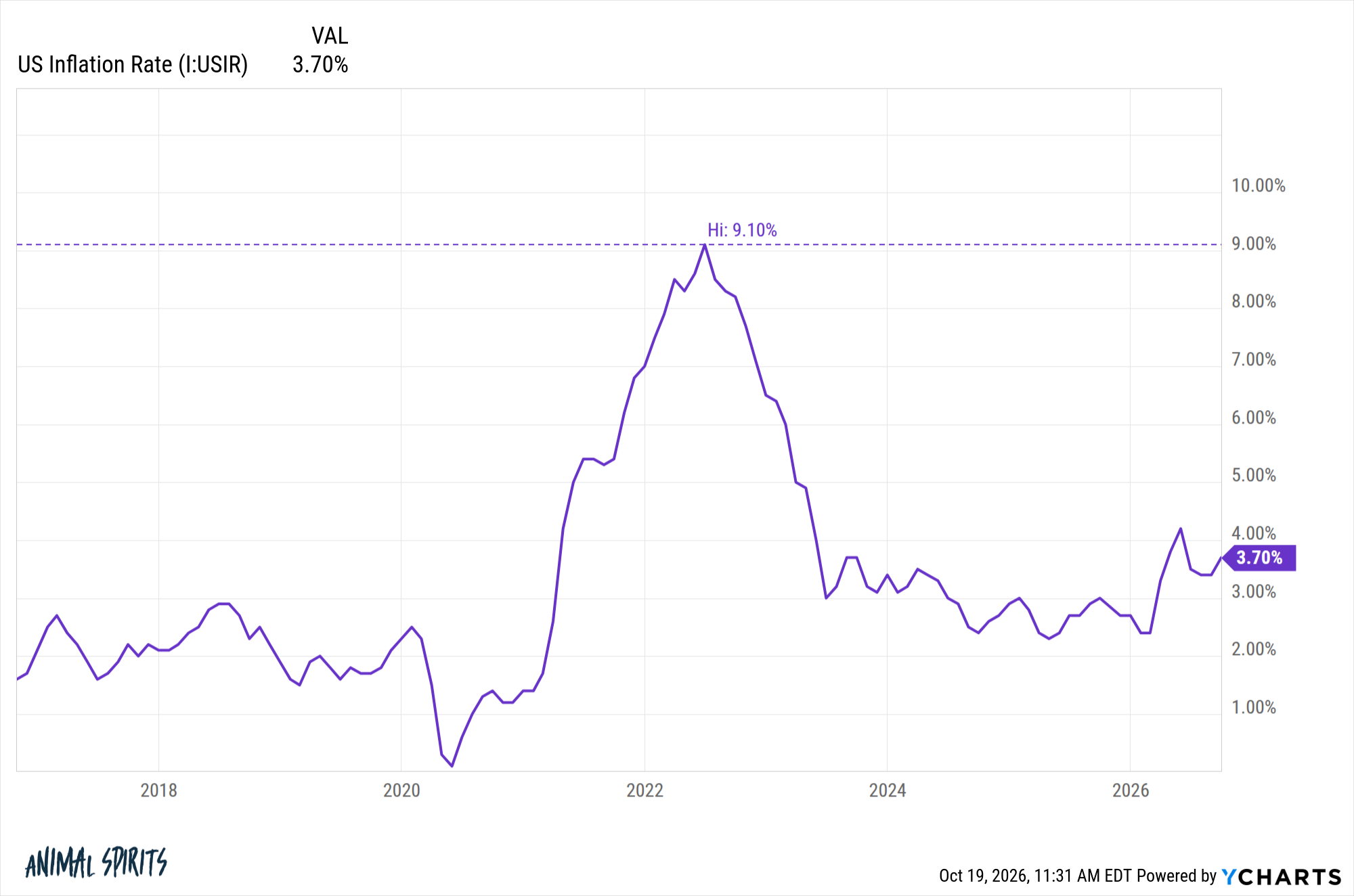
In the fall of 2022, the inflation rate peaked at more than 9%:
At the time a recession was a foregone conclusion:
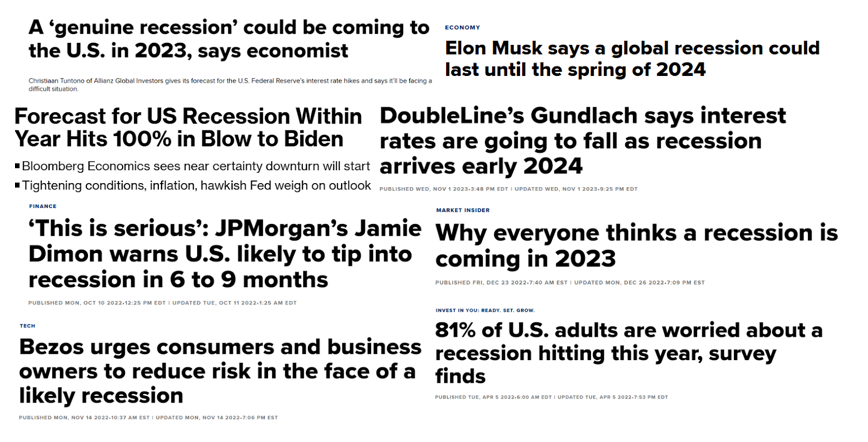
It was a ‘when’ not an ‘if’ as far as most people were concerned.
The stock market bottomed in October 2022 with the S&P 500 in a 25% drawdown and the Nasdaq 100 more than 35% off all-time highs. Inflation was showing no signs of slowing down.
The very next month OpenAI released ChatGPT.
Many people now think the AI boom that Chat set into motion is the biggest reason we never went into a recession. AI also gave the bull market another leg higher.
It seems so obvious now looking back in hindsight.
It was not so obvious at the time.
During the pandemic/meme-stock boom in the ladder half of 2020 into 2021, our tech overlords were too busy selling everyone on the metaverse, web 3 and crypto to care much about AI.
All the VCs were selling this as the greatest innovation since the Internet. Facebook literally changed their name to Meta to get ahead of this trend.
No one was talking about artificial intelligence taking over the world. We were being sold NFTs, DAOs and virtual real estate.
The crazy thing is, even the people who build ChatGPT at OpenAI had no idea the LLM would take off like it did.
MIT asked OpenAI employees for their thoughts after the release:
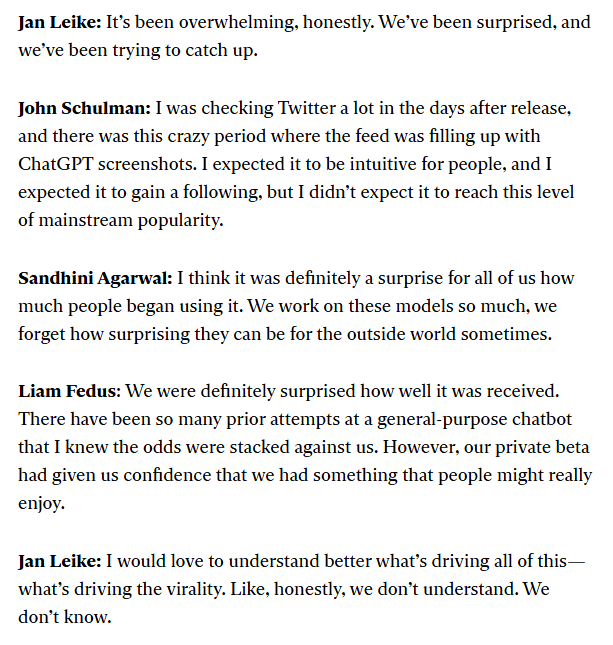
In fact, OpenAI did some internal polling before it was launched to guess the number of users in the first week. Most were in the 10k to 50k range. The highest bet was 100k. The tool actually hit 1 million users in the first week, blowing away its creators expectations.
This is why you have to take the predictions about job losses, economic utopia or a 10% chance of wiping out humanity with a giant grain of salt — tech people can help create the tools that will bring us into the future but they have no idea what the ramifications will be.
For example, the Anthropic staff was asked to predict what what the economy will look like in 2030:

The median response was 17% GDP growth. That’s the economic utopia scenario where productivity growth is off the charts and technology is a deflationary force.
I suppose anything is possible.
Ernie Tedeschi pointed out that we’ve never had 17% GDP growth in the post-WWII era, even after we shut off the economy and turned it back on during Covid: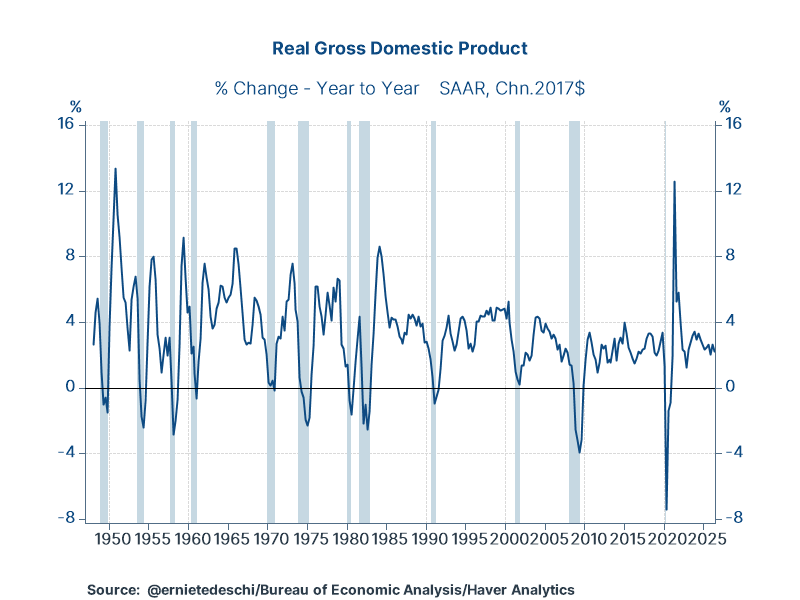
You also have to consider the real world barriers to entry for an economic utopia created by super intelligent computers.
What would the Fed’s response be to economic growth numbers that high? How would the government react to massive AI-induced job loss?
And how will companies react to these new tools?
In The Financial Times there was a story about how agents could make life harder for the banks by making it easier for consumers to earn more interest on their cash:
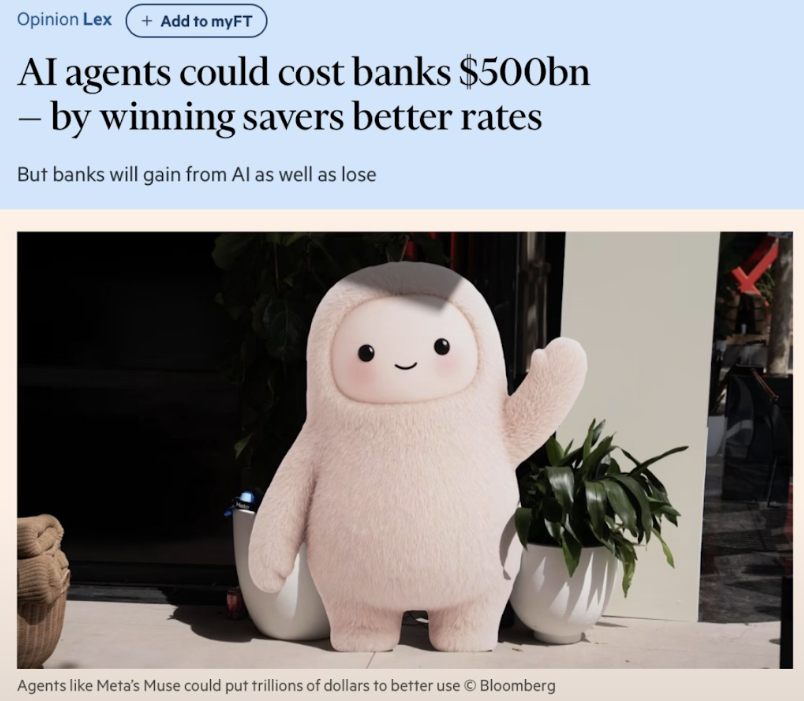
The idea here is that idle cash is just sitting there earning nothing because of inertia. AI agents working on your behalf could take the initiative to earn you some interest on that cash by moving it around for you.
Then there was a CNBC story about how JP Morgan is now blocking AI agents from accessing accounts at the bank:
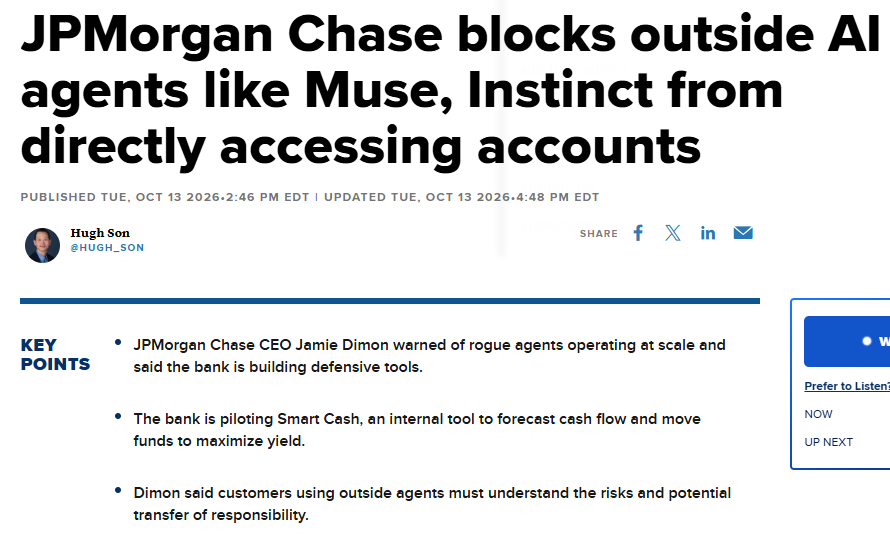
There are no frictions in most forecasts about the AI future. Those frictions do exist in the real world.
AI is going to make life a lot easier for a lot of people. It’s going to make many of us much more efficient. It already is in some cases.
But software cannot operate in the physical world without constraints. It’s impossible to predict what the unintended consequences of AI will look like.
How will politics and regulation shape this technology?
What are the roadblocks that will make it difficult for AI to make sweeping changes?
What happens if public backlash intensifies?
And how can we forecast an AI future when we can’t even predict what’s happening with AI in the here and now?
Two weeks ago there was a story in The New York Times about the idea that higher interest rates are having no impact on the AI boom:
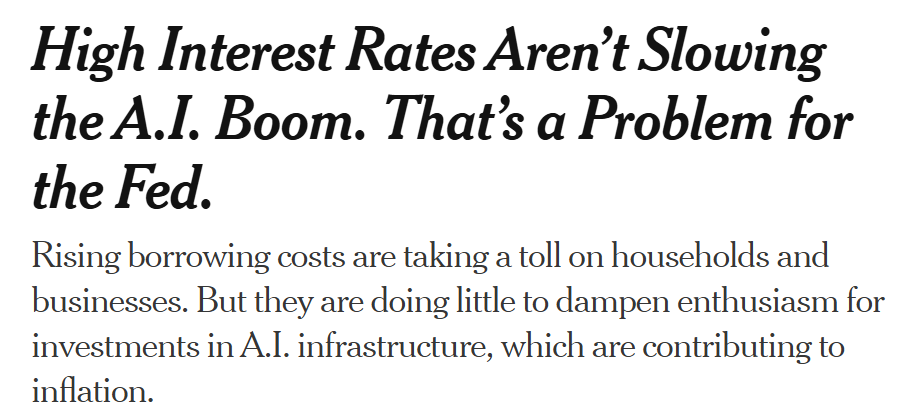
Last week there was a story in The New York Times about how higher interest rates are having an impact on the AI boom:
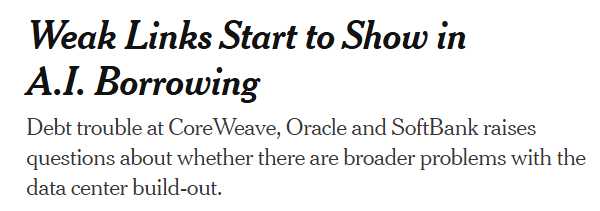
These stories were 12 days apart!
This is the fun stage of the innovation boom because people get to daydream about how the future will change because of an innovative technology.
It’s important to remember no one knows how this will work out.
Not the VC people.
Not the AI people.
Not the finance people.
Not the politicians.
No one knows what’s going to happen.
That’s equal parts exciting and scary.
Further Reading:
Hedging the AI Trade