In the spring of 2021 I wrote a blog post titled Why This is Not Another Housing Bubble.
The reasons I gave at the time were pretty straightforward:
- There were more creditworthy borrowers.
- Supply was constrained.
- Consumer balance sheets had improved.
- Affordability was far worse in other countries.
- Demographics were favorable.
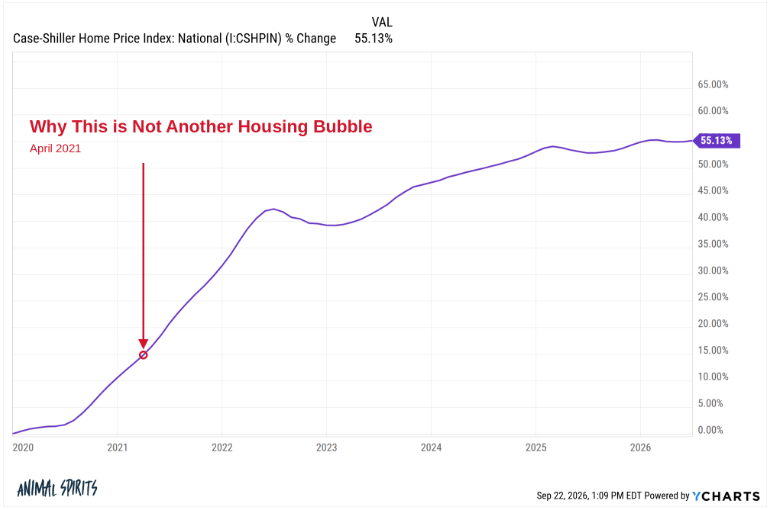
When I wrote that piece the Case Shiller National Home Price Index was up 16% in total for the 2020s. Nationwide housing prices have now risen an additional 33% since then, up more than 55% on the decade.
I’m not here to take a victory lap.1 There were people smarter than me making this same claim at the time.
But I do recall the feedback I received for that piece. A lot of people said I was nuts. How could you have such a massive run-up in prices with no bubble?
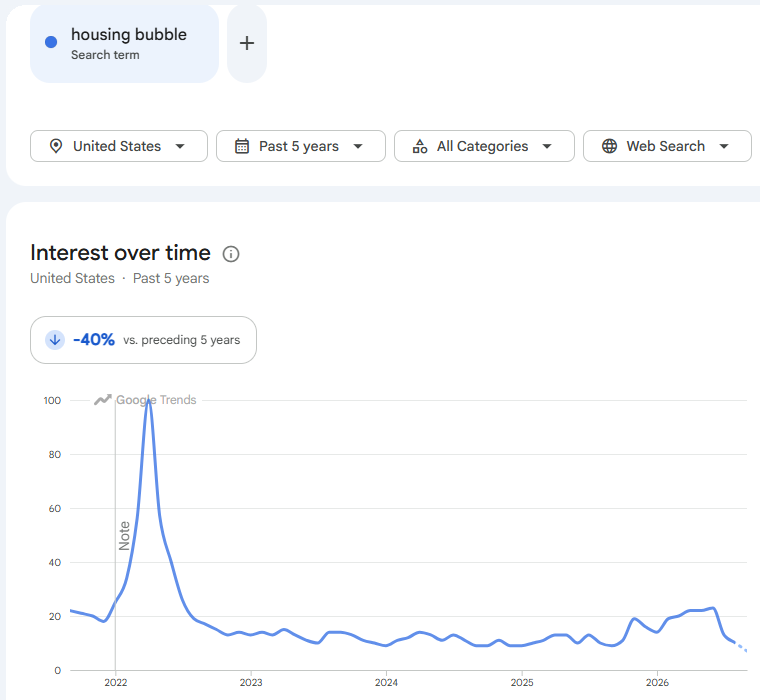
You can see the Google trend data shows a lot of people were interested in this topic in the early part of the decade:
You had a situation where one of the most leveraged financial assets on the planet experienced one of the biggest price increases in history in a short period of time.
How did this not lead to a massive bubble in speculative activity followed by a crash?
Let’s expand on some of my thoughts from 2021 and add a few other things I missed back then:
There was no glut of homes being built. Look at U.S. housing starts during the housing bubble of the mid-2000s versus the 2020s:
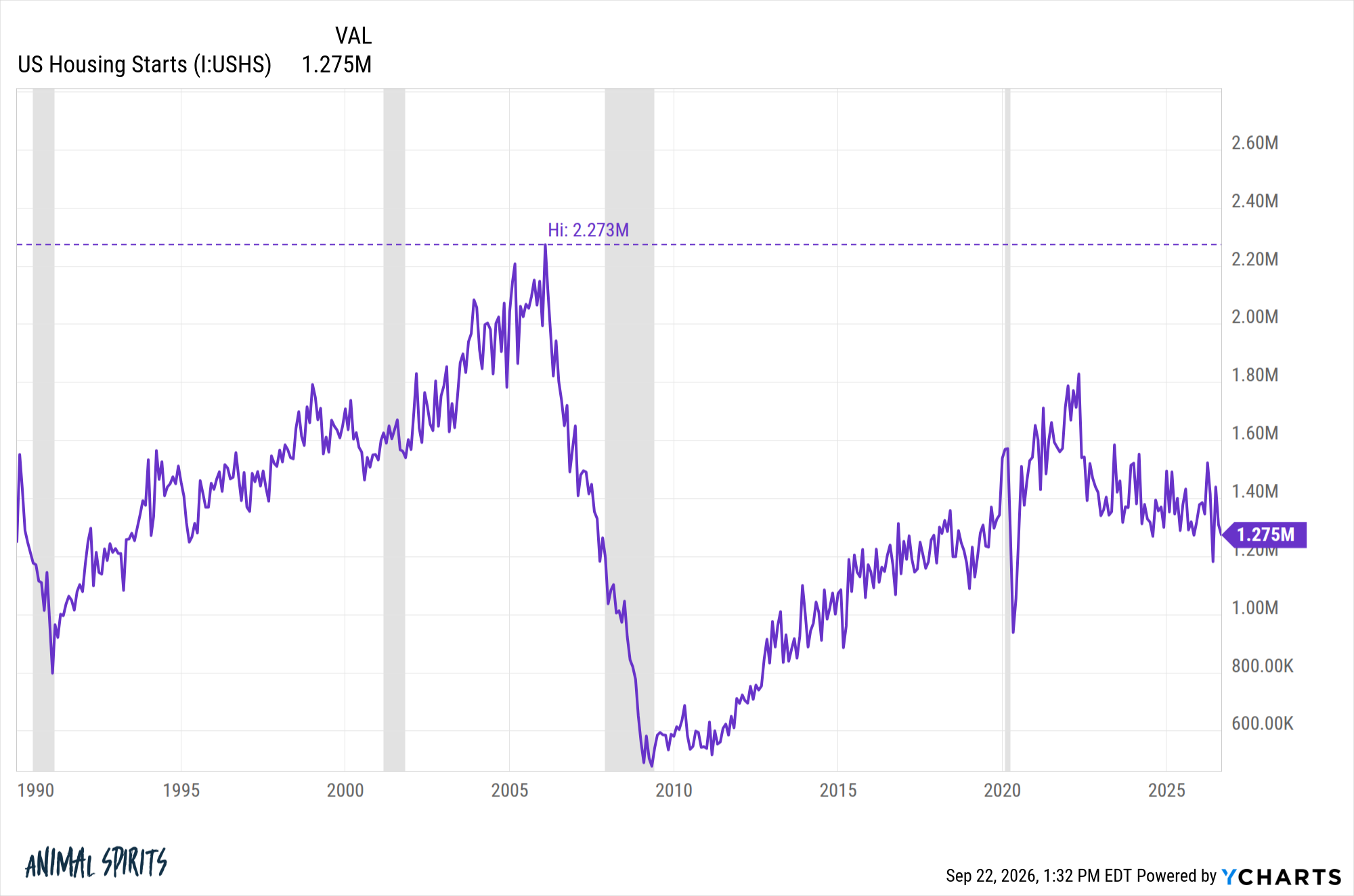
We never got close to those levels and there are now 40+ million more people in the United States. One of the reasons for the housing crash is we overbuilt. That didn’t happen this time.
We didn’t get speculation. My wife and I got sucked into a lot of the home flipping shows on HGTV and TLC in 2006 and 2007. Flipping houses was all the rage during that cycle.
People were putting very little money down, taking out teaser rate loans, putting a minimal amount of renovation into a property and then selling for a higher price.
Plus you had the stories about strippers buying five condos in Las Vegas and strawberry pickers making $14k a year buying $750k homes.
We didn’t get that kind of activity this time around. The market was far more sober.
The market changed too fast. I have a friend who purchased a rental property in 2021. He told me his plan was to continue borrowing more money to buy more and more rental properties each year until he had a substantial real estate portfolio.
The only problem is mortgage rates went from 3% to 6% seemingly overnight. Borrowing at 3% made this rental property dream a reality. At 6% those plans went out the window. He only ever bought the one house.
Mortgage rates. Everyone who held a mortgage had well over a year to refinance at 3% or less.
Homeowners effectively locked in the greatest inflation hedge ever right before 40-year high inflation. Housing is far and away the largest budgetary line item for most households. There were a lot of people who locked in extremely low monthly mortgage payments.
Most homeowners did not want to give up those low rates.
Demographics have been supportive. 40% of all homeowners have their mortgage paid off free and clear. The largest age cohort in America right now is in the 33-37 range:
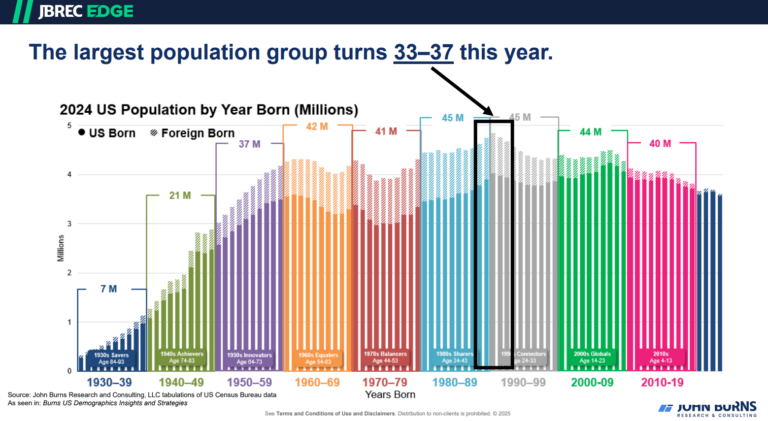
That means you have a lot of people who will never be forced sellers. And you have a group of people in their prime homebuying years.
We did get a housing recession. While there was no crash in housing prices we have now been in a housing market recession for the past 3 years or so:
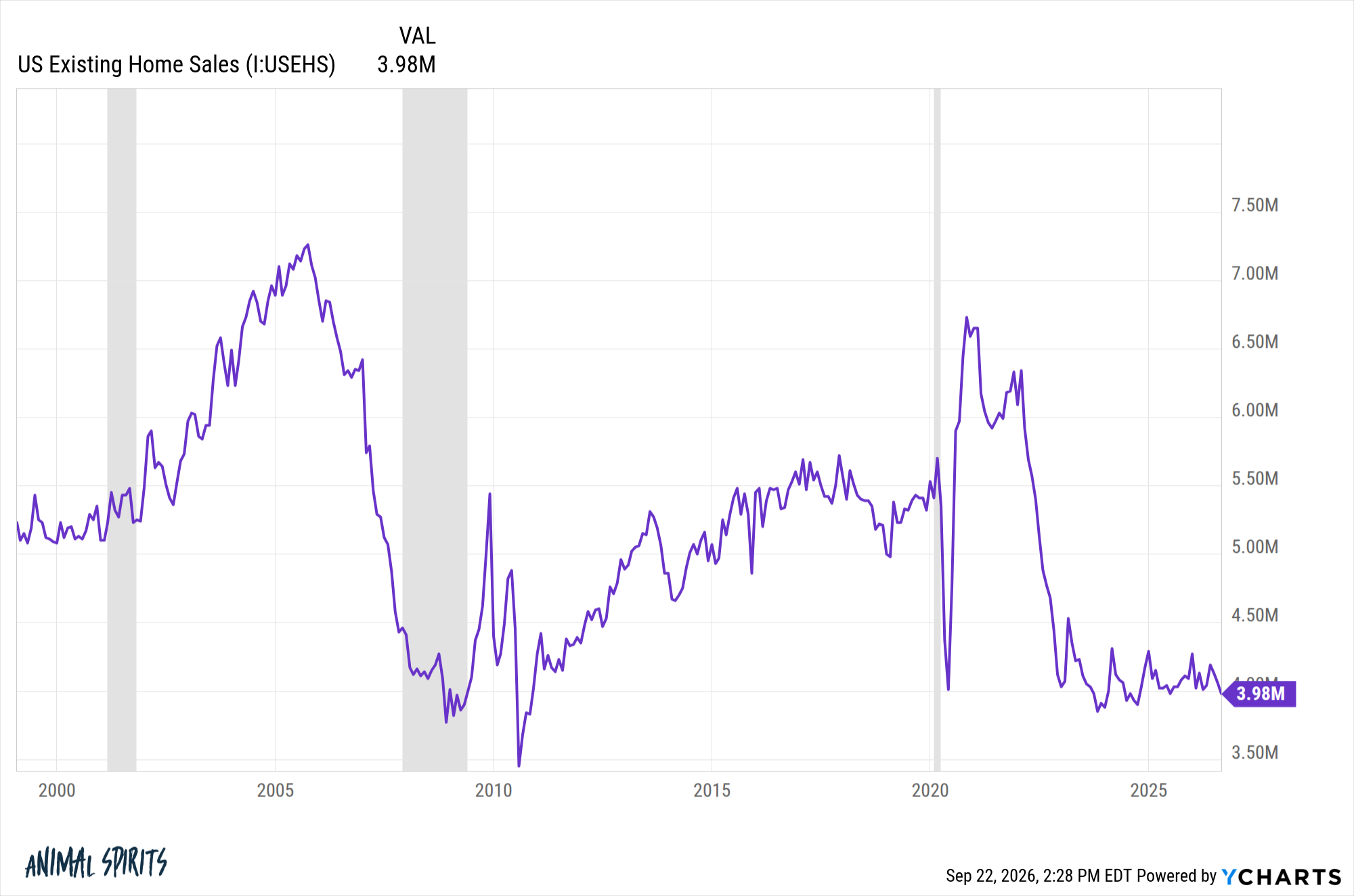
Existing home sales have been at the same levels last seen during the depths of the housing market crash for a number of years.
There wasn’t a crash in prices but there was a crash in housing market activity.
A rise in price is not the same thing as a bubble. There are some financial commentators who desperately want to predict the next crash. They see every big increase in price as signs of a new bubble.
The housing market certainly experienced an abnormal surge in prices. But there were no lapses in lending standards. There was no excessive speculation. There was no home construction boom or inventory glut.
Therefore there was no bubble in housing.
And now what we’re left with is one of the biggest home equity gains in history:
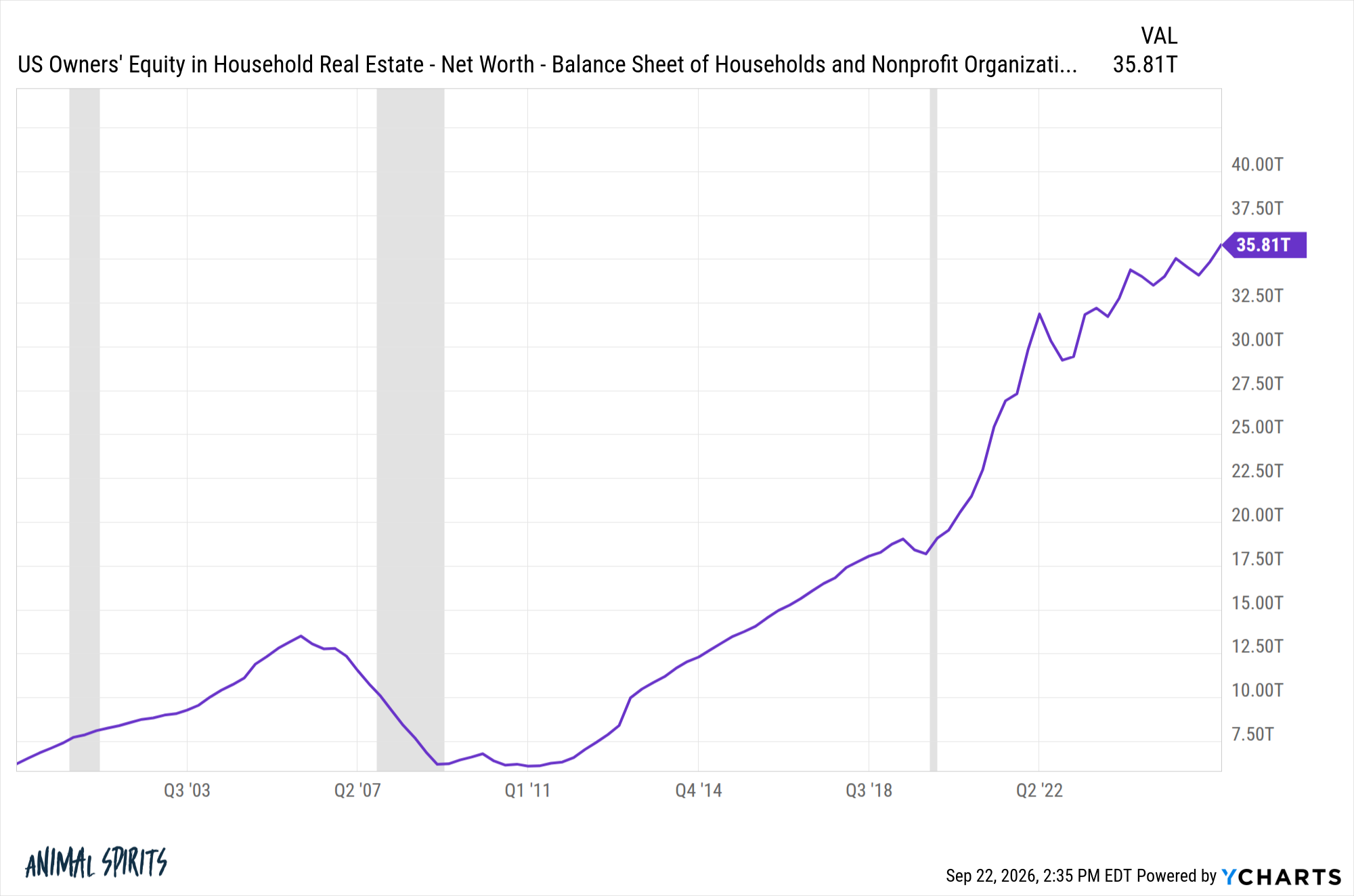
If there eventually is a downturn in the housing market, homeowners have a big cushion.
Further Reading:
Rich Old People
1OK maybe like half a lap.