A reader,
Most of my friends work in tech and while they understand the Boglehead philosophy, the concern is that there is limited upside in public equities and most of the value is captured while companies are private these days. If the most valuable new companies increasingly create their biggest gains while private, will traditional public indexes miss out on a lot of the economy’s innovation-driven value creation? What does this mean for ETFs? Is it time for a different approach?
I’ve heard this narrative that public equity investors are missing out because so many companies are staying private much longer than they did in the past.
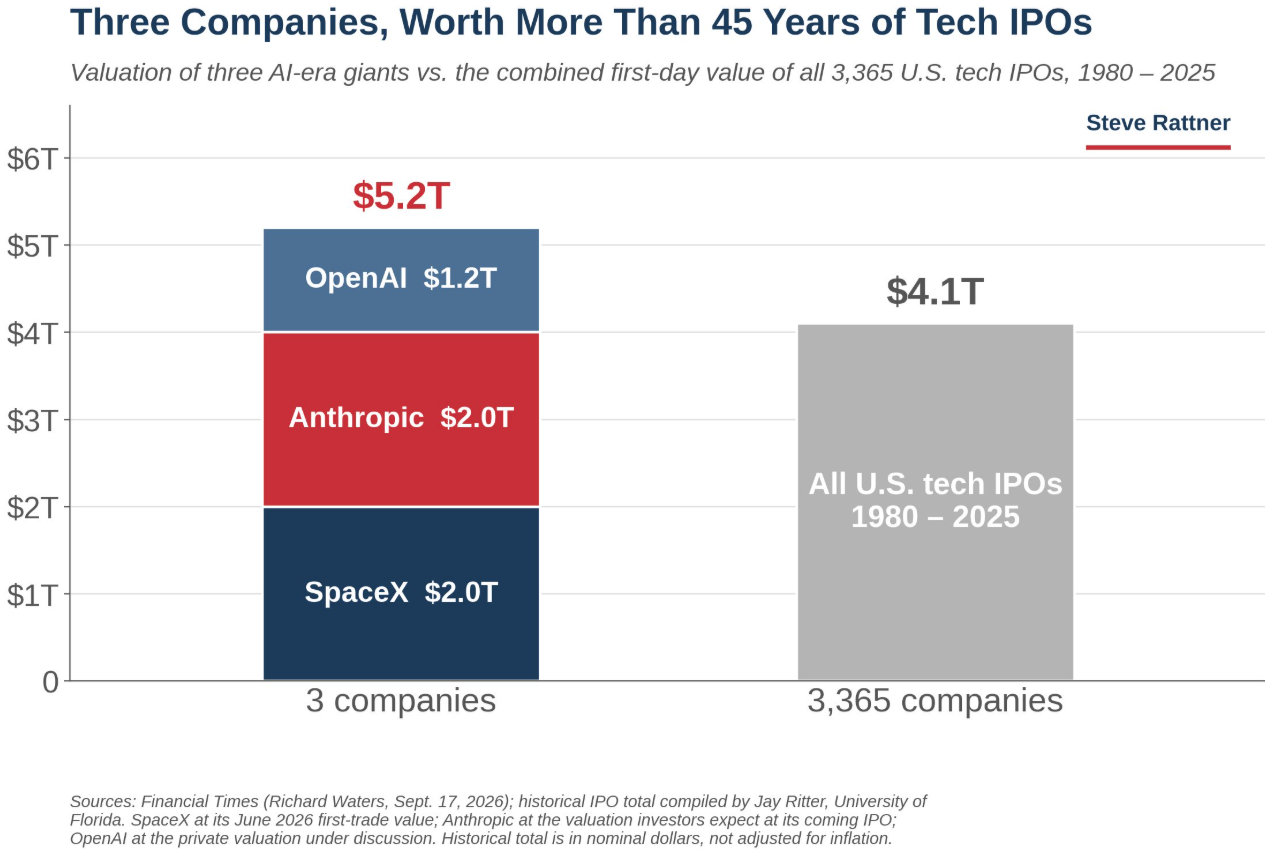
Amazon went public in the 1990s with a market cap of around $440 million.
SpaceX IPO’d this year at almost $2 trillion. It’s estimated OpenAI and Anthropic will each go public with market caps well over $1 trillion.
Steve Rattner created this chart that shows these three companies alone are estimated to be worth more than every U.S. tech IPO combined since 1980:
That feels like a lot of missed opportunity for investors.
It is true that the sheer amount of money in private markets has made it much easier for companies to avoid going public for much longer than they did in the past. It’s estimated there are now more than 1,800 unicorns (worth $1 billion or more) worldwide worth a collective $9.2 trillion.
Surely, this has had an impact on stock market performance.
The strange thing is that the stock market has done just fine without all of these private companies.
Look at the returns on the tech-heavy Nasdaq 100 in the past 15 years:
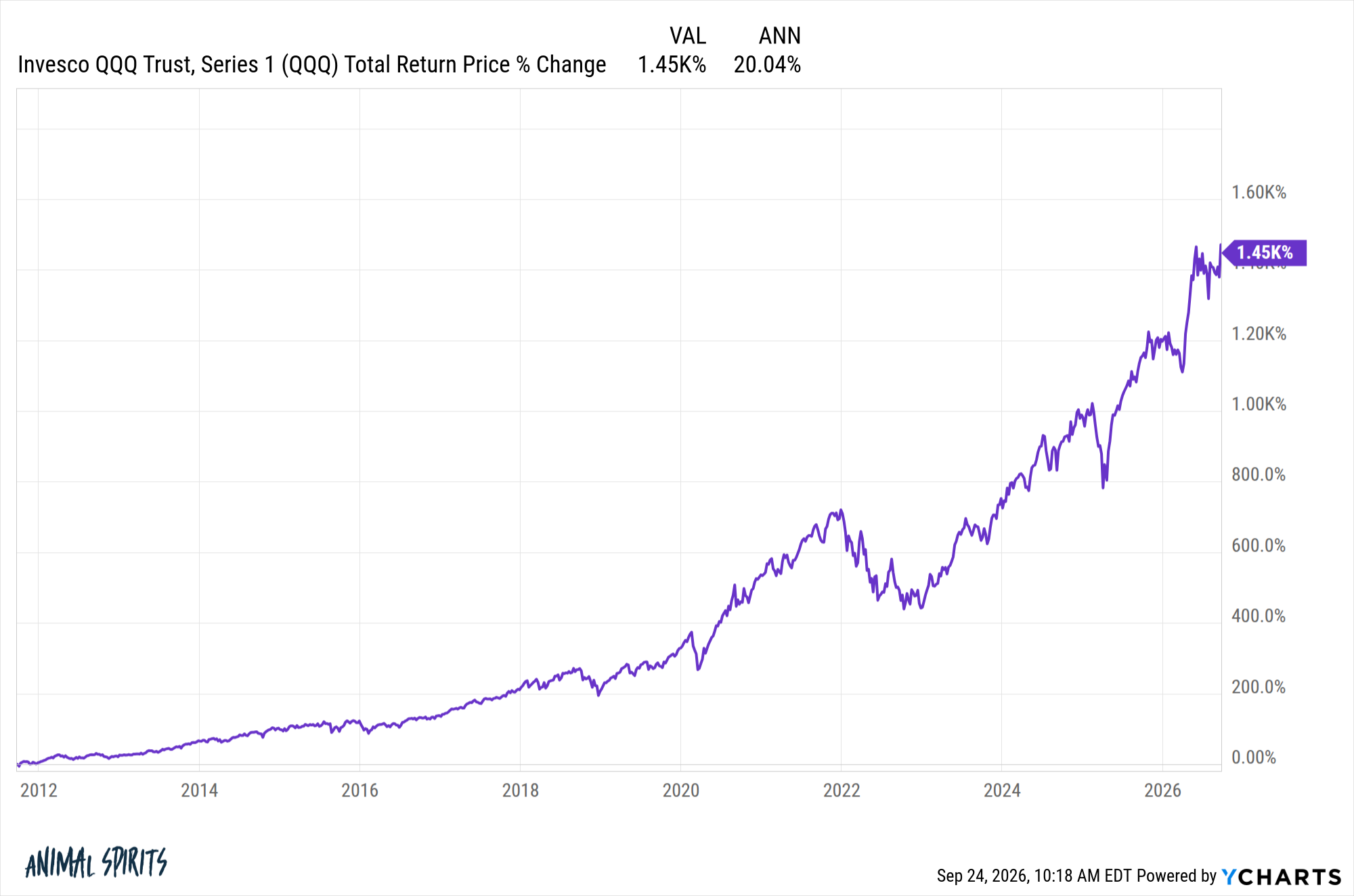
The Qs have compounded at an annual rate of 20% per year for a decade-and-a-half. This is perhaps the greatest tech bull market in history and it happened without all of those unicorn companies.
I’m guessing these Nasdaq 100 returns would have beaten 90% of all venture capital funds in this time frame. Maybe more.
Nvidia is up almost 14,000% in the past 10 years. Were there private companies with better returns than that? Sure. But how many people actually had access to them? And how many people actually had access to the top decile of VC funds?
Not many.
Plus, investors have taken advantage of the private markets through acquisitions.
In the past 20 years or so there have been more than 700 acquisitions made by Mag 7 companies. When there is a new competitor or exciting new technology, often times these companies simply buy them.
Look at some of the most well-known acquisitions from the Mag 7:
- Google: YouTube, DoubleClick, Android, Waze, Nest, Fitbit, DeepMind, Wiz.
- Apple: Beats, Shazam, Siri.
- Microsoft: LinkedIn, Skype, GitHub, Activision.
- Amazon: Zappos, Twitch, Ring, Whole Foods, Goodreads, MGM, Woot, Diapers.com.
- Meta: Instagram, WhatsApp, Oculus.
Nvidia just announced its acquisition of Hugging Face.
Plus, Microsoft, Amazon, Google and Nvidia all have a stake in OpenAI and/or Anthropic.
I understand why this narrative exists. Far fewer companies are going public than in the past. There are a lot of large privately held businesses. People who got in at the ground floor have made a boatload of money in certain start-ups.
But it’s also true that those winners are the exception not the rule.
According to BLS data, almost half of all new businesses fail within 5 years. Over 10 years around two-thirds of start-ups are gone.
Nick Maggiulli looked at tech start-ups specifically and found:
- 70% of startups don’t exit
- 25% exit for under $100M
- 4% exit for $100M-$1B
- 1% exit for over $1B
Venture capital is a power law strategy by design. The hope is 1-2 big winners make up for all of the other losers.
It’s also true that the average performance of these companies after they go public has been underwhelming:
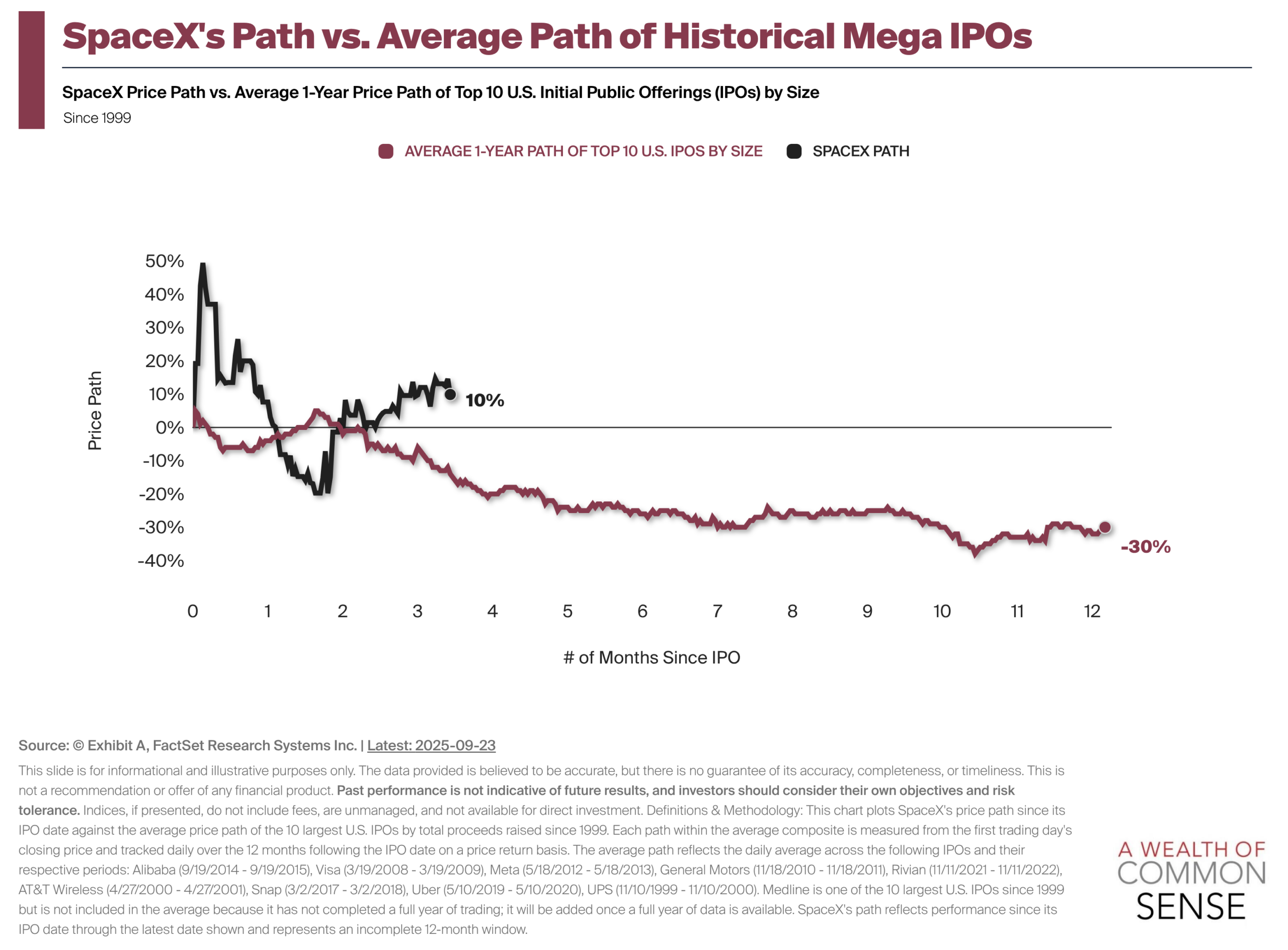
One of the reasons so many companies are staying private longer is because private market investors overvalued them.
There has been a lot of value created in the private markets this cycle. But that hasn’t harmed public market investors.
Yes, you can be a Boglehead tech investor by putting your money to work in the stock market. And maybe you can still take a swing with some venture investments on the side.
Just know those investments are essentially lottery tickets.
We talked about this question on this week’s all-new episode of Ask the Compound:
We also discussed questions about inflation, defensive stocks, career advice for equity analysts and paying off your mortgage early.
Further Reading:
Power Laws in the Stock Market