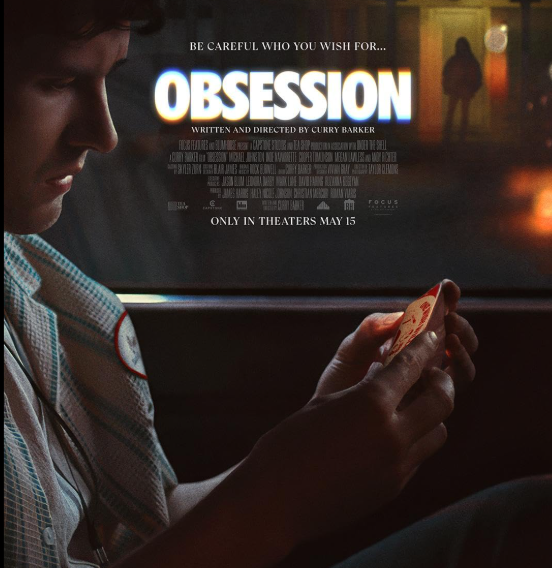
Obsession is one of the best movies of the decade.
It’s also one of the best stories in recent film history.
Writer-director Curry Barker is 26 years old. The budget for the movie was just $750k. It’s made almost $500 million in worldwide box office.
I love that fact that a low-budget indie flick can feel so high quality. I love a great movie with a bunch of relatively unknown actors who feel like they’re going to be stars.
And I love the premise of the movie.
The plot is about a guy who makes a wish that a girl who is out of his league will love him.
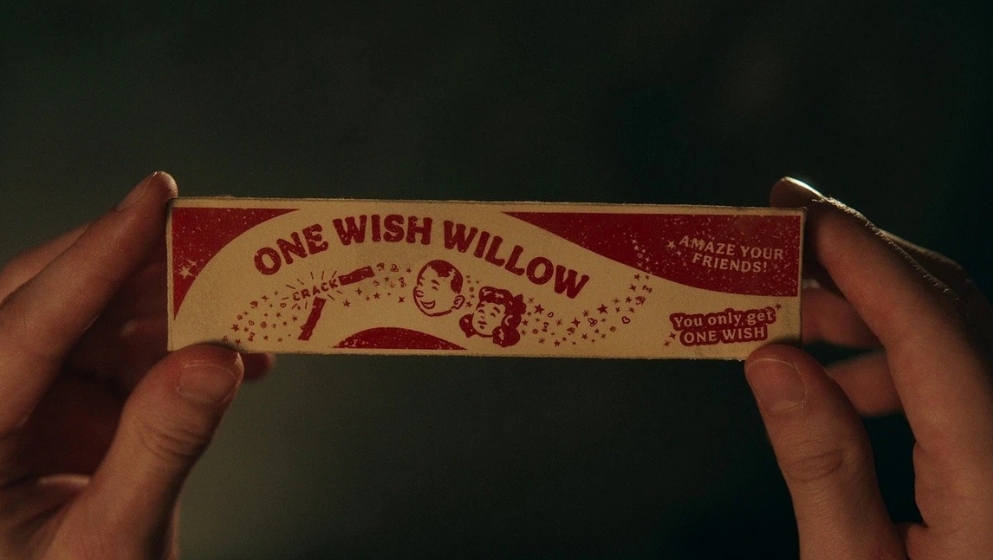
That wish comes with some scary unintended consequences.
I won’t spoil it but this is the kind of movie you need to watch at least twice to fully appreciate it.
My finance brain immediately had me wondering about the unintended consequences if people got to make their economic wishes come true.
Let’s give it a shot:
I wish for 3% mortgage rates again.
Done. Now here’s a recession that causes unemployment to spike, income growth to slow and a stock market crash. Good luck borrowing money.
It’s like waking up one day with duct tape covering your door.
I wish prices would go back to 2019 levels.
Done. The economy will now go through a period where prices fall but consumers delay spending, revenues drop, profits take a hit and GDP declines, leading to an economy with severe deflation.
For a highly indebted country, deflation actually increases the debt burden.
That deflation is also accompanied by a 30% haircut in your wages.
Don’t even think about asking for a raise or going to boy’s night out.
I wish housing prices would fall to become more affordable.
Done. Here’s a massive financial crisis where banks are failing, employees get laid off and lending standards make it nearly impossible to borrow money.
Household wealth drops precipitously, especially for the middle class, who have the bulk of their net worth tied up in their primary residence.
Housing prices are lower but few people who need financial relief can now afford to buy one even at depressed levels.
I wish for income inequality to improve.
This one already happened.
Income inequality improved substantially coming out of the pandemic:
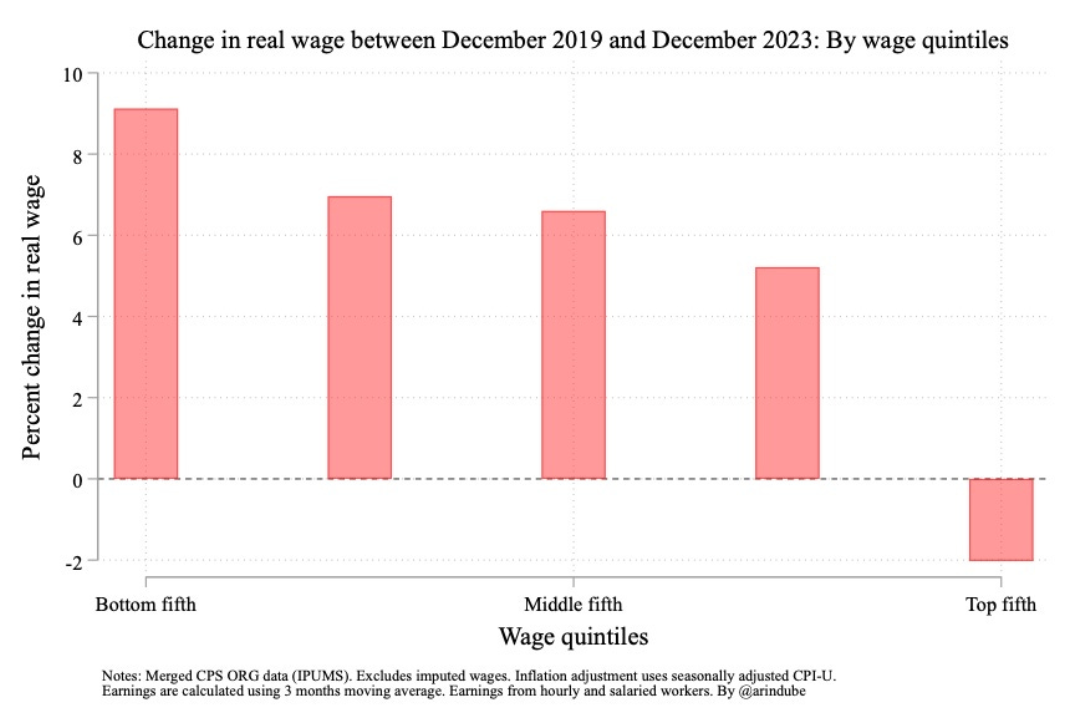
The lowest wage cohorts experienced the fastest wage growth.
The Covid stimulus led to a tight labor market. That increased wages substantially, especially at the lower end of the wage spectrum.
And people hated it.
Why?
Because it also led to a 9% inflation rate and a cumulative 30% increase in consumer prices.
Economic sentiment in the 2020s looks like this because of the inflation:

I wish the stock market would fall 50% so I could buy stocks on sale.
Take your pick of the economic environment that has caused stocks to fall this far in the past 100 years:
- The Great Depression
- The 1937 depression echo-crash
- The 1973-74 great inflation
- The 2000-2002 bursting of the dot-com bubble
- The 2007-2009 Great Financial Crisis
Don’t get me wrong. Young people should be especially open to stock market declines.
You just need to understand that the biggest stock market crashes typically happen because the economy is in a very bad place.
One minute you’re in love, the next minute you’re eating dead cat sandwiches.
Obviously, there are other ways to get better economic outcomes without a pandemic, recession or financial crisis.
But just know that economic outcomes do not play out in a vacuum. There are trade-offs to consider.
The economy in the 2010s was one of slow GDP growth, low inflation, stagnating wages, a high-ish unemployment rate and 0% rates.
The economy in the 2020s has seen higher GDP growth, higher inflation, higher wage growth, low unemployment and higher rates.
If you want higher wage growth you have to deal with higher inflation.
If you want higher economic growth or a better labor market you have to deal with higher borrowing rates.
If you want a girl who shows total devotion you might have to sit through her dark Hansel and Gretel poem in front of all your friends at a party.
Careful what you wish for.
Michael and I talked about Obsession, unintended economic consequences and and much more on this week’s Animal Spirits video:
Subscribe to The Compound so you never miss an episode.
Further Reading:
The Worst Asset Class For the Next 5 Years
Now here’s what I’ve been reading lately:
- The Siren’s Call (Bull & Baird)
- You should spend more money in your 20s (Of Dollars & Data)
- Rich and unhappy (Known Unknowns)
- The VIP economy (Your Brain on Money)
- Inside the making of The Odyssey (GQ)
Books:
Podcast book tour: