A reader asks:
I bought Exxon, Shell and Devon Energy in my traditional brokerage account back when oil was $0 a barrel. I’m sitting on some solid unrealized gains and feel that I need to rebalance my portfolio and lock in some gains. I wouldn’t even mind sitting on some dry powder for a market pullback. I feel like we’re one news announcement away from oil dropping like a lead balloon. What is the best way to determine a jump off point amid geopolitical uncertainty? Or will oil go higher if China starts buying from our US companies? Am I chasing another 10-15% upside before a larger drawdown? I’m 38 with a 4 and 6 year old, I max out my SIMPLE IRA yearly and have a 529 for kids. My investment style has always been a long term buy and hold, putting patience over the latest hot trend. I’m just feeling burned out from the market with AI and the fact that I’m addicted to logging into my account every day just to see what’s happening.
Pretty good timing on those purchases.
Both Exxon and Devon Energy are up more than 300% since the end of April 2020:
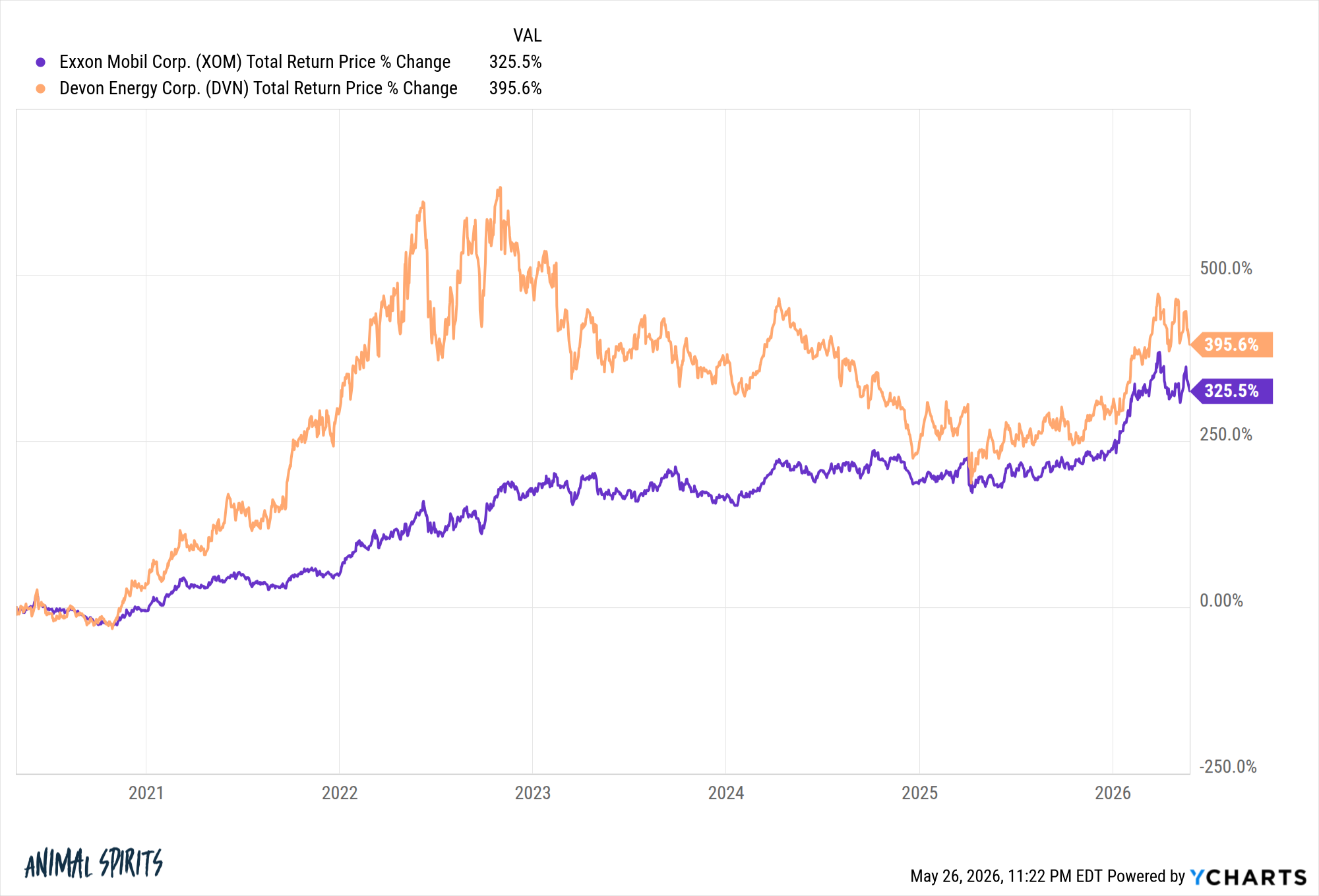
Markets went haywire in the spring of 2020 but oil prices going negative is one of the more memorable moves. That wasn’t supposed to happen…ever?
Buying oil stocks in 2020 was quite the contrarian trade.
By March 2020, energy stocks as a group had negative total returns going back to 2005. It was a lost-decade-and-a-half.
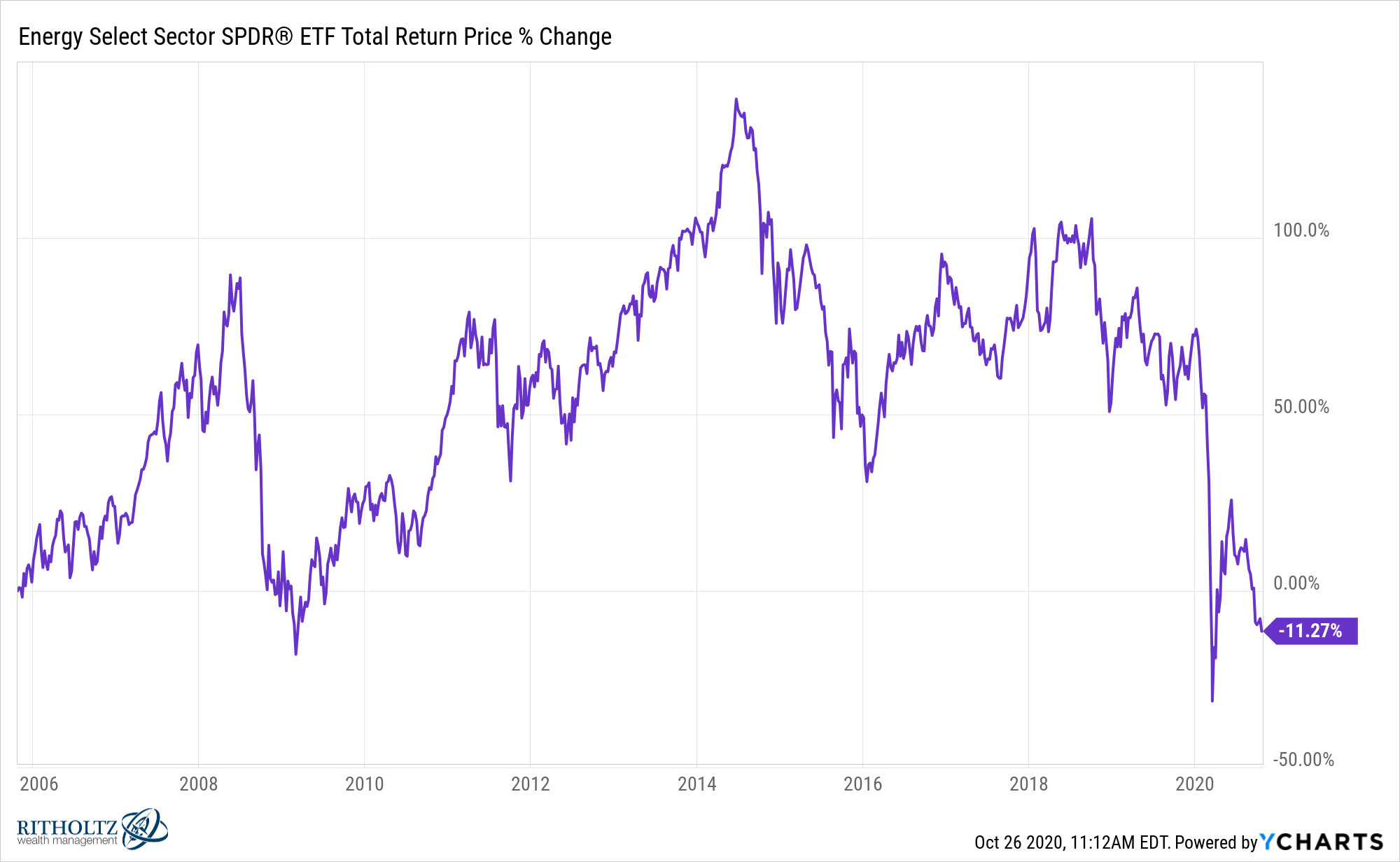
Since April of 2020 the energy sector ETF (XLE) is up 280% versus a gain of 180% for the S&P 500.
These cycles of outperformance and underperformance have been normal for energy stocks this century: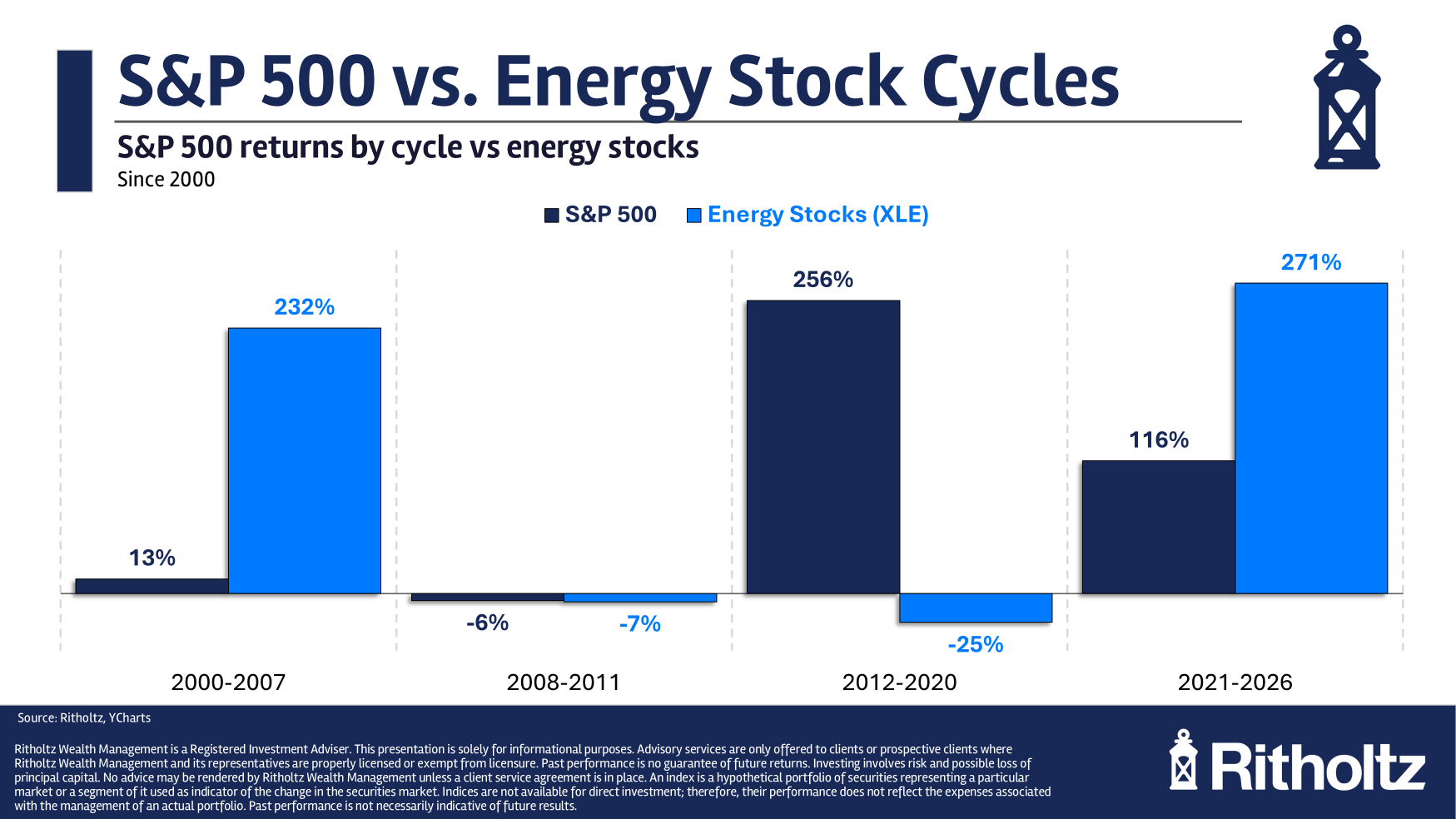
The energy sector crushed the S&P 500 in the lead up to the Great Financial Crisis. Then there were a few years where the S&P 500 and energy stocks both treaded water.1 That was followed by a boom for the S&P and a bust for energy stocks. And finally, the energy comeback from negative oil prices.
What happens next? How should you handle your huge energy stock gains?
Whatever you decide DO NOT make your investment decisions based on geopolitics. That should be the biggest takeaway for investors this year.
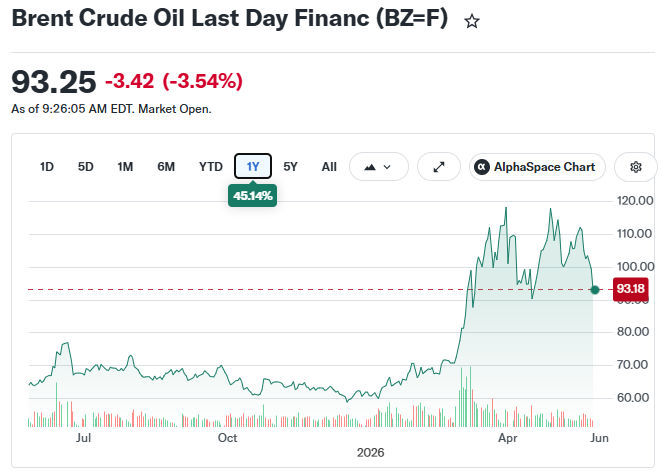
Everyone who follows the energy markets was predicting $200/barrel oil because of the war.
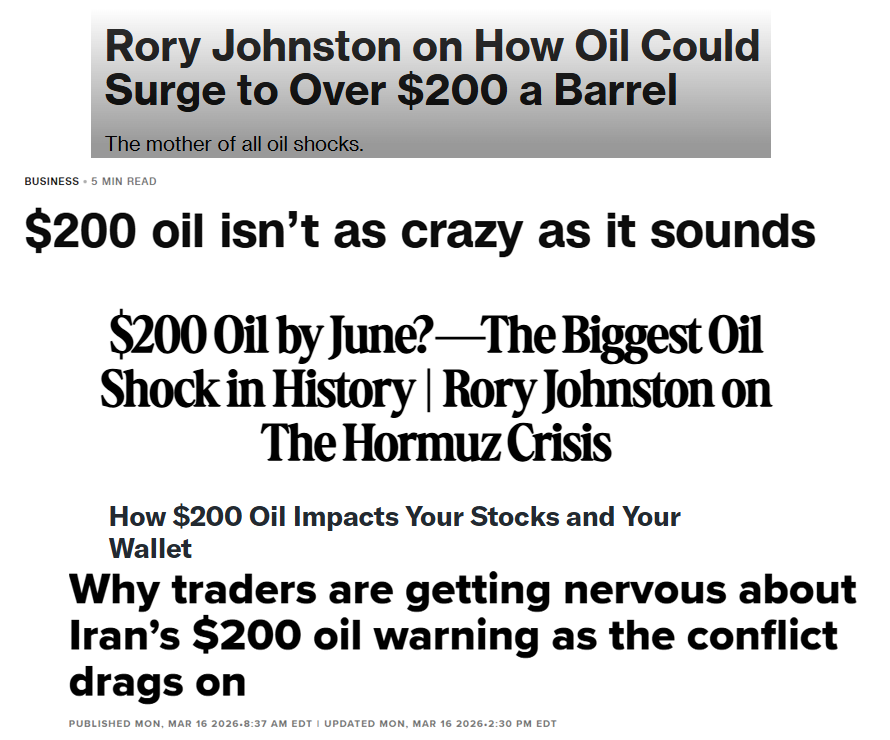
And I don’t blame them!
Given all the happenings around the closure of the Straight of Hormuz, it feels like oil prices should be higher. Markets often don’t cooperate with predictions.
Oil prices never even sniffed anywhere close to $200 a barrel:
We played this game in 2022 when the Ukraine war started as well:
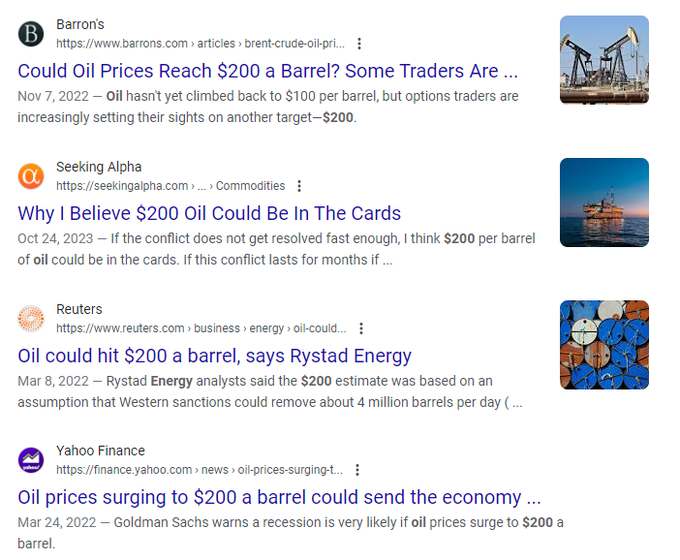
Why are the predictions always $200 a barrel? People like round numbers.
The energy analysts have no idea what will happen to the price of oil. Neither do I. Neither do you. Don’t use geopolitics to make portfolio decisions. Even if you’re right about the supply and demand dynamics, you might still be wrong about the market implications.
My biggest piece of advice here is you need to simplify your portfolio or process.
You have two young children at home. You shouldn’t be burned out from checking your portfolio all the time.
Also trying to time the market isn’t going to help with finance burnout. It’s going to make it worse!
Sitting on dry powder and waiting for a pullback is just inviting even more brain damage into the equation because you’ll be constantly checking the market to see when you should get back in.
The good news here is you won by making some nicely timed stock trades. You can diversify now or later but the big thing here is you need some sort of plan to guide your actions.
This is the beauty of having a pre-established asset allocation you can stick with regardless of what’s happening with AI, oil prices, geopolitics or any of the other crazy stuff going on in the world.
Once you have an asset allocation in place you don’t need to wrack your brain every time there needs to be an investment decision.
What should you sell? Whatever asset class or position is above its target weight.
What should you buy? Whatever asset class or position is underweight.
What should you invest new money into? Your pre-established asset allocation weights.
I have no idea if energy stocks have more room to run or if they’re due for a pullback.
Regardless of what you decide to do, your investment process shouldn’t burn you out like this. Constantly checking your portfolio every day is no way to implement a long-term strategy.
Create some reasonable investment criteria to guide your actions. Automate as much of it as humanly possible. Stop checking your portfolio all the time.
Then go enjoy time with your kids.
Life is too short to stress about the markets all the time.
We answered this question on an all new episode of Ask the Compound:
Everyone’s favorite tax expert, Bill Sweet, joined the show to discuss questions about the Jeff Bezos tax plan, tax planning in retirement, retirement withdrawal strategies, early retirement planning and how to create a dynasty 529 plan for your kids.
Further Reading:
How Do Higher Oil Prices Impact Stock Market Returns?
1Both were down close to 40% in 2008. XLE was released in late 1999. I’m sure if we extended the returns back to the 1990s it would have been another cycle of underperformance.