Deutsche Bank has a chart that shows we’re looking at the worst 10 year period ever for U.S. government bonds:
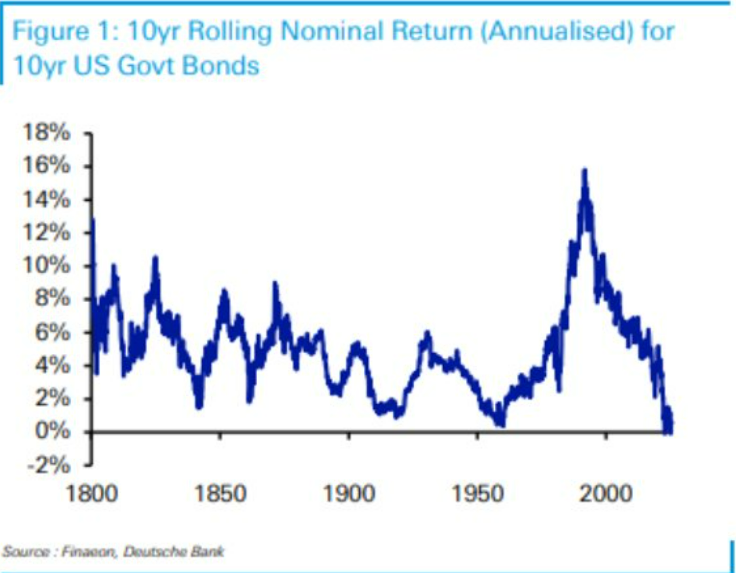
That doesn’t seem good.
Being a market returns geek I decided to take this a step further by looking at the returns by decade for various maturities in government bonds to see how the 2020s stack up historically.
Here’s the data for 5 year, 10 year and long-term (20+ years) U.S. Treasuries by decade going back to the 1930s:
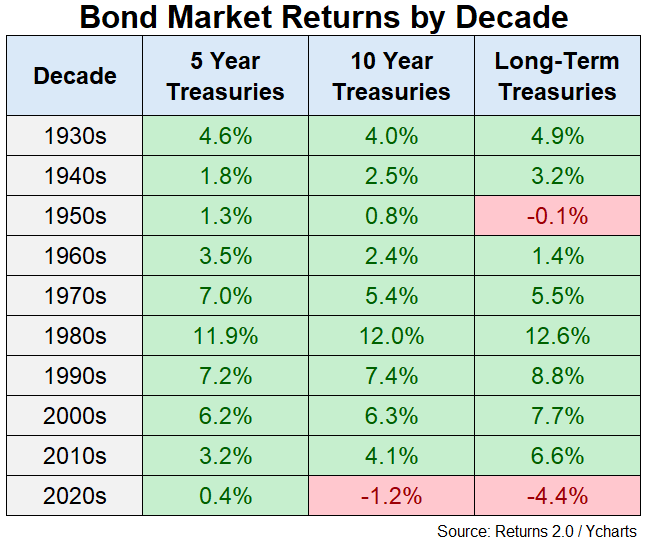
A little more than halfway through the 2020s we’re on pace for the worst decade in modern economic times.
Not great.
Going from generationally low bond yields to 9% inflation and a massive spike in rates in a short period of time didn’t help.
But it’s actually worse than it appears.
These are nominal returns. The biggest risk for bonds is inflation because they pay you a fixed amount of income over time. You need to look at the inflation-adjusted returns to really understand how things compare over time.
These are the real returns:
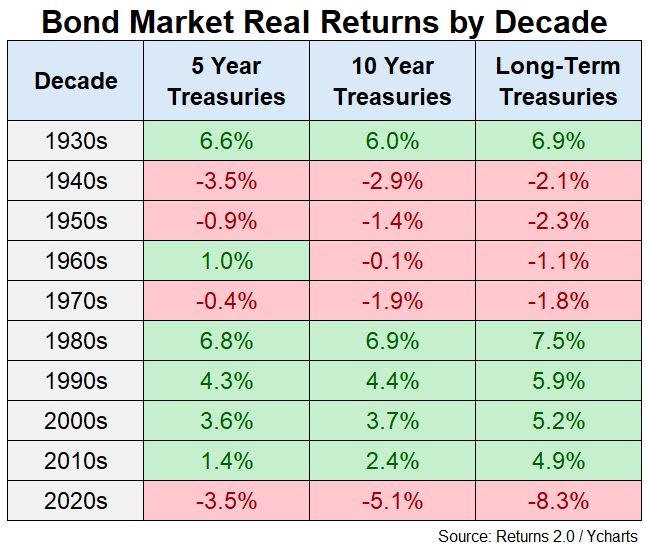
A lot of the green from the nominal chart turns red on a real basis.
The most glaring example is the 1970s where you had pretty good nominal returns because yields were relatively high but awful real returns because inflation was so high (which is why rates were high in the first place).
In fact, real returns were negative from basically World War II all the way through the inflationary 1970s as rates and inflation wreaked havoc on fixed income investors.
The 2020s look bad on a nominal and real basis. This really is the worst decade (so far) ever for government bonds.
How bad is it Ben?!
Long-term Treasuries are still in the midst of a 40% drawdown even after accounting for the income paid out:
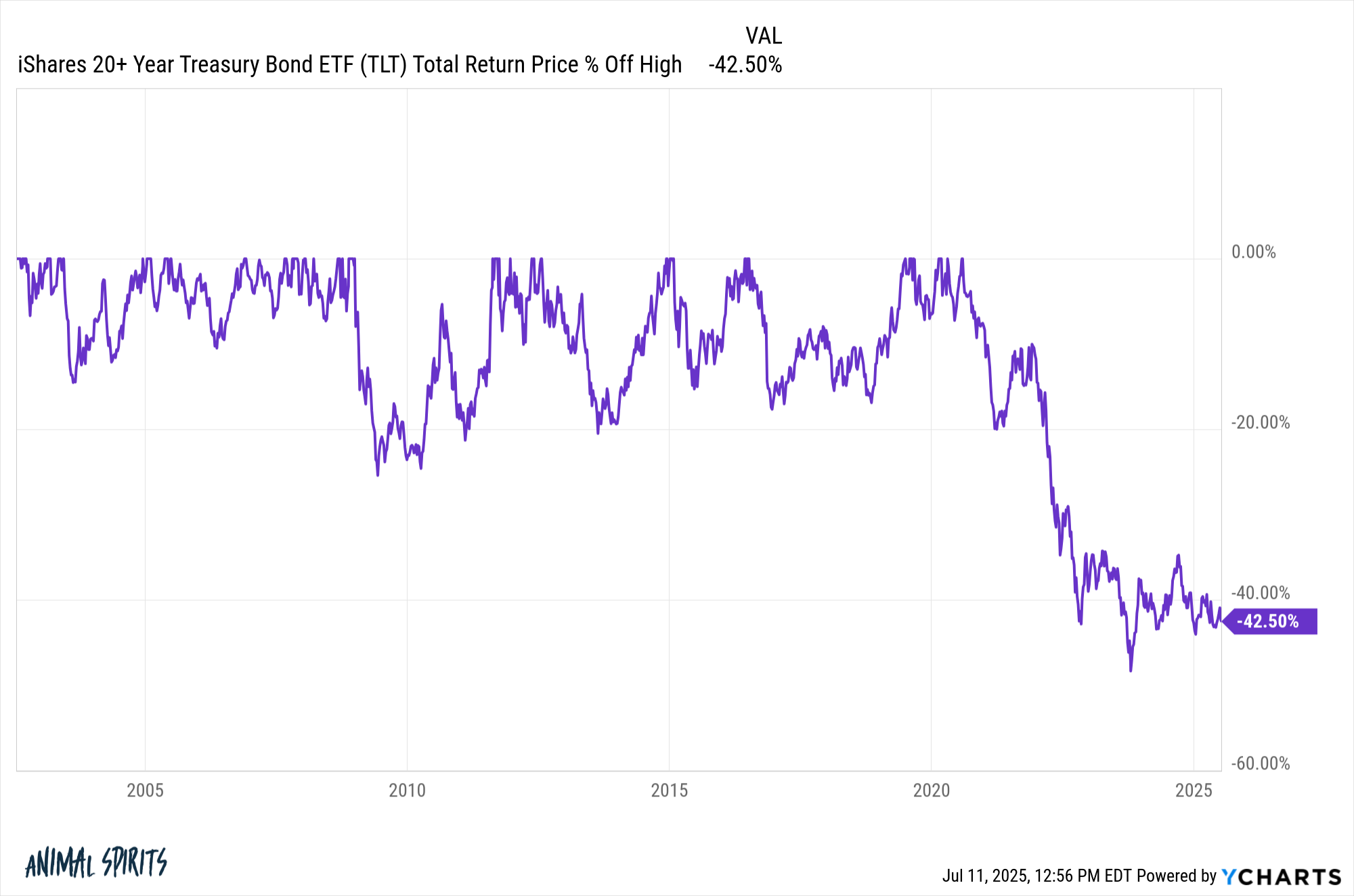
They’ve been in a 40% drawdown since 2022!
Why aren’t more investors freaking out about this?
Can you imagine if the stock market got cut in half and failed to make any serious progress for three years? It would be a daily story in the financial press. Investors would be losing their minds. It would be a full-fledged crisis.
You don’t ever really hear anything about carnage in the bond market.
I suppose this is partly because of the way bonds are structured. You can hold to maturity and be made whole (on a nominal basis).
There were also perfectly good alternatives for those who didn’t want to accept duration risk from longer-term bonds when yields were on the floor:
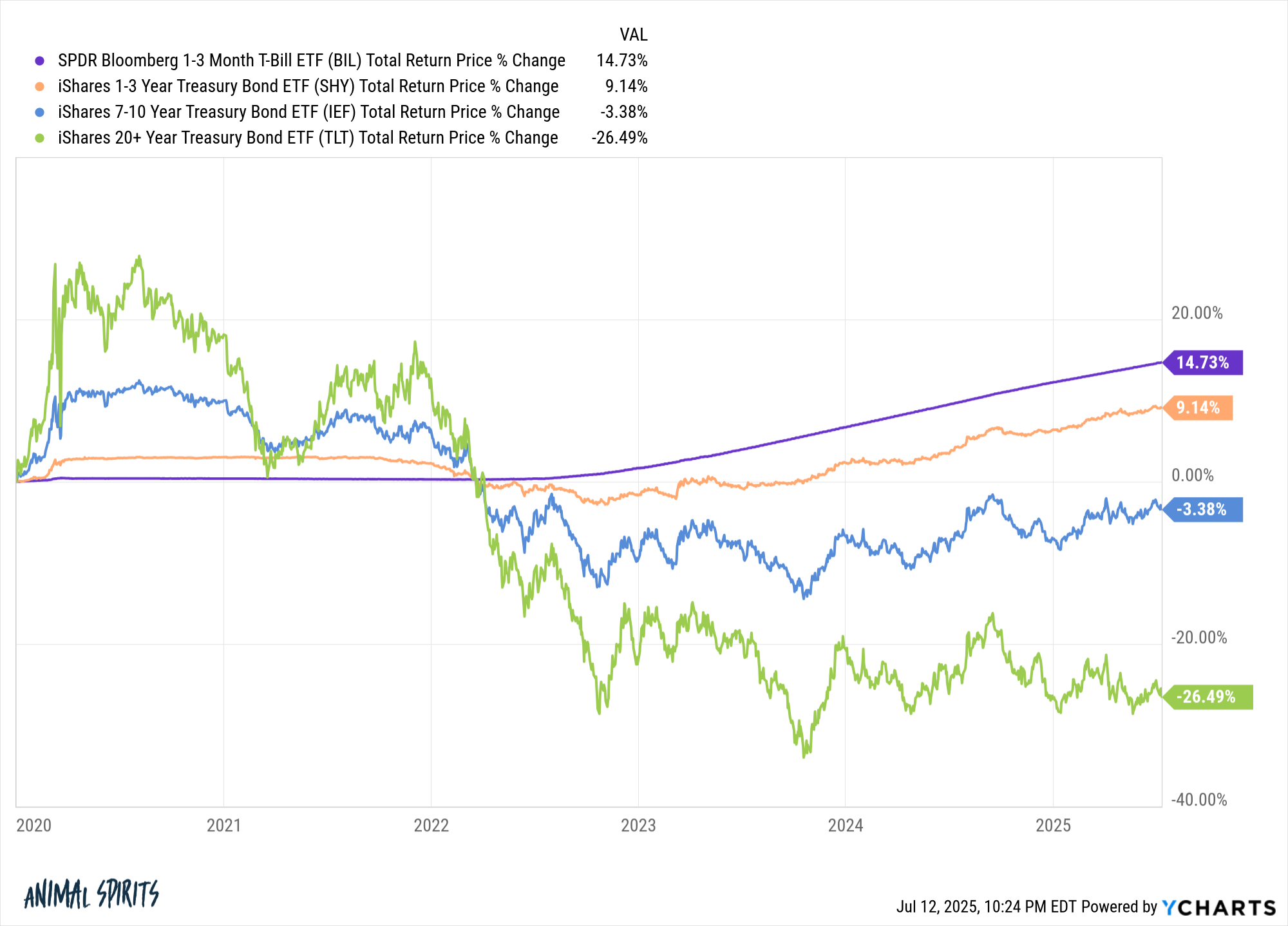
Short-term Treasuries and T-bills have been a no-brainer alternative with higher yields and far less volatility.1
Another reason bond investors aren’t freaking out is because yields are much higher now than they were when this whole mess began back in the pandemic:
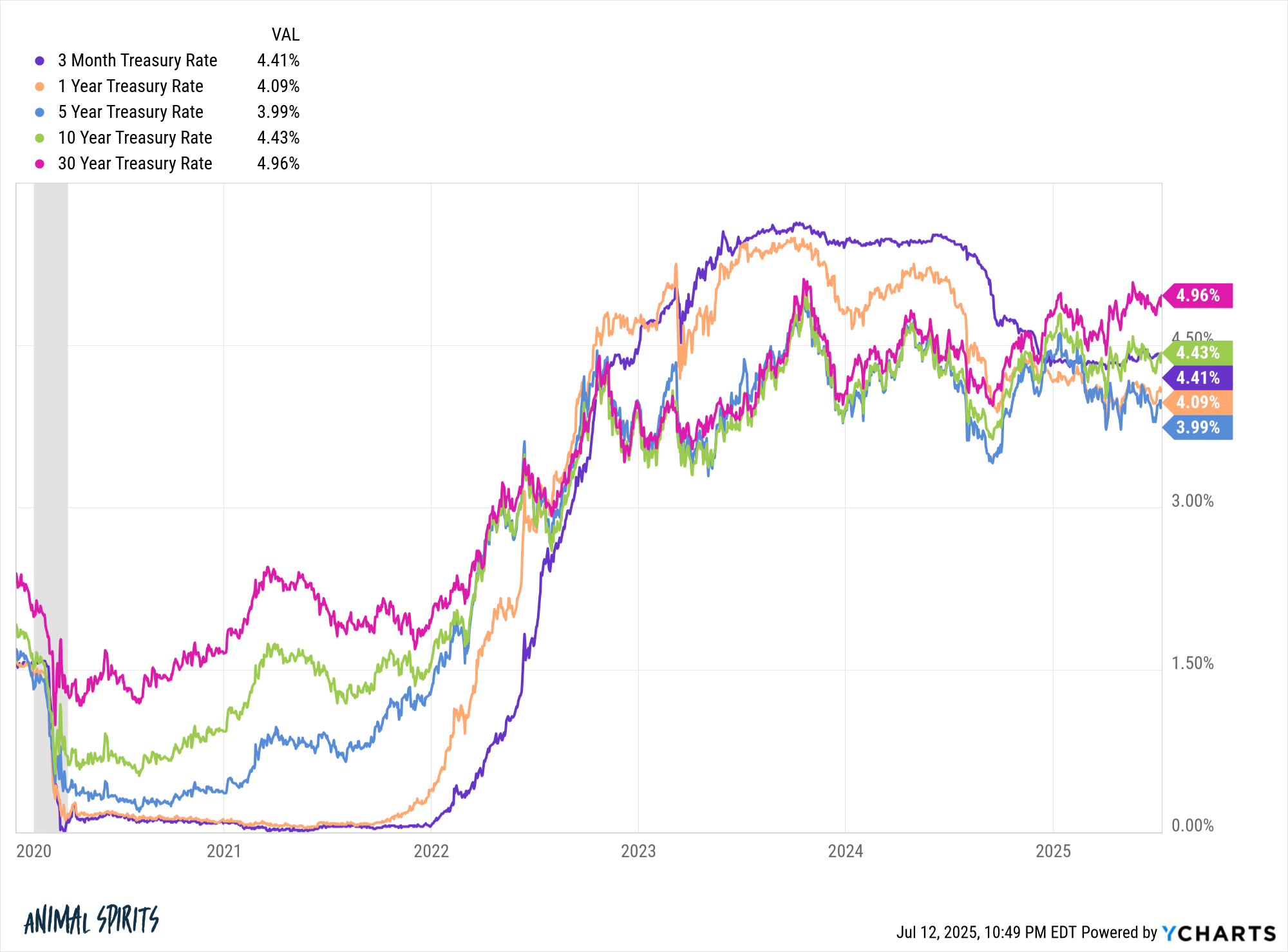
Bonds aren’t a screaming buy by any means but yields in the 4% to 5% range are much better than they were throughout most of the 2010s and early-2020s.
The first half of this decade showed some of the worst returns we’ve ever seen in bonds. Now that we’ve lived through that unpleasant period, expected returns are higher.
Sure, rates could continue their ascent and inflation could come roaring back. That would ding bonds again.
But starting yields are now much better than they were in 2020 so the remainder of the decade should see much better returns from here.2
Further Reading:
Is It Time to Lock in 5% Yields?
1Plus, most investors in long-term Treasuries are pensions, insurance companies and yield speculators.
2Let’s say annual returns for the 10 year are 4.5% for the remainder of the decade, which is close to the current yield. In that case the entirety of the 2020s would be an annual return of around 1% per year.