Boy that escalated quickly.
Thursday was a pretty nasty day in the stock market, especially in the tech and AI names.
The S&P 500 fell more than 4%. The Nasdaq 100 dropped 5.5%. Emerging markets slid 6%. Semiconductor stocks plunged more than 11%. South Korea was down almost 14%.
All of this in a single day!
Not all drawdowns are created equal in times like these.
Take a look at the drawdowns from recent highs in a host of different markets, sectors and countries through the close on Thursday: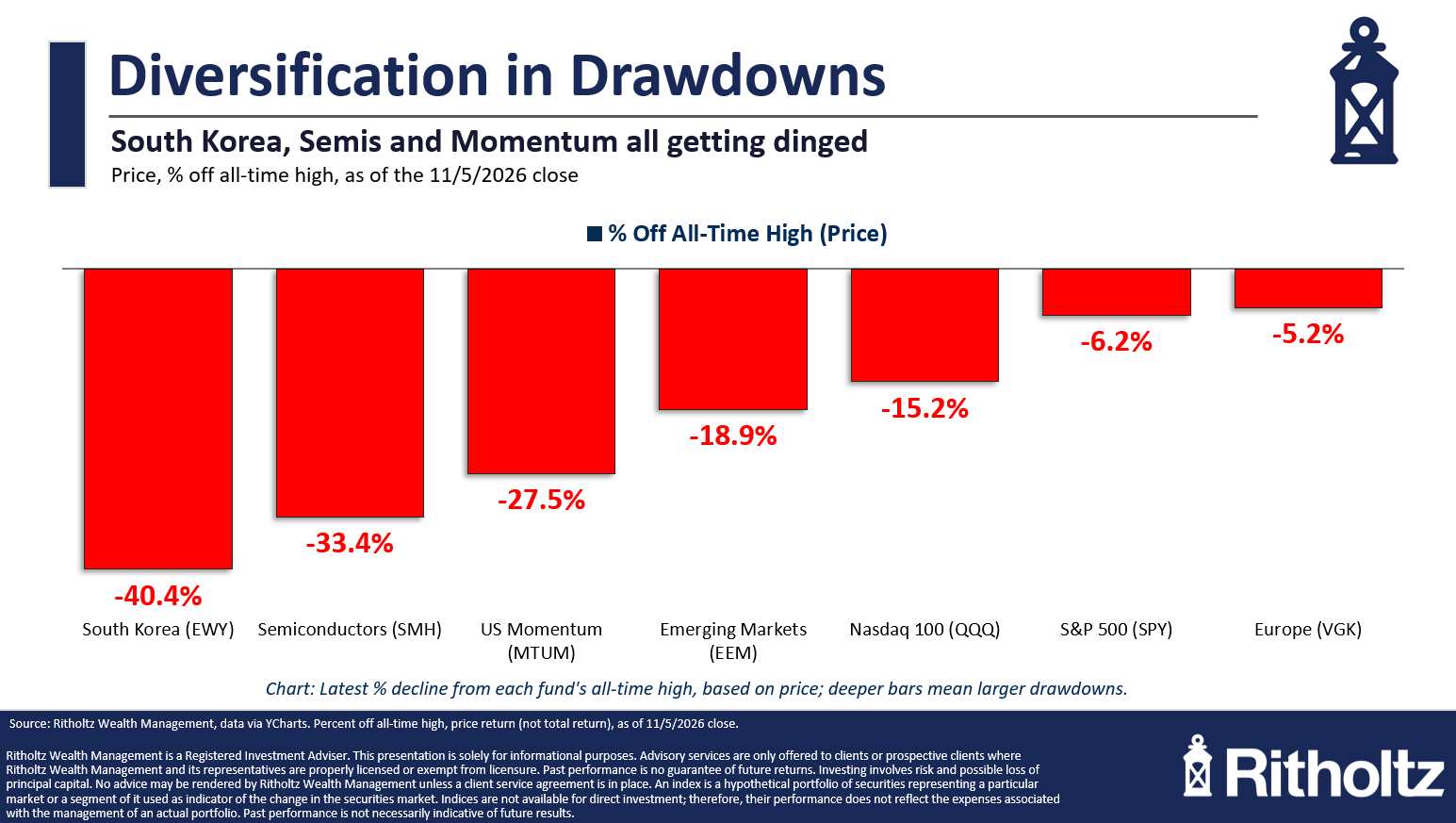
Momentum names have experienced some wild volatility this year. Big gains, big losses, multiple cycles in some of these market segments.
It makes sense that the areas of the market that experienced large gains are now experiencing large losses. It comes with the territory. No pain, no gain and all of that.
But look at the S&P 500. It was down a little more than 6% in total despite the biggest, most important sector getting taken to the woodshed.
The drawdowns in the S&P sectors tells the story here:
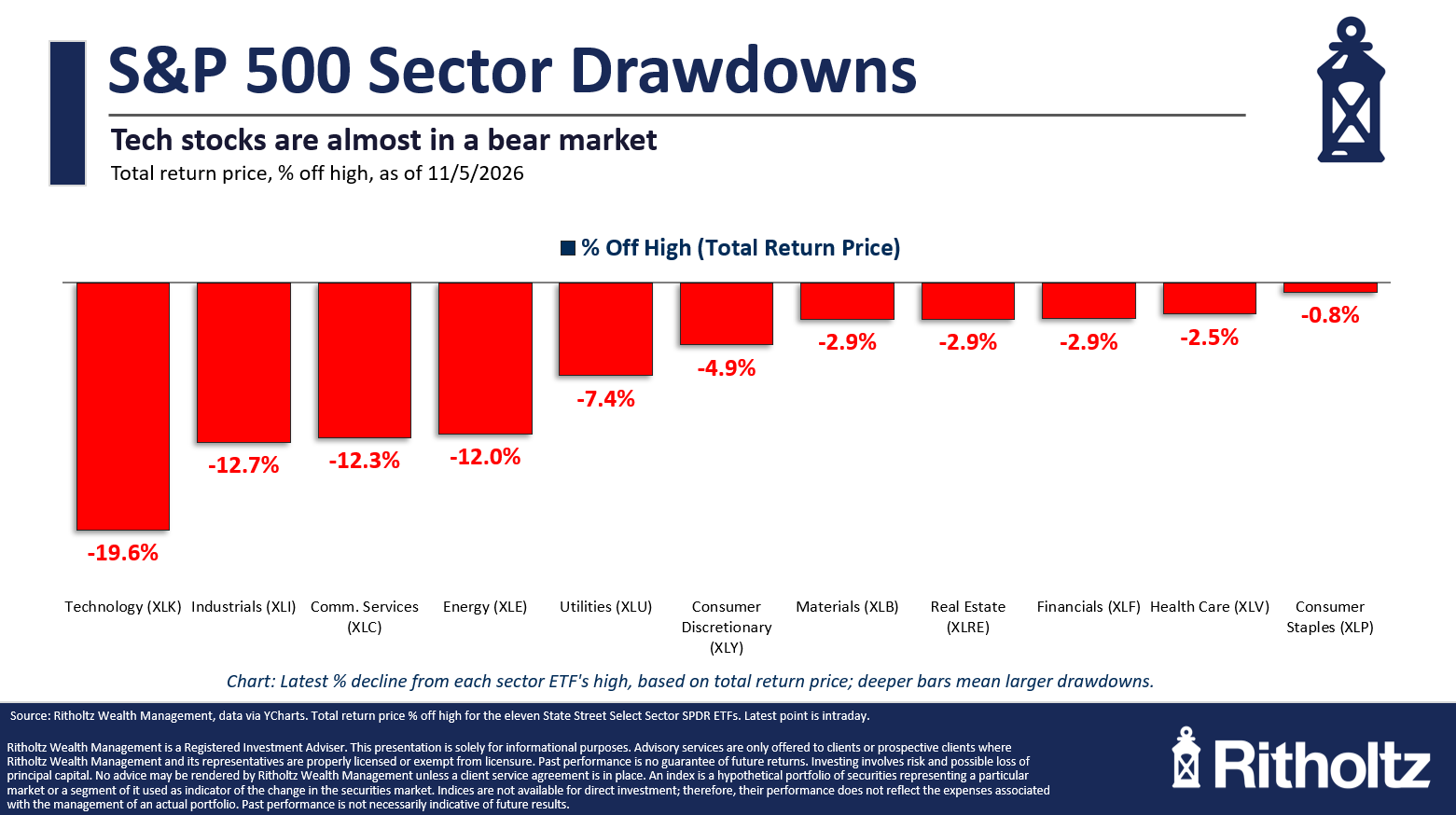
Tech is almost in a bear market. Industrials, communication services and energy stocks are all in double-digit drawdowns.
But materials, real estate, financials, health care and consumer staples are all down less than 3%. The other parts of the market are helping keep the tech damage to a minimum.
Diversification to the rescue.
I have always been an advocate for index funds but I’ve been saying from the beginning of this AI cycle that indexing is the simplest way to play it.
Innovation booms are happening faster than ever and the markets are pricing in changing expectations at a blistering pace. You could be right about the fundamentals but wrong about the stocks because expectations get taken too far in either direction.
It’s impossible to know who the winners and losers will be from week-to-week as the technology, capex figures, regulatory environment and model capabilities change.
Just look at this chart of booms and busts in Meta’s share price: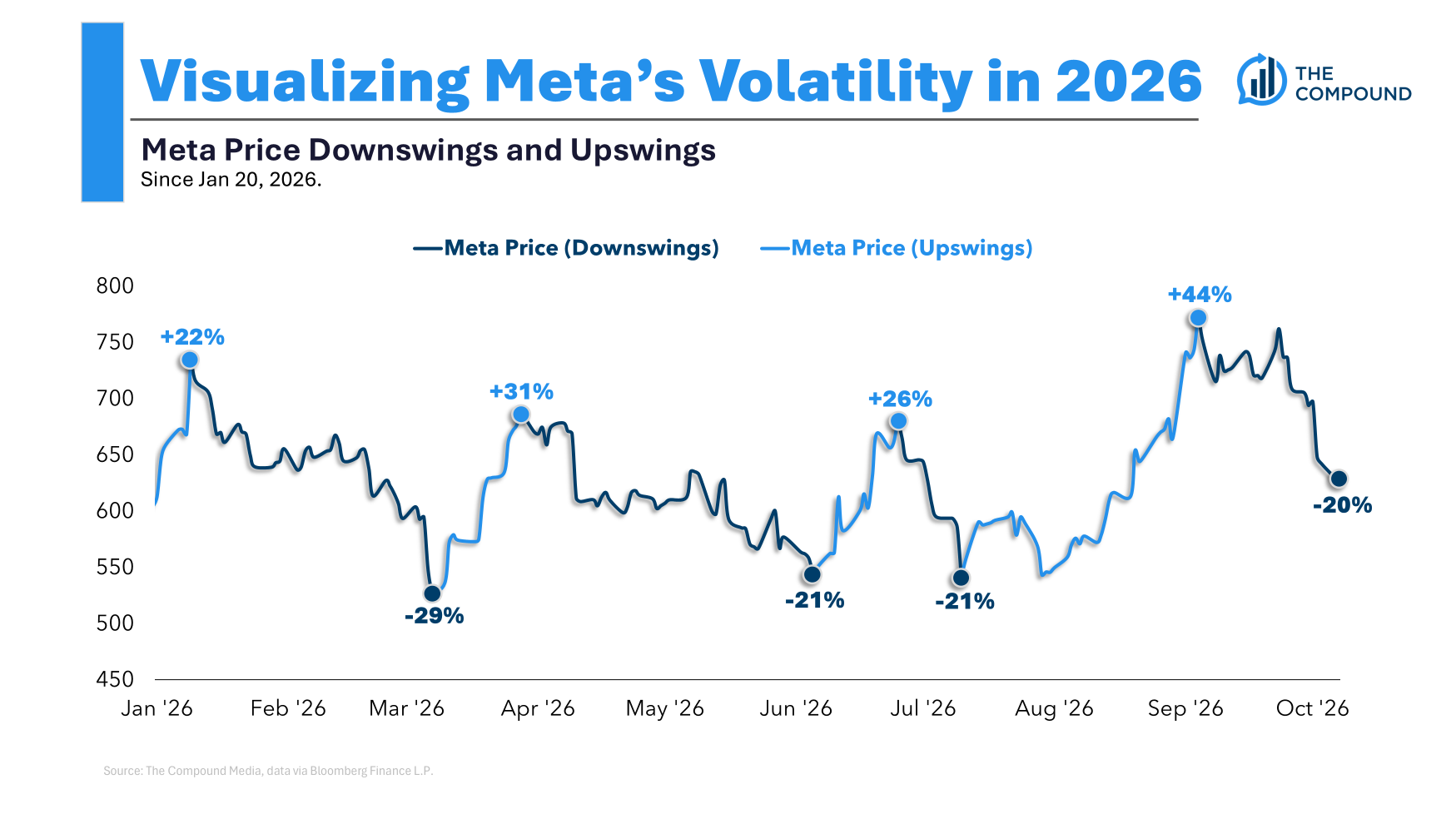
This isn’t a 5- or 10-year chart. This is just over the past 10 months!
It’s a bull market! It’s a bear market! They’re winning! They’re losing! They’re rising! They’re crashing! The re-pricing speed is insane.
Owning the S&P 500 or Nasdaq 100 won’t make you a hero but it does give you the best shot at owning the winners, whoever they turn out to be. That’s the beauty of index funds – they pick the winners for you.
Obviously, index funds are not immune from drawdowns. A bigger one will happen at some point.
This year is pretty tame in the context of historical volatility.
The average intra-year peak-to-trough drawdown for the S&P 500 since 1990 is -14%:
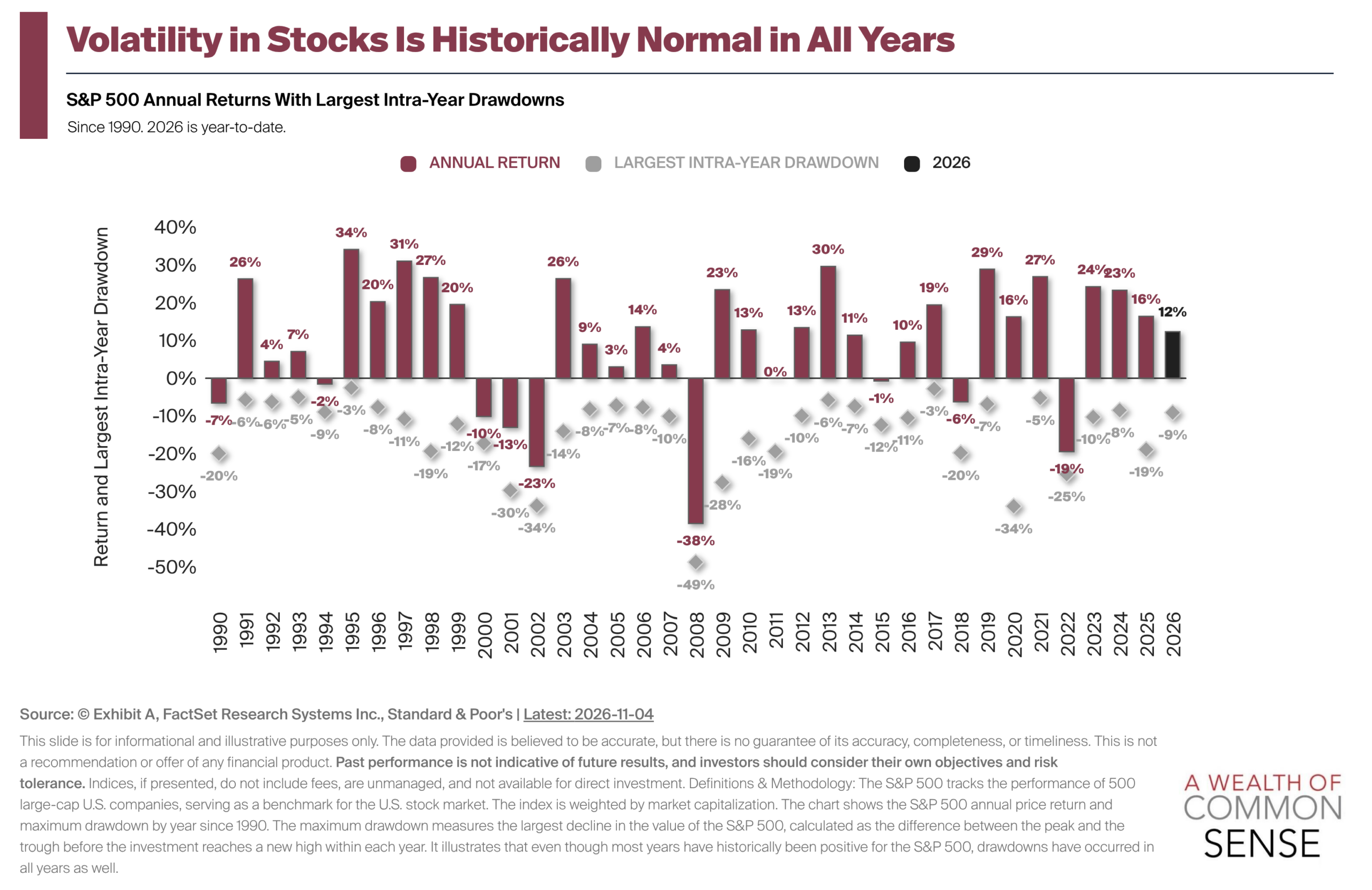
The S&P was down 9% when the war in Iran broke out. It’s only down 6% in the current downturn.
That’s merely a flesh wound.
Maybe this is the start of a bigger correction. Maybe the AI trade is going to blow up for real this time. Or maybe it’s already over. Who knows.
Long-term investors in stocks know that volatility, corrections and setbacks are a natural part of the investing process:
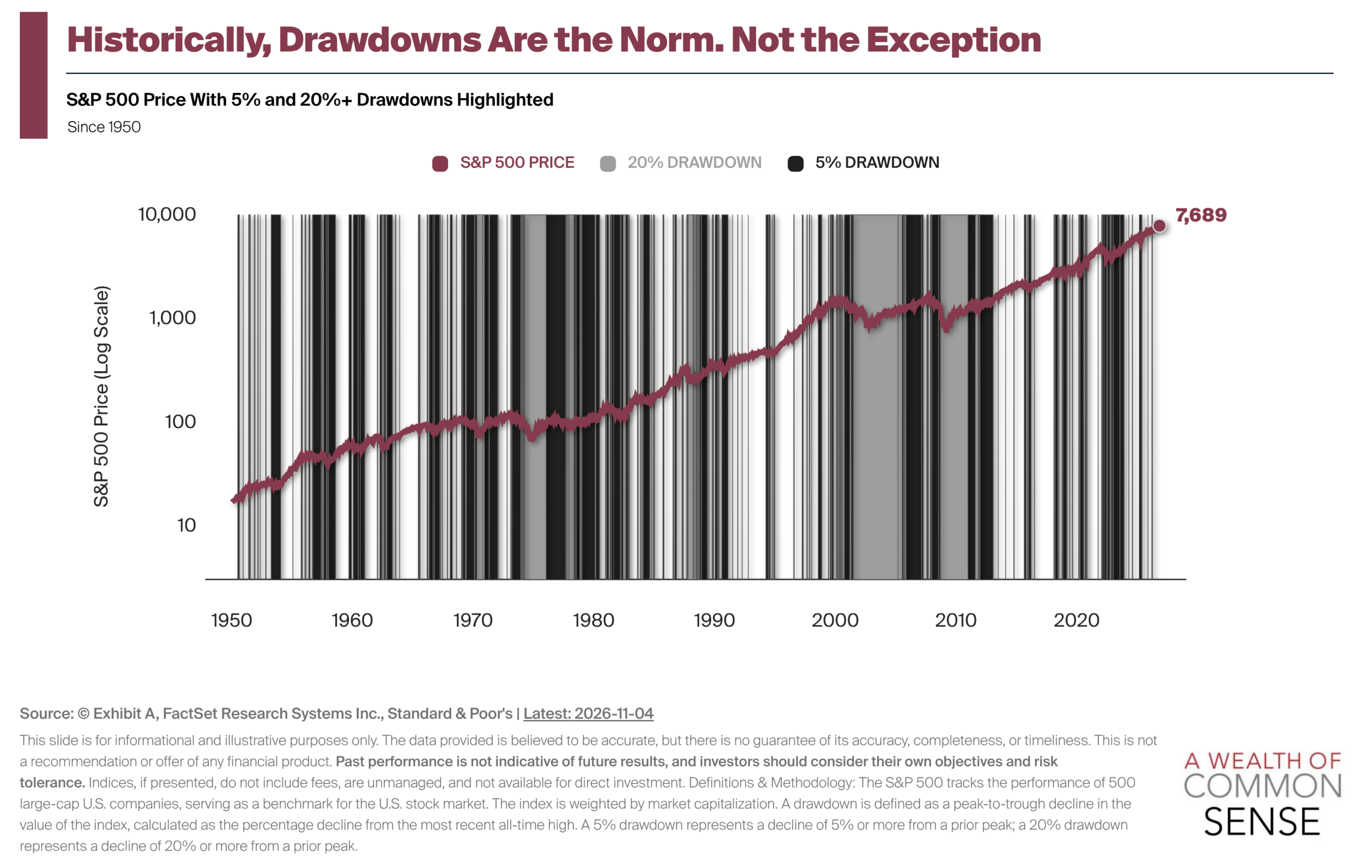
A bear market will happen again.
It will feel scary in the moment.
Stocks will bottom when everything feels the bleakest.
Then they will return to new all-time highs again.
You just can’t predict when this will happen.
But you can prepare for it.
Now is as good a time as any to reassess your pain threshold for losses.
Michael and I talked about AI stocks getting crushed, the benefits of diversification and more on this week’s Animal Spirits video:
Subscribe to The Compound so you never miss an episode.
Further Reading:
A Bloodbath in the Stock Market?
Books: