A reader asks:
The stock market feels unique or unusual because normally when bond yields spike so does the vix but this time the vix is declining. Do you agree with me that this stock market dynamic is unusual this time and what does it mean going forward?
This is a rational question.
Here’s the formula every single student gets taught in finance 101:
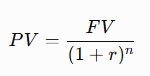
The present value (PV) of an asset is equal to the future value of cash flows (FV) divided by one plus the discount rate (r) taken to the number of periods (n).
If the interest rate goes up, the present value should go down. It’s math.
Alas, the stock market doesn’t always trade on theory and math.
This year the stock market is up double digits in the face of 10 year Treasury yields screaming higher by 30%.
It’s counterintuitive but most of the time when interest rates rise the stock market tends to perform just fine. And when rates are falling rapidly that can spell doom for the market.
Why?
Rates usually rise when economic growth is higher. And the Fed typically cuts rates when the economy needs a boost.
In early-2021 people were becoming concerned about what all of the pandemic government spending would mean for rates and inflation. I wrote a piece for Fortune at the time saying inflation was a much bigger risk to the stock market than rising rates.
Here’s a table I created at the time that shows historically the stock market handles higher rates just fine most of the time:
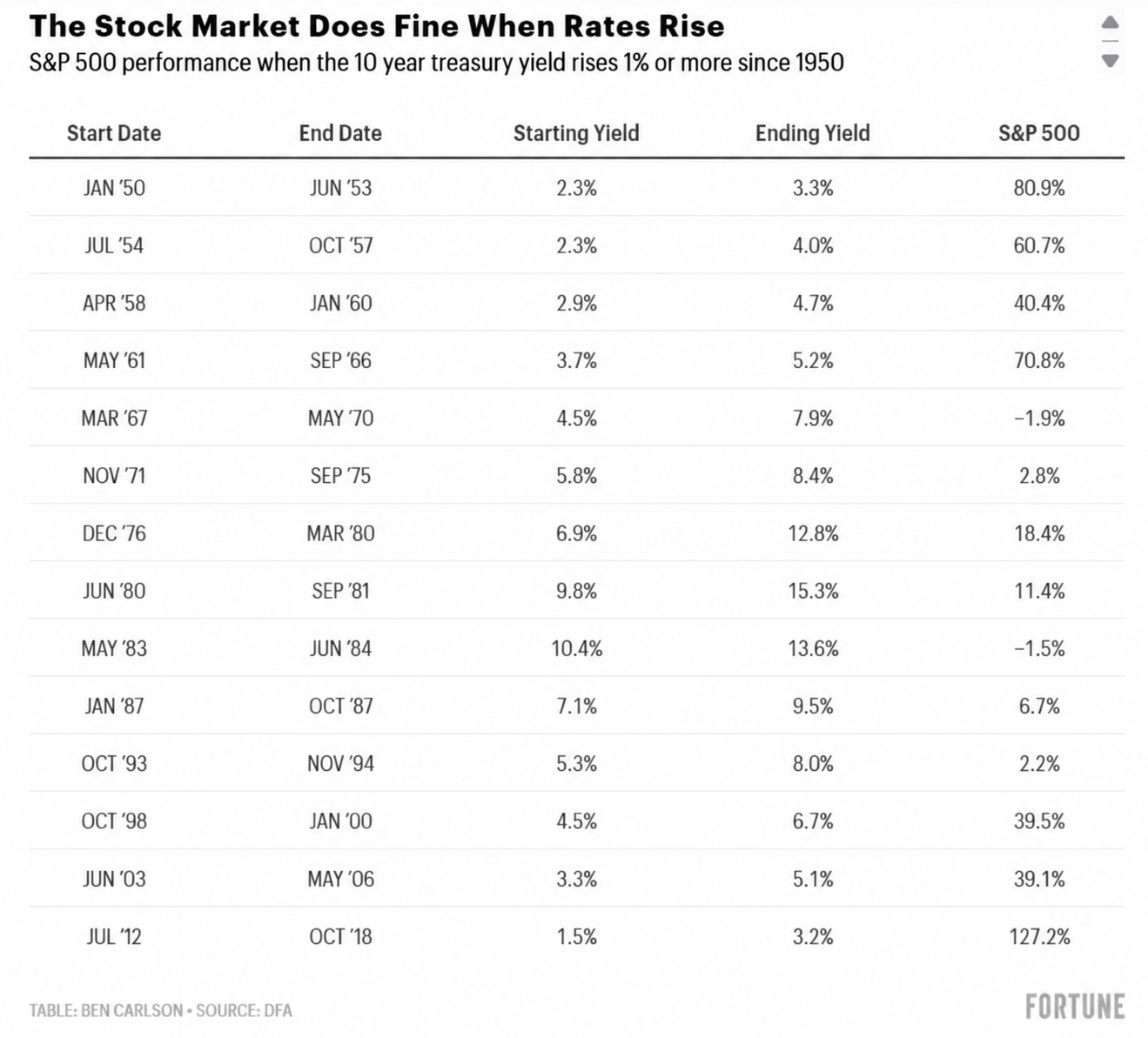
In 12 out of the 14 times the 10 year Treasury rose 1% or more, the stock market was positive over the entire period. There was some volatility along the way in some case but for the most part the stock market swallowed those higher rates.1
In that piece I wrote, “Inflation is far more important to stocks than interest rate levels.”
Well, in 2022 we got both high inflation and rising interest rates and the stock market fell 25%. This is why there are no iron laws when it comes to the markets. Sometimes you get elevated volatility from rising rates but that’s not always the case.
Inflation is not nearly as high today as it got in 2022. We’ve gone from 2.4% right before the onset of the war to 3.4% in the latest reading.
But economic growth is much stronger now than it was in 2022. The AI capex boom shows no signs of slowing down. The labor market is improving. But also the war in Iran has caused energy prices to spike which has reignited inflation fears.
And yet the stock market remains undeterred.
It helps that earnings growth has been so strong this year. You could make the claim that rising interest rates are one of the main reasons multiples have decreased this year despite such high growth in earnings:
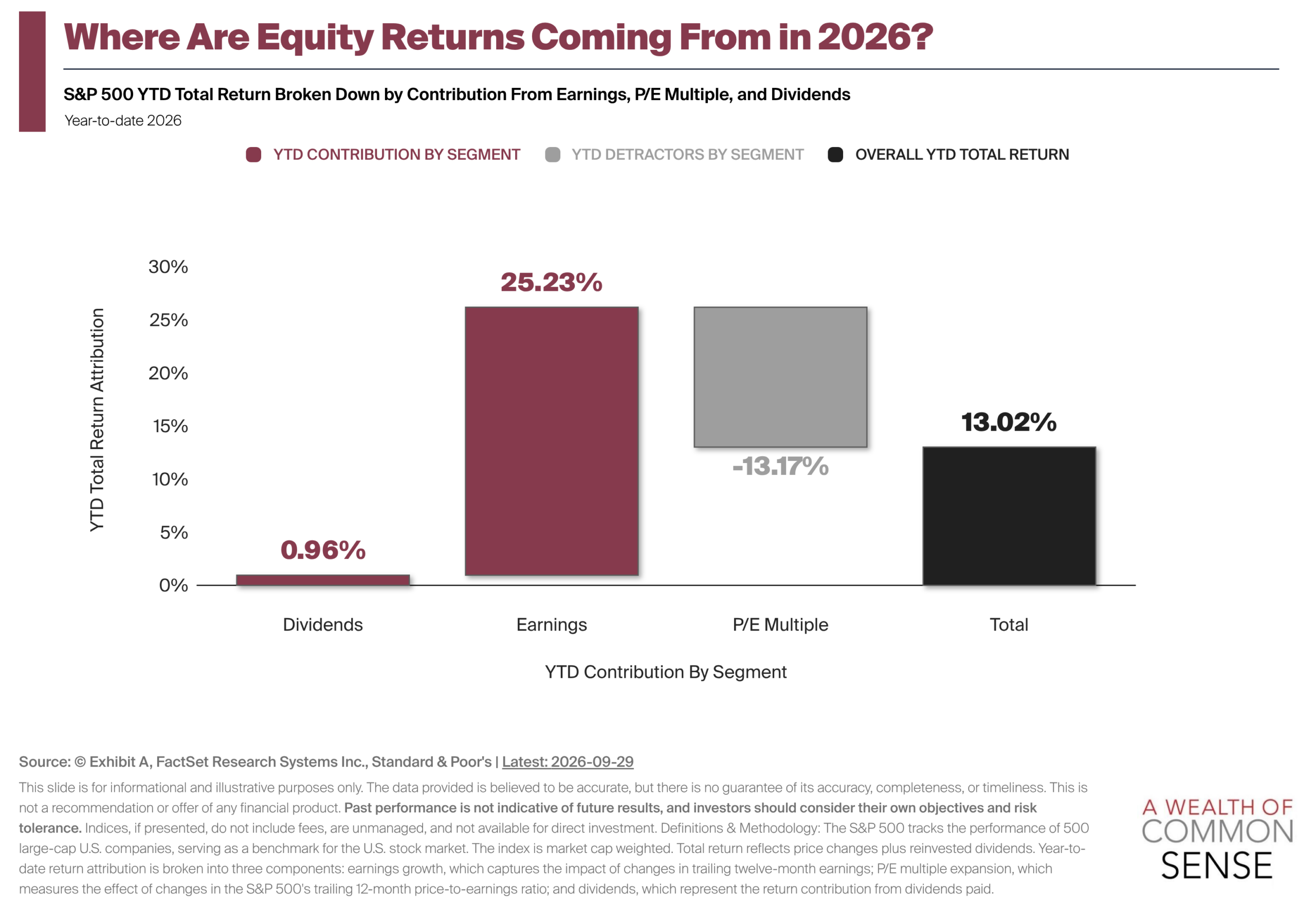
Prices aren’t falling but valuations are.
So you can’t simply look at interest rates in a vacuum. Context is required, as always.
Assuming profits continue rising, it’s hard to see a good reason for the stock market to sell off.
However, at a certain level of rates there is more competition from bonds in terms of asset allocation decisions. You can now earn 5-7% in various fixed income strategies. If rates keep moving higher there are going to be investors who have no choice but to take some money off the table from stocks and re-allocate into fixed income.
That could certainly cause some equity volatility.
If inflation gets too high that would be concerning for the stock market as well. This was also in that Fortune piece I wrote before inflation hit in 2022:
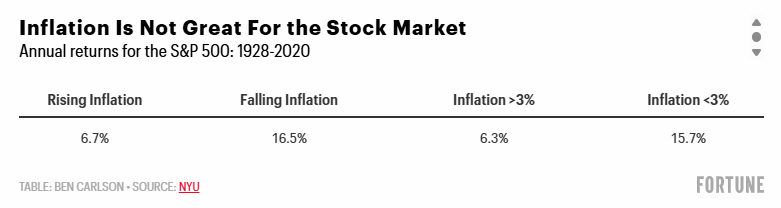
A little inflation isn’t a bad thing. A lot of inflation could spell trouble.
So there is obviously a point at which rates will cause volatility in stocks.
Where is that level?
I don’t know.
We discussed this question on an all-new episode of Ask the Compound:
Jonthan Novy joined us this week to answer questions about life insurance, long-term care insurance, bear markets, 0% credit cards and wages vs. consumer sentiment.
Further Reading:
The Psychology of Inflation
1The stock market also experienced some unpleasantness at the end of some rate increases like in 1987 and 2000.