The big risk in the markets rarely comes from the place where everyone is looking.
You often don’t see where it’s coming from.
Right now everyone is well aware of the biggest risk — it’s AI by a mile.
It checks all the historical boxes of a capex boom that ends in a bust.
Allow me to count the ways in chart form.
The Financial Times has some good charts that put this into both current and historical context.
Look at this spiderweb of interconnected hyperscalers building the AI infrastructure:
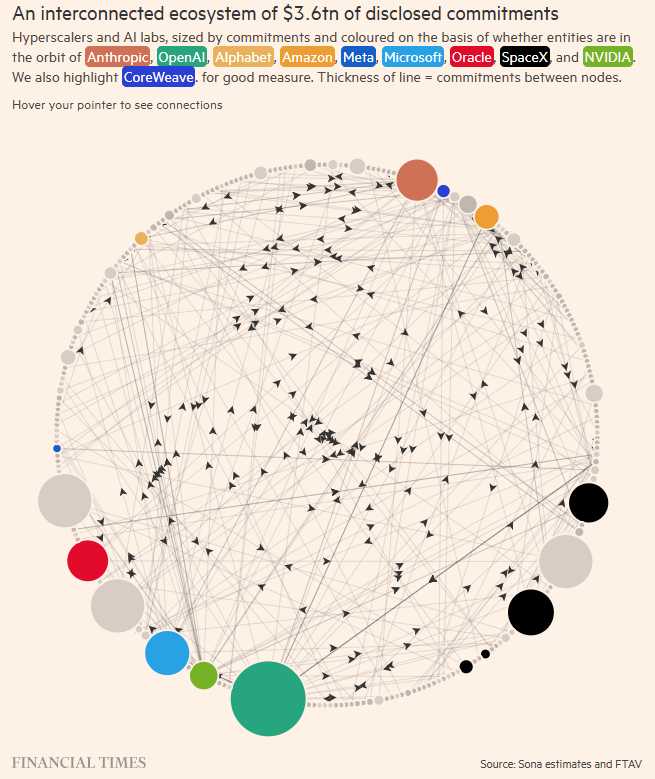
My back-of-the-envelope math says these companies are collectively worth something in the range of $22-25 trillion.
And they all have different deals, relationships or ownership arrangements with one another. They’ve all jumped out of the plane holding hands with no parachutes. A number of these CEOs have said going too small is a bigger risk than going too big.
They’re all in.
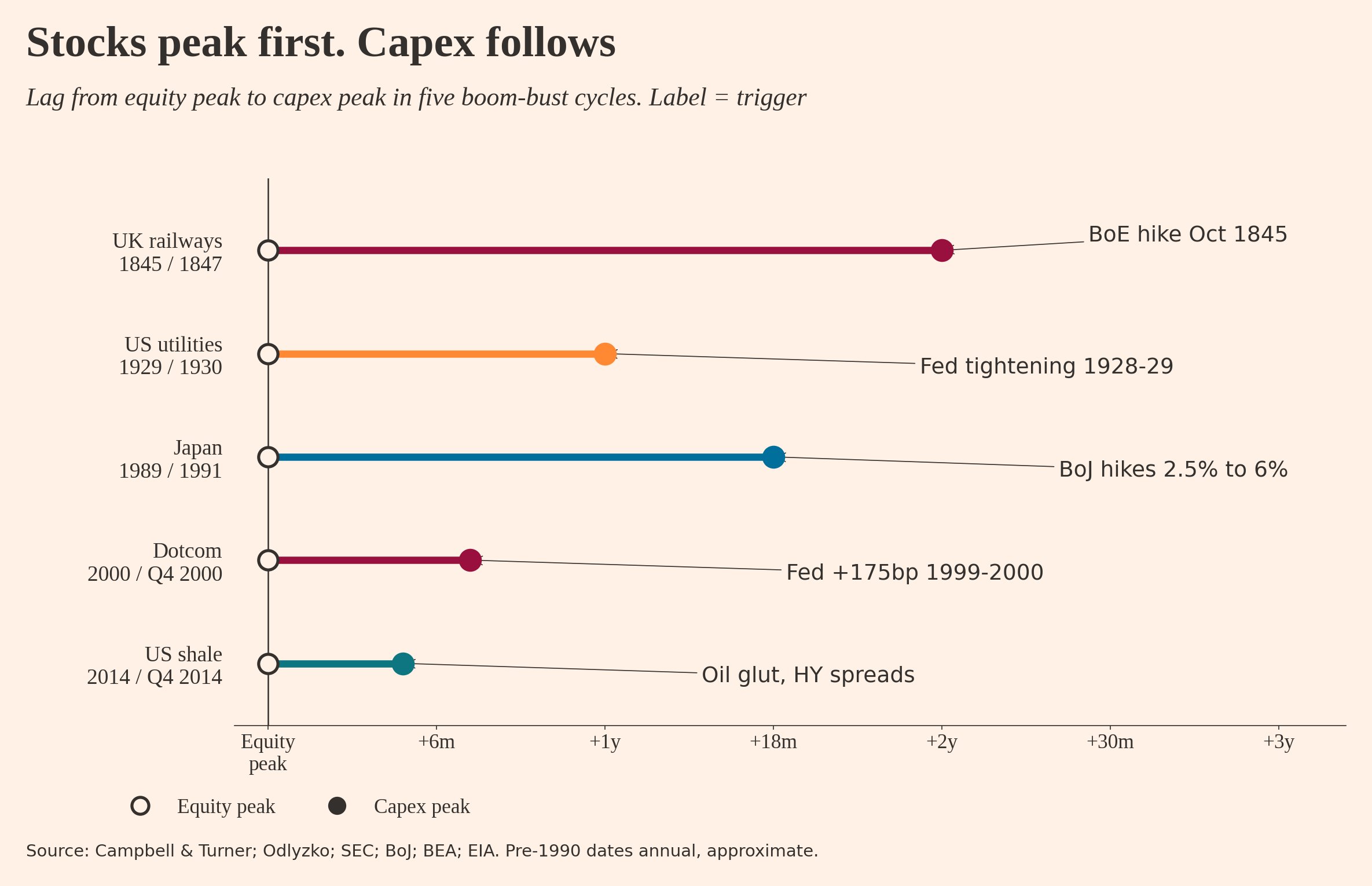
This is a cool historical chart that shows how the stock market typically peaks well before capex spending slows down in many of the biggest booms:
Now here’s how the dot-com capex boom lines up with today:
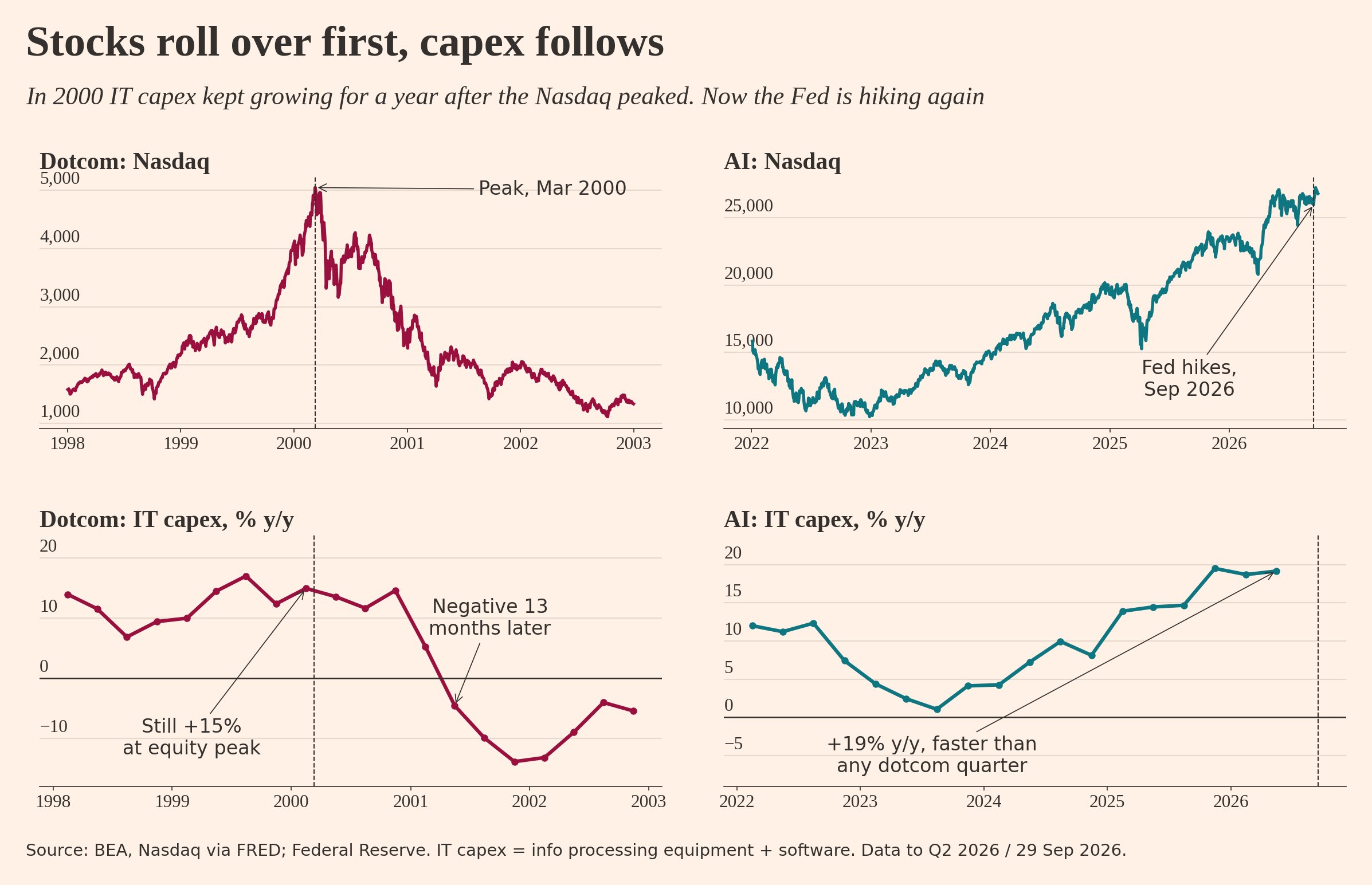
The stock market is not all knowing but it is forward looking. It’s quite possible the market will peak well before the AI spending binge is done with.
Everyone is worried about these risks because the sheer size of these companies is staggering.
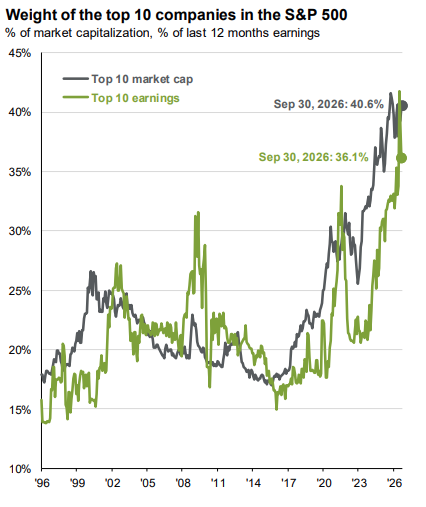
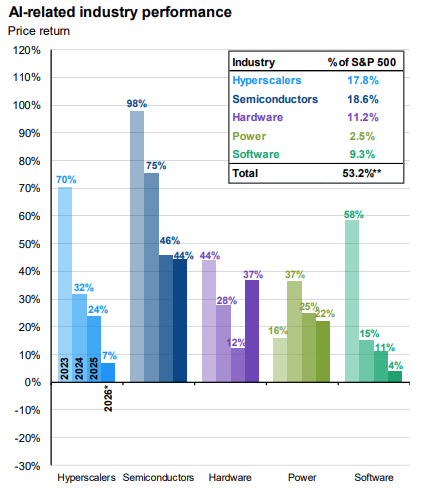
JP Morgan has some charts that make this apparent.
The biggest companies are now far bigger than they’ve been in the past 40+ years:
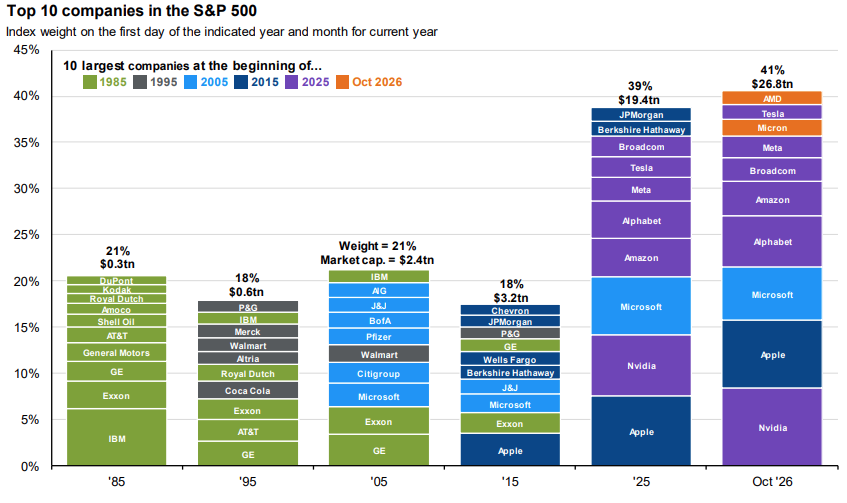
It’s also dominated by tech companies and not super diversified.
The top 10 companies in the S&P 500 not only have an outsized share of market cap, but they make up most of the profits too:
AI-related stocks are now the majority in the S&P 500 across the various sectors:
The amount of spending that’s already taken place and what’s estimated going forward is one of the largest concentrated bets in history:
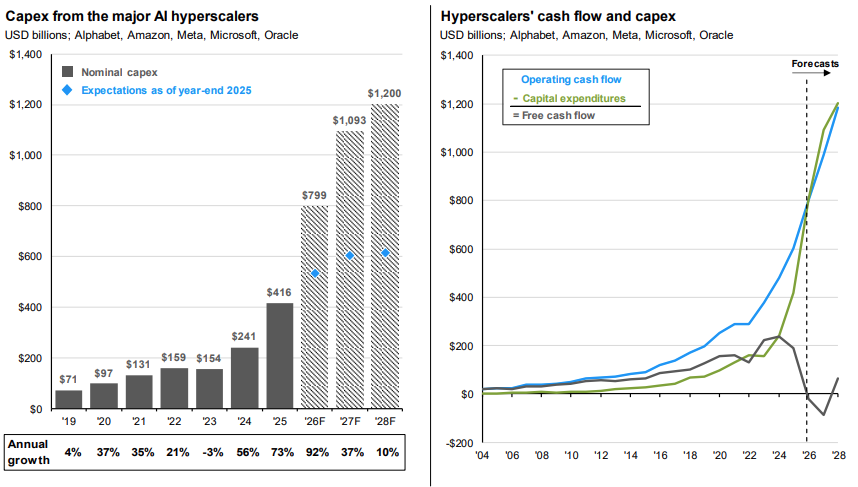
Trillions are being thrown around like it’s nothing. It’s hard to wrap your head around numbers this big.
And while the hyperscalers were funding this buildout from their massive free cash flows at the outset, the investments are now so big that they’re beginning to take on debt.
Vanguard has some charts on how this debt is increasing in both amount and as a share of the debt markets:
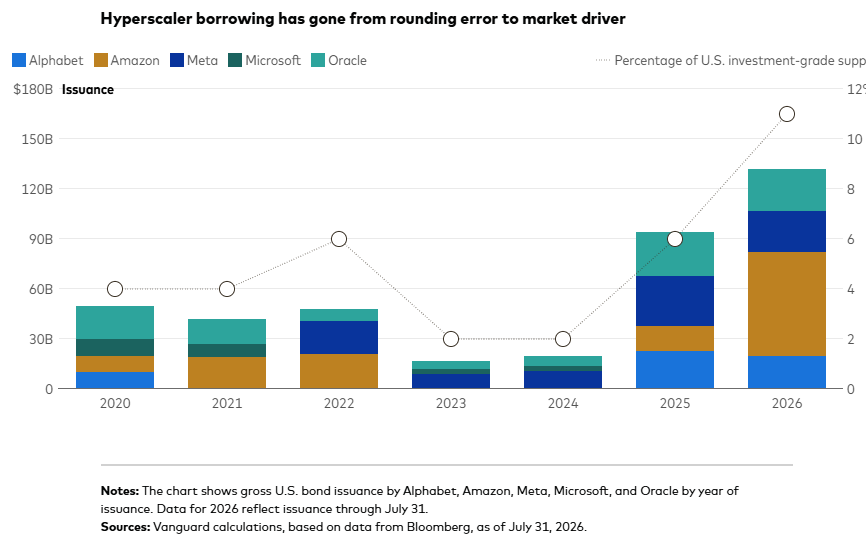
It looks like a lot more debt is coming:
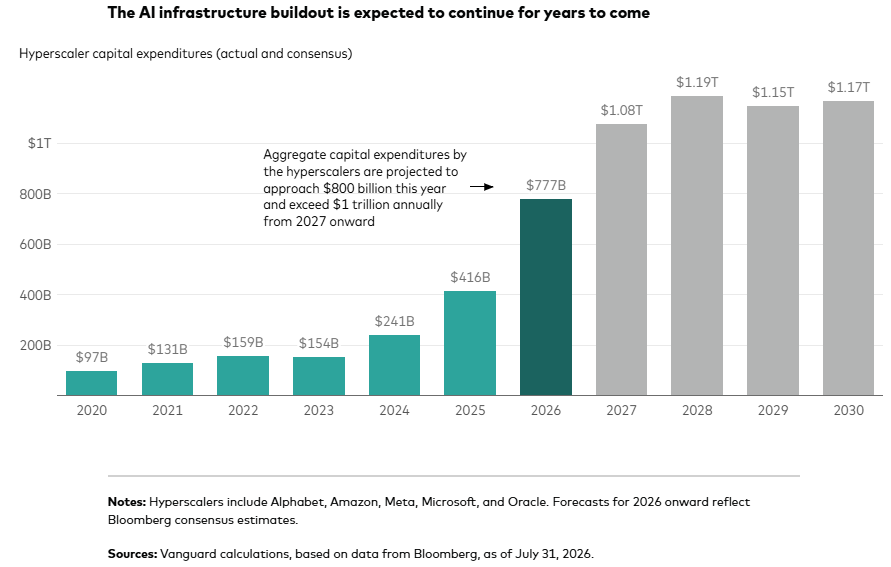
The spending mixed with the increased debt loads is what most people are worried about. Even if AI does everything our tech overlords are promising for productivity (not human extinction) all of the excitement and overzealousness seems likely to burst the bubble.
As someone who has studied history’s biggest booms and busts the current situation certainly makes me worry about the potential for this to end badly.
The biggest, most important AI stock in the world right now has to be Nvidia. The market cap of the company is now bigger than the entire stock market for most countries at the moment:
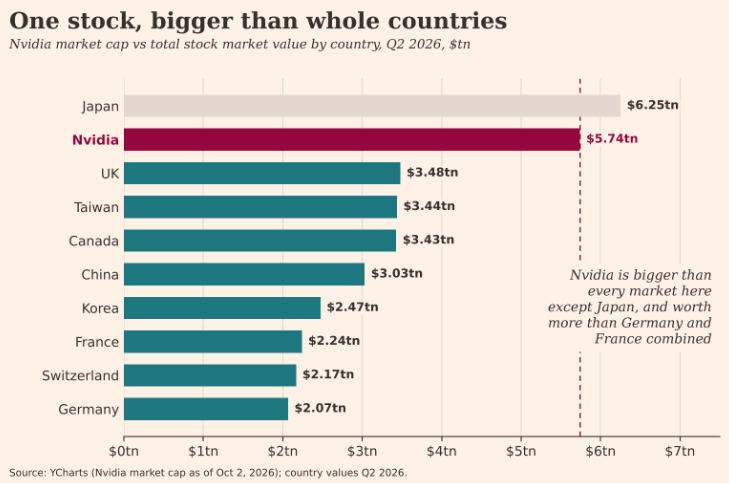
In a strange way, the fact that Nvidia is so big and so important helps makes the case against an AI bubble right now.
In fact, investors seem to be taking caution with the stock price right now. Seriously!
Look at this chart from Matt and team at Exhibit A:
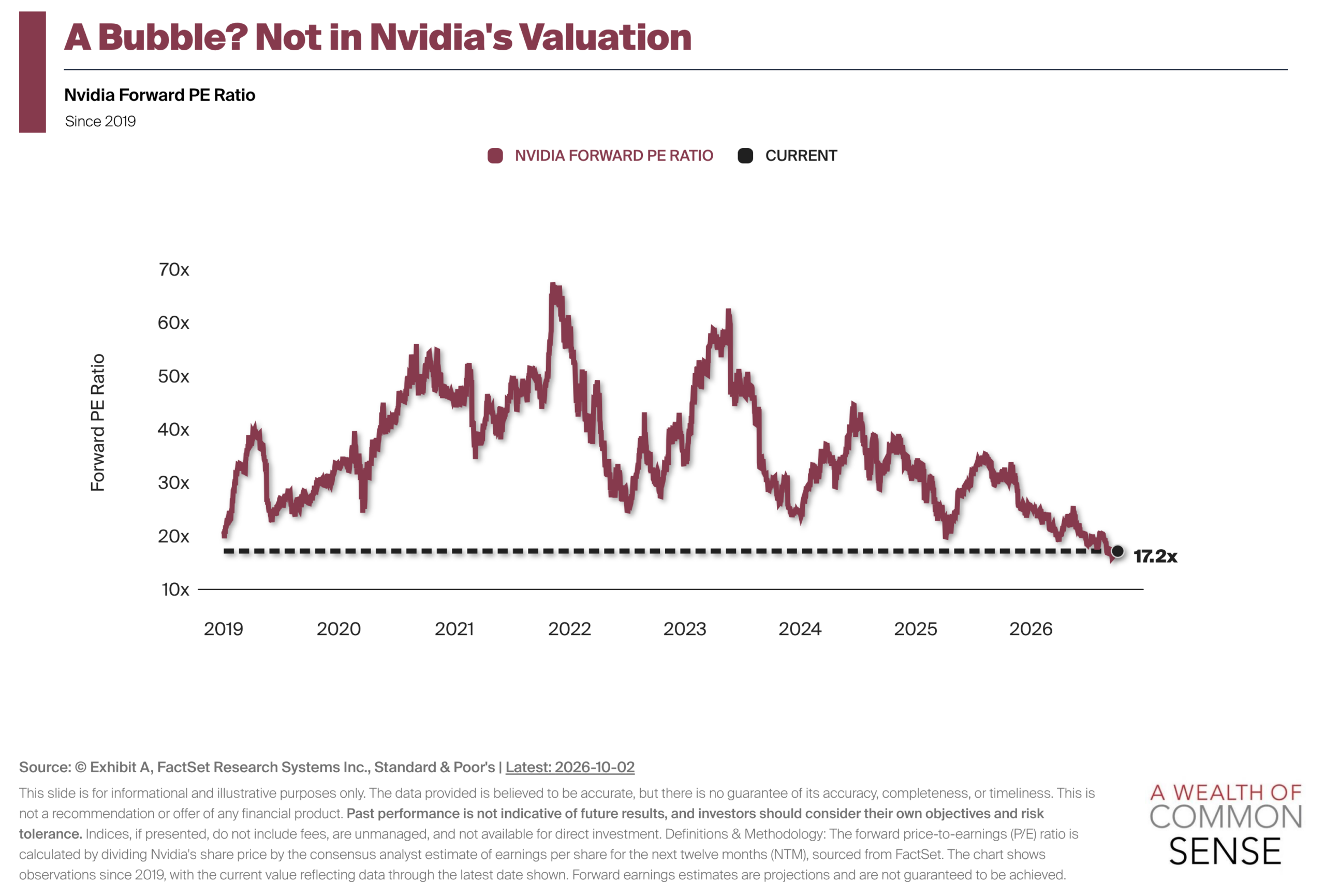
Nvidia valuations are falling! Everyone already know Jensen’s leather jackets are the best!
Forward PE ratios are now as low as they’ve been this entire decade. The profit growth is outstripping the share price growth.
That doesn’t feel like bubble behavior.
I’m torn on what’s going on right now.
I would love to pound the table and tell you this is absolutely a bubble that is going to pop or this is THE transformation innovation of our lifetime that will change everything.
Warren Buffett once said, “If past history was all that is needed to play the game of money, the richest people would be librarians.”
Sometimes the risks are obvious. Plenty of people were warning about the dot-com bubble and Great Financial Crisis.
Sometimes the risks are what happens after you have already worried about everything else.
Ever since the Great Financial Crisis people have been asking “What can go wrong next?”
No one really asks what can go right?
I suppose that is the nature of the finance business.
There are similarities and differences between every market cycle.
History feels like it might be rhyming more then ever today. It could also be the case that technology is speeding up everything about market cycles and this one will play out unlike the previous episodes.
It feels uncomfortable to say but the three most important words right now for every investors trying to handicap this market are:
1. I
2. don’t
3. know
Further Reading:
The Railway Bubble vs. the AI Bubble