These are strange times for the markets and the economy.
Mortgage rates are now over 7% again.
The unemployment rate is still just 4%.
Fixed income investors now have 5% high quality bond yields and 4% cash yields. Those yields have been rising at a rapid clip.
Consumers have been forced to deal with $100 oil and $5 gas prices.
That’s led to an inflation rate of 3.4%, much higher than the Fed’s target which is why they just raised rates.
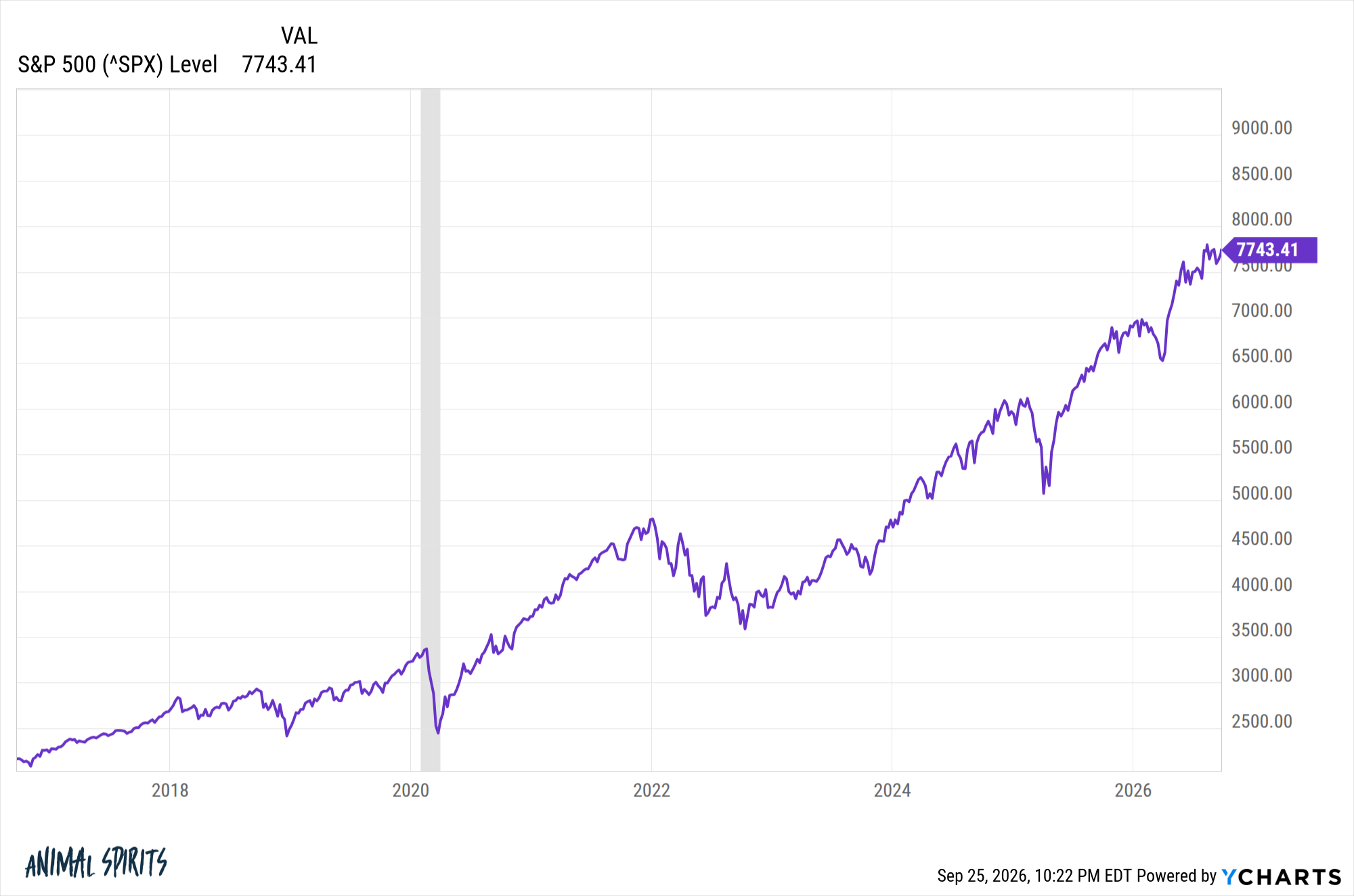
We’re basically at all-time highs in the stock market.
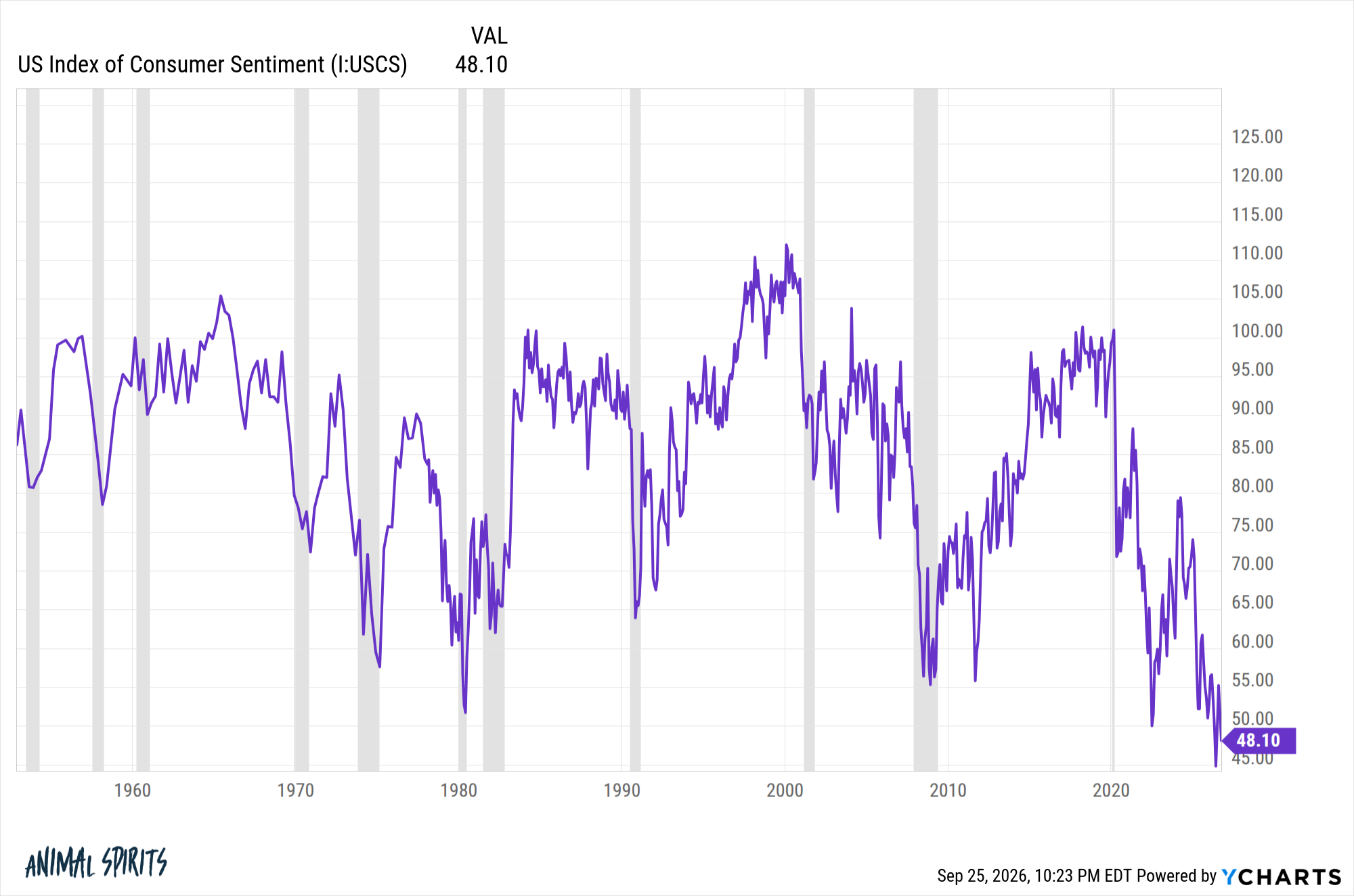
But consumer sentiment is about as low as it’s ever been.
There’s something for everyone right now.
The Fed is probably going to keep hiking interest rates because inflation is higher than they’d like and economic growth remains strong.
In fact, the Atlanta Fed model is now forecasting real GDP growth of 5% for the third quarter:
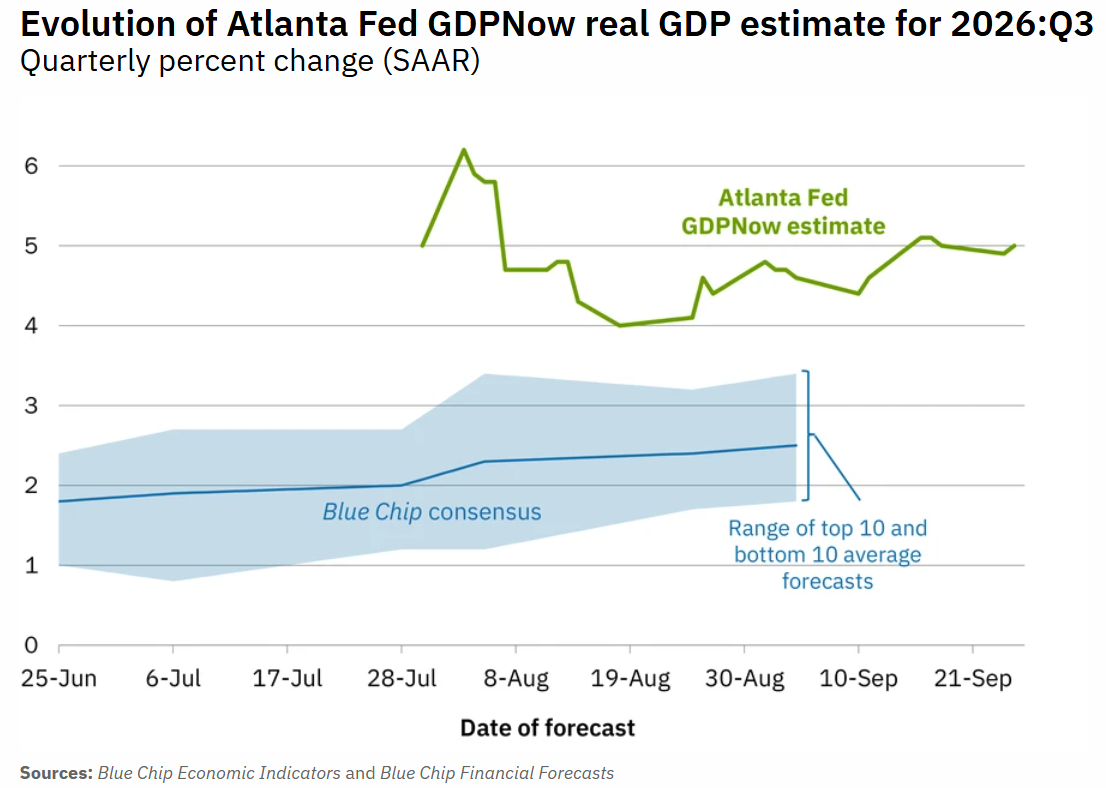
I know you know this but real means after inflation. This model might be wrong but the economy remains strong despite a multitude of worries from people who worry for a living.
But raising short-term interest rates isn’t going to stop the war in Iran to bring energy prices back down. And I’m not sure how much it’s going to slow hyperscaler spending on AI, which The Wall Street Journal now calls one of the biggest bets in economic history:
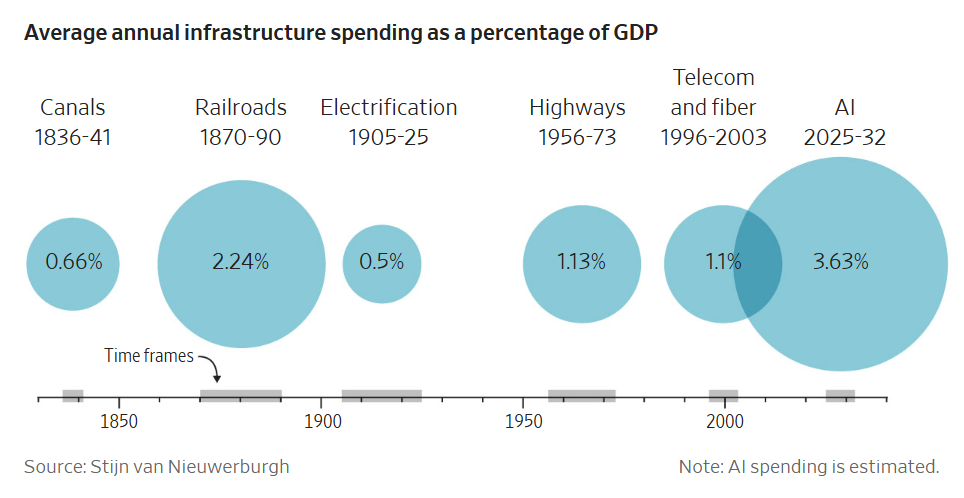
Can the Fed slow spending on the AI buildout by raising rates? At a certain point, yes. I’m just not sure what that level is.
It’s possible inflation will remain high for some time even if the Fed keeps raising rates because of the war and AI capex binge.
The labor market is also in an odd place. If anything, the labor market is improving. In the past year, initial unemployment claims are down 12%. Continuing claims are down 11% in the last 12 months.
Fewer people are filing for unemployment plus wage growth is accelerating for lower and middle class workers:
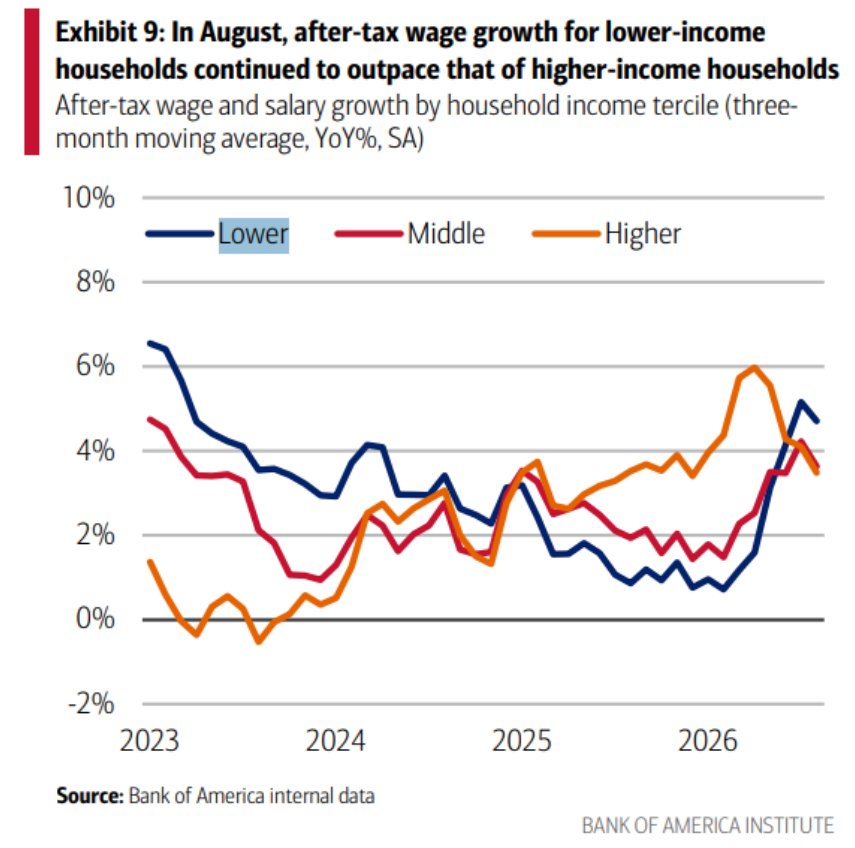
This labor market improvement happening when the unemployment rate is already low. And in the face of fears that AI will take a bunch of jobs. Just like no one predicted!
The extremes we’ve witnessed in the economy and markets has been fascinating to watch.
During the Covid panic in March 2020, these were the Treasury yields at various maturities:
- 30 year – 1%
- 10 year – 0.5%
- 5 year – 0.5%
- 2 year – 0.4%
- 3 month – 0%
Fixed income more or less paid no income.
Now look at where yields stand:
- 30 year – 5.5%
- 10 year – 5.2%
- 5 year – 5%
- 2 year – 4.9%
- 3 month – 4.2%
Rates have moved up in a hurry. The 10 year Treasury yield was briefly lower than 4% before the war. Not anymore.
Finance theory would tell you rising interest rates should be bad for risk assets, especially long duration securities like stocks. You know hurdle rates, present value calculations and such.
Well, markets don’t always care about finance theory.
If you start from the absolute bottom in the 10 year Treasury yield on March 9, 2020, rates have gone from 0.5% to 5.2%.
From the lows in yields, despite a massive increase in rates, the S&P 500 is up nearly 210% in total or 18.8% annualized in that time frame. Even with 4% annual inflation in that time, that’s a real return of almost 15% annualized.
Yeah there was a bear market in 2022 but the returns for stocks during a rapidly rising interest rate environment have been spectacular.
It helps that the government spent a little bit of money, AI bailed out the stock market and we’ve had one of the biggest tech bull markets of all-time.
Of course, long-term bonds have gotten absolutely destroyed by rising rates. Long bonds are in the midst of a nasty lost decade:
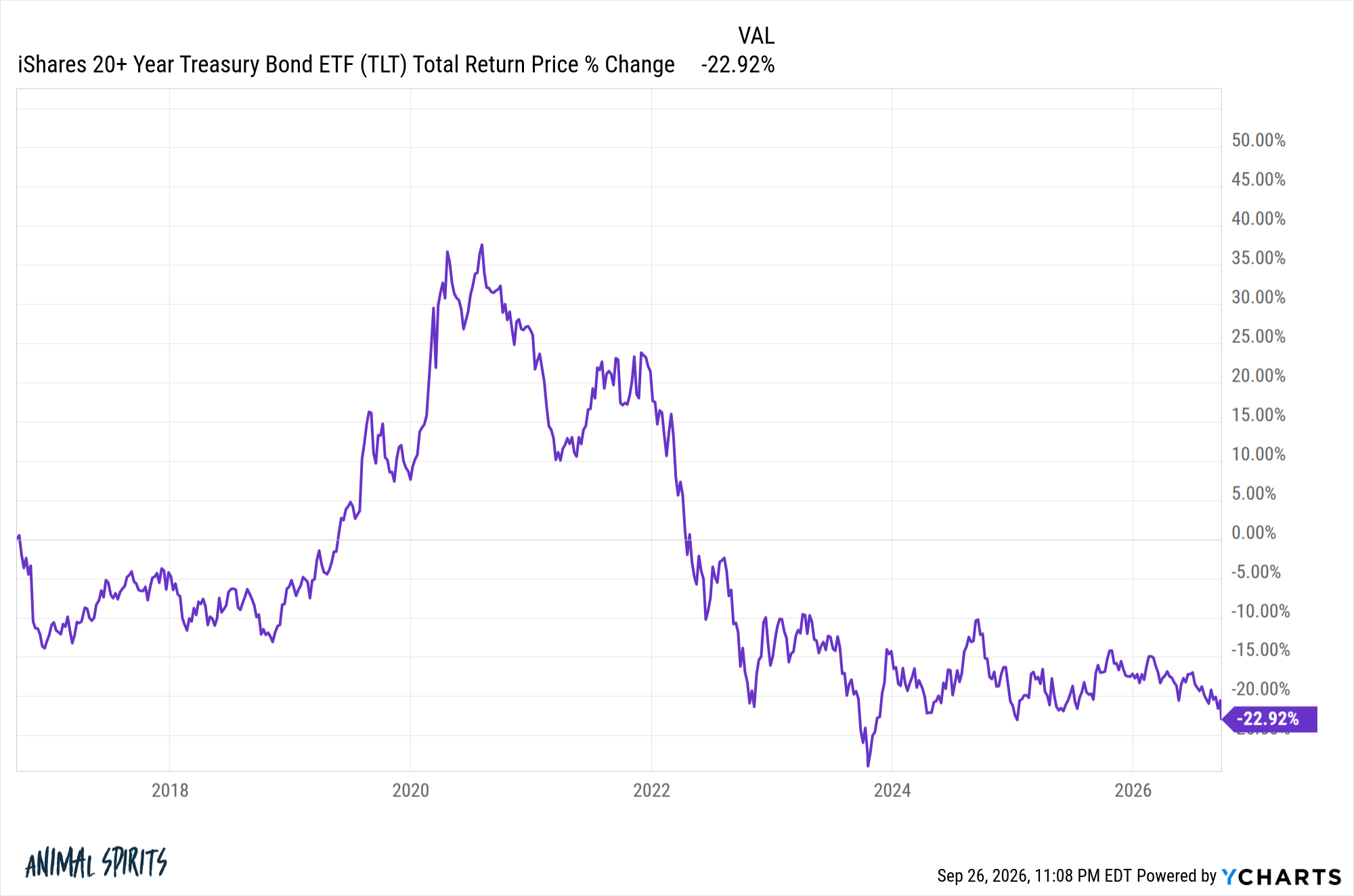
And this includes the income portion of the bonds.
Some things make sense right now. Some things don’t seem to make any sense at all.
Charlie Munger once said, “If you’re not confused, you don’t understand what’s going on.”
Things are very confusing at the moment.
This now feels like the natural state of the world.
Further Reading:
Now THIS is a Bull Market