A reader asks:
Ben, curious to know what your thoughts are on this chart from Visual Capitalist.
Here’s the chart in question:
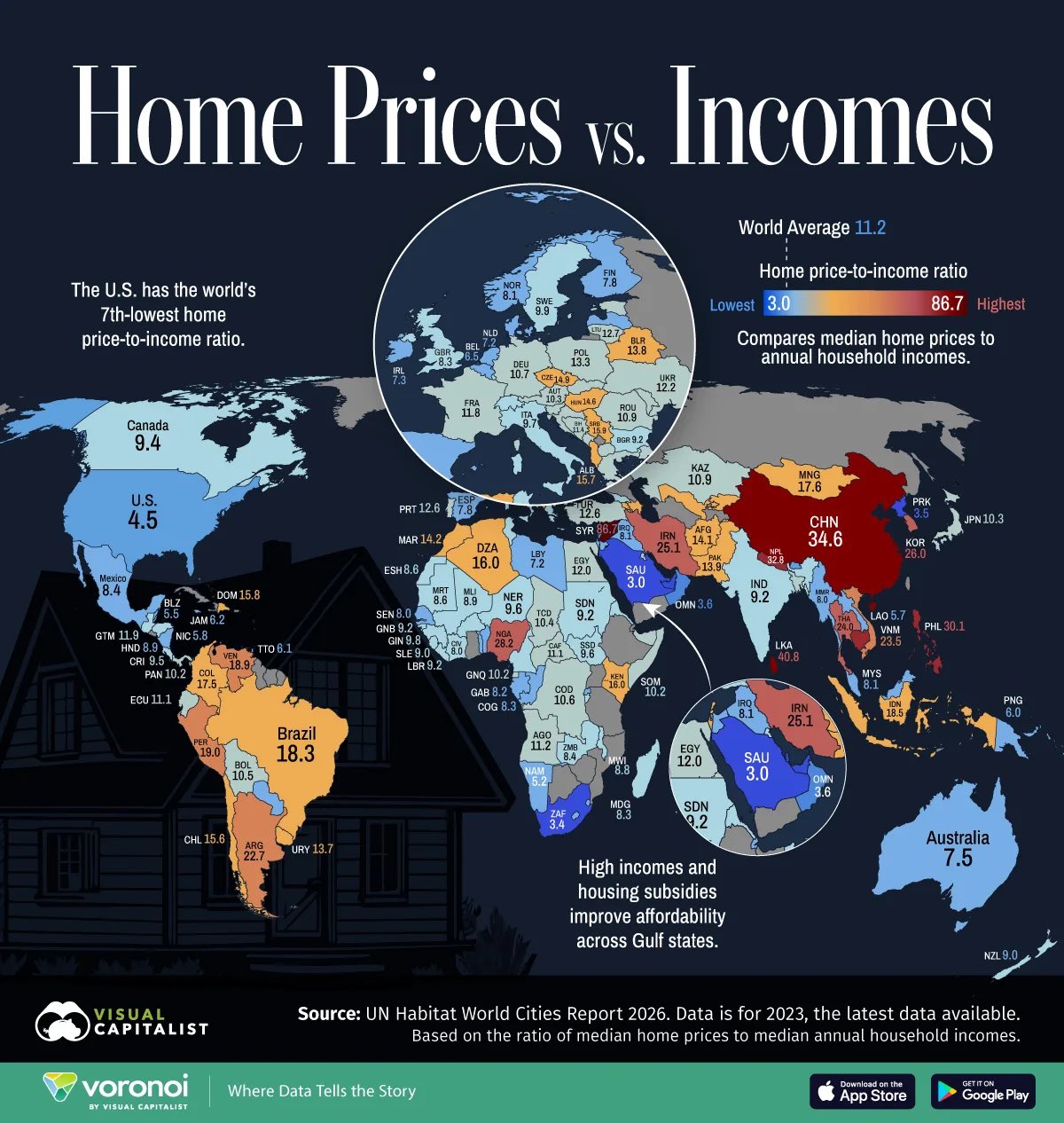
It shows the home price-to-income ratio across countries around the globe.
One thing becomes abundantly clear when looking at these numbers — housing prices are more expensive in most other parts of the world.
In fact, the U.S. has the 7th lowest price-to-income ratio in the world.
The Dallas Federal Reserve has a database of housing prices and incomes for most developed countries going back to 1975.
I update this data regularly to track growth in inflation-adjusted housing prices and inflation-adjusted disposable incomes over the past 50 years or so.
Here’s the latest update for the United States:
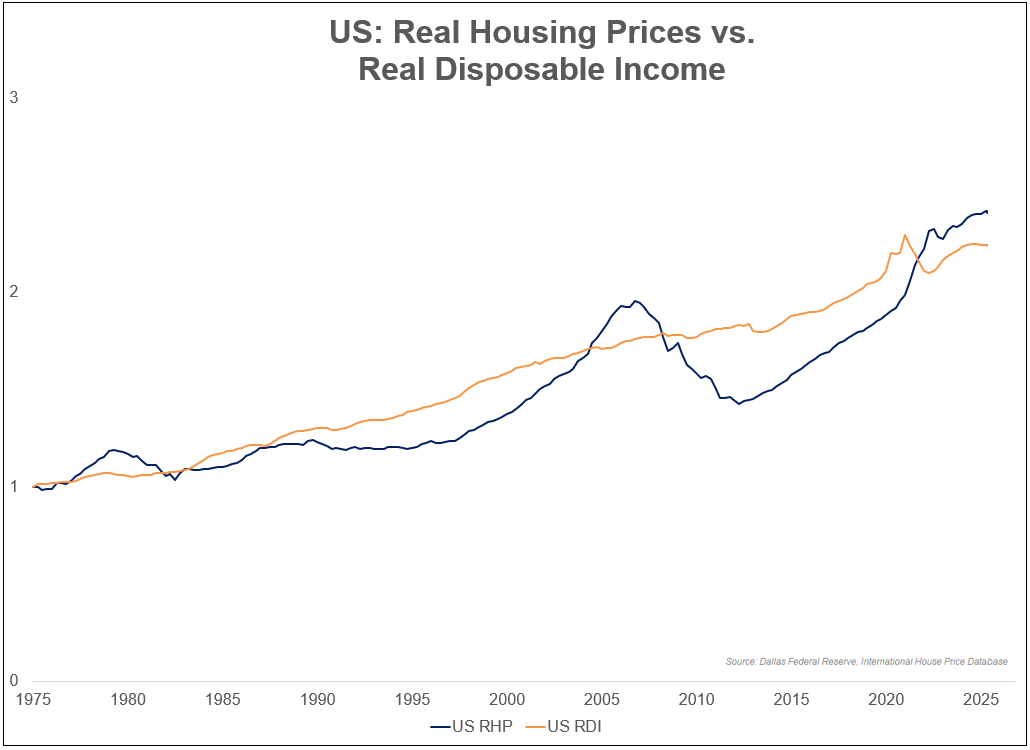
There have been only a few instances in which growth in real housing prices has eclipsed growth in real disposable income. Now is one of those times.
But these numbers look tame by comparison to many other countries.
Here it is on the same scale with the UK, Canada and Australia:
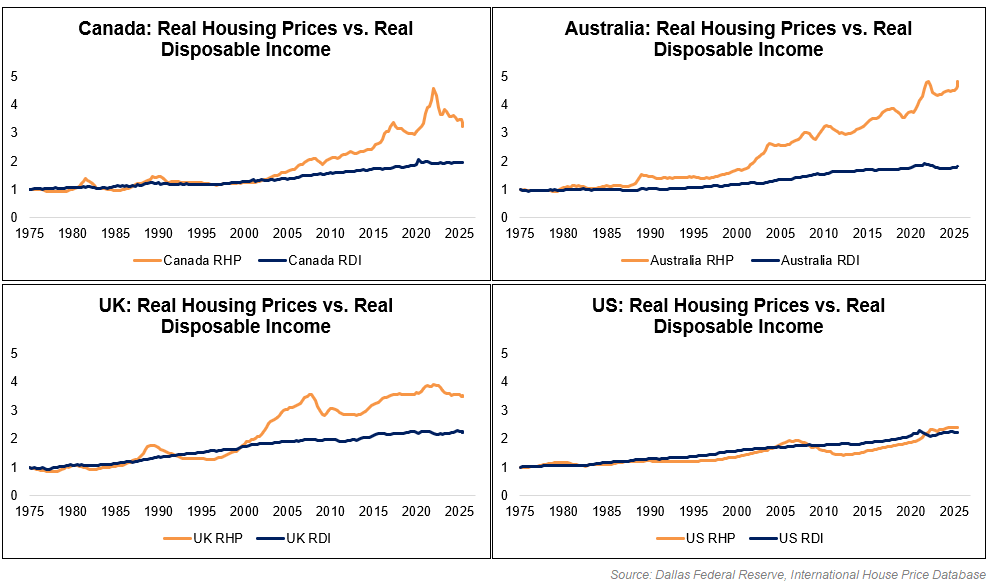
Affordability is much, much worse in these other countries.
I can’t imagine what it must be like to be a young homebuyer in Australia right now.
Now, this doesn’t make you feel any better as a potential homebuyer in America. Who cares what the rest of the world has to pay if you’re struggling to afford a home here?
And these are all nationwide prices and incomes. Housing is local. It really depends on where you live, how much money you make, the supply of houses for sale, etc.
But it is important to note that housing affordability can absolutely get worse before it gets better.
Maybe mortgage rates will fall and that will help.
But if we don’t do something about the supply of housing in this, country, we could be on the same path as places like Canada, Australia and the United Kingdom where housing unaffordability is even worse.
Until we make building more homes a priority or the baby boomers begin passing their homes down to the next generation or income growth outpaces home price growth by a wide margin, affordability likely will get worse in many places.
I feel for young people who missed out on a generational bull market in housing through no fault of their own.
I covered this question on the latest edition of Ask the Compound:
Bill Sweet also helped us discuss questions about when to sell your investments from a tax standpoint, AI’s impact on housing, owning volatile investments, when to avoid an HSA and how Roth 401ks work.
Further Reading: