There’s a neat website called Ordinary Abundance that looks at many of life’s luxuries that are relatively new that we all take for granted.
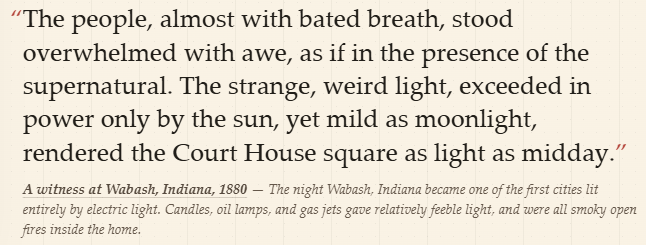
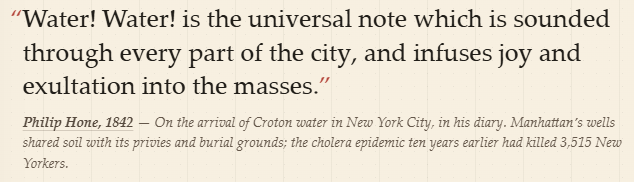
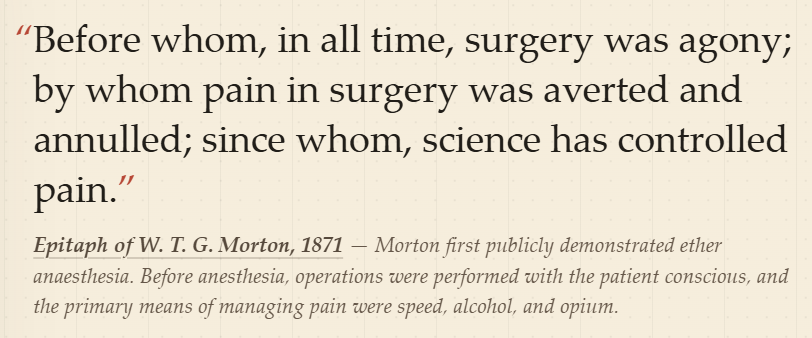
It does this by pulling old quotes from people who experienced these new breakthroughs in real-time.
Electricity:
Clean water:
Medical care:
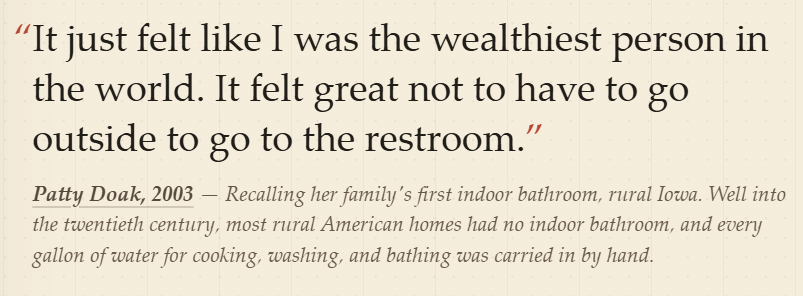
Indoor plumbing:
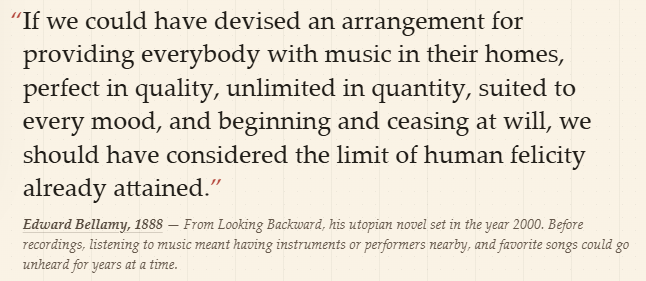
Music on demand:
It’s a sign of progress that we don’t celebrate these minor miracles. In fact, we complain about them!
When the Wi-Fi goes out on a flight. When a video call lags for a brief moment. When your same day Amazon delivery is postponed by a few hours. When your smartphone battery doesn’t last as long as it used to.
All signs of progress.
One of the reasons I love reading history is that it’s a constant reminder about how uncomfortable life have been for the majority of human existence. How did people survive with no air conditioning? No hot showers? No GPS? No refrigerators? No DoorDash?
Life was a lot harder financially-speaking too.
In the late-19th century, three-quarters of men 65 or older were still in the labor force.1 Half of the people who were able to retire lived with their children or other relatives.
In the 1920s, 60% of the elderly had a net worth of $80k or less (in today’s dollars). Nearly two-thirds of American households lived below the poverty line in 1929, before the Great Depression began.
Young people complain about how hard it is to get ahead today but there has never been an easy time to get ahead. Life has always been hard but it’s actually easier to get ahead today than it was in the past.
Joseph Moore writes about this in his new book How to Get Rich in American History. Let’s look at some examples from the book.
Today failure is seen as a badge of honor. In the past, it was nearly impossible to come back from because there was no safety net:
Until late in the century, there was very little insurance to cover losses. If your bank collapsed, house burned, crops failed, or spouse died, you just lost everything.
You could literally go to jail for failure to repay your debts:
People went to prison for being broke in the 1700s, and this happened regularly. Worse, if a man went bust, his wife and kids were imprisoned, too.
There was no such thing as disposable income for most households because most of the money went to necessities:
In 1870, food, rent, and clothing took 91 cents of every dollar made (today it’s under 40 cents). The typical American owned just one and a half shirts. That is an actual historical statistic. To make money to buy this expensive food and the other half of that shirt, the typical man worked sixty hours per week. Women worked more. And the dollars people were paid in could lose their value overnight, making them no more stable than cryptocurrency today.
Even if you could save some money it’s possible that cash would go up in flames:
Financial life was mind bogglingly complex throughout the 1700-1800s. There just wasn’t enough money. To fill the gap, nearly anything counted as cash, sometimes even counterfeits. The values of “real” currency changed regularly. If you could manage to find money, know it was legit, and discern its worth, there was still next to nowhere to safely keep it. Every citizen tracked hundreds of variables. A mistake could cost your life’s savings.
By the Civil War, there were 10,000 unique notes in circulation. Some were worth more than others. You had to redeem a dollar with the bank that printed it. Many of those banks went under, making the money worthless.
Investing was a lot harder back then too:
Early Americans had to figure interest rates with pencils where you have spreadsheets. Individuals regularly issued mortgages to local homeowners that included payment tables and civil law procedure. Could you do that? The price of any security in the world is available, accurate, and on your phone. Nineteenth-century investors had to go to seedy bucket shops that served liquor at the bar–and pornography in the bathrooms–just to see what the ticker tape said.
It’s easy to romanticize the past at the expense of the present but it’s important to understand how hard life used to be.
There’s never been a golden era when it was easy to get rich.
Things certainly aren’t easy today but in many ways things are much easier than they were in the past.
I talked to Joseph at Talking Wealth about what history teaches you about getting ahead, investing in real estate and more:
Further Reading:
Air Conditioning: An Economic Wonder
1It’s around 20% today.