America is now 250 years old.
There’s been a lot of history talk in recent weeks in the lead-up to the semiquincentennial.1
So I couldn’t help myself but do a little U.S. stock market history.
Bill Simmons had Taylor Sheridan on his podcast recently. When Simmons asked Sheridan about his filmmaking style, he said, “Never have a character tell me something that the camera should show me.”
I have similar feelings about stock market data. Let’s go through some visuals.
This is annual calendar year returns from 1928 through the end of 2025:
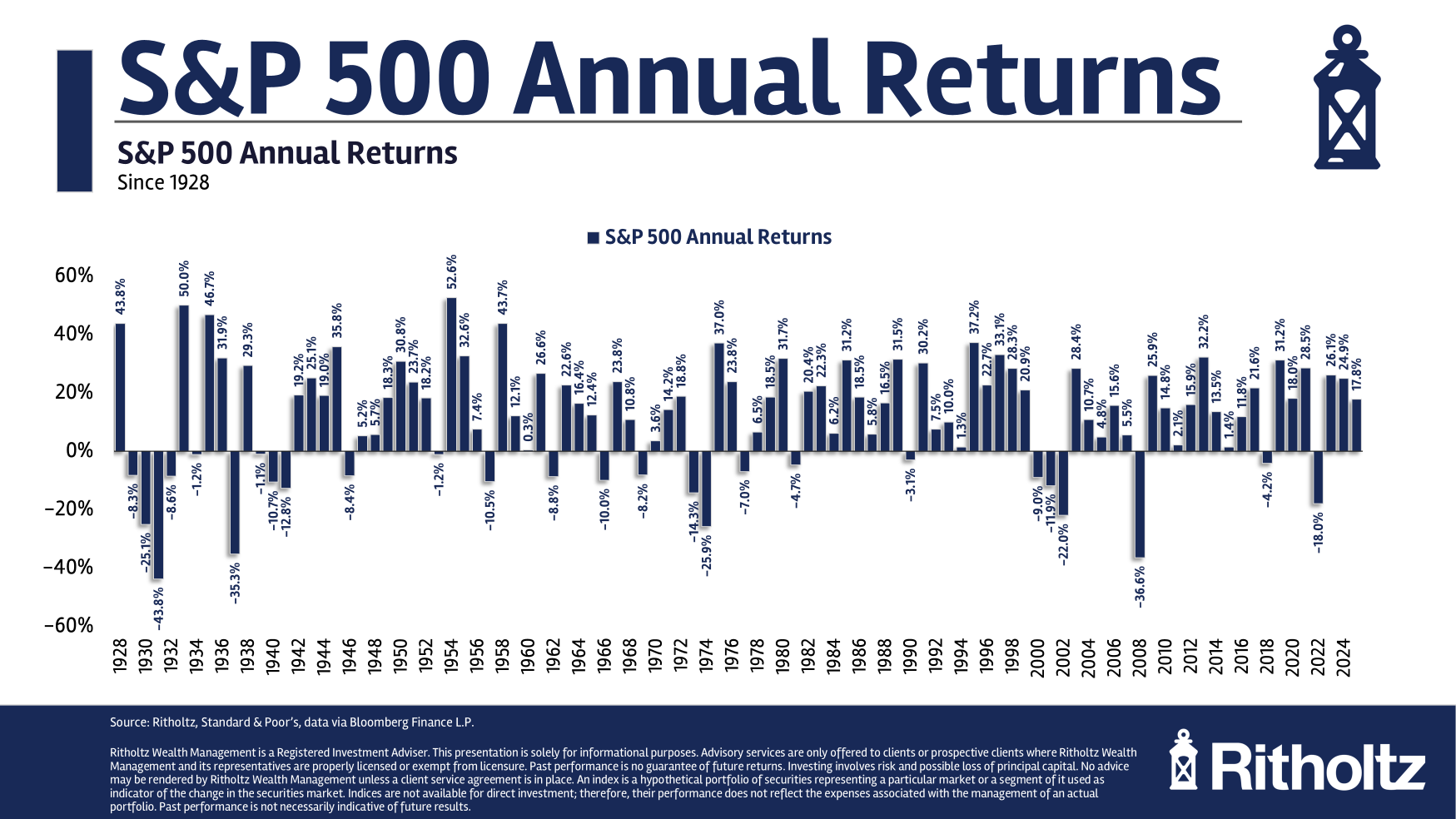
The average annual return in this period was 10% per year.
But the average experience in any given year wasn’t anywhere close to 10% year in and year out.
This is what the returns look like if you show just the up years and remove the down years: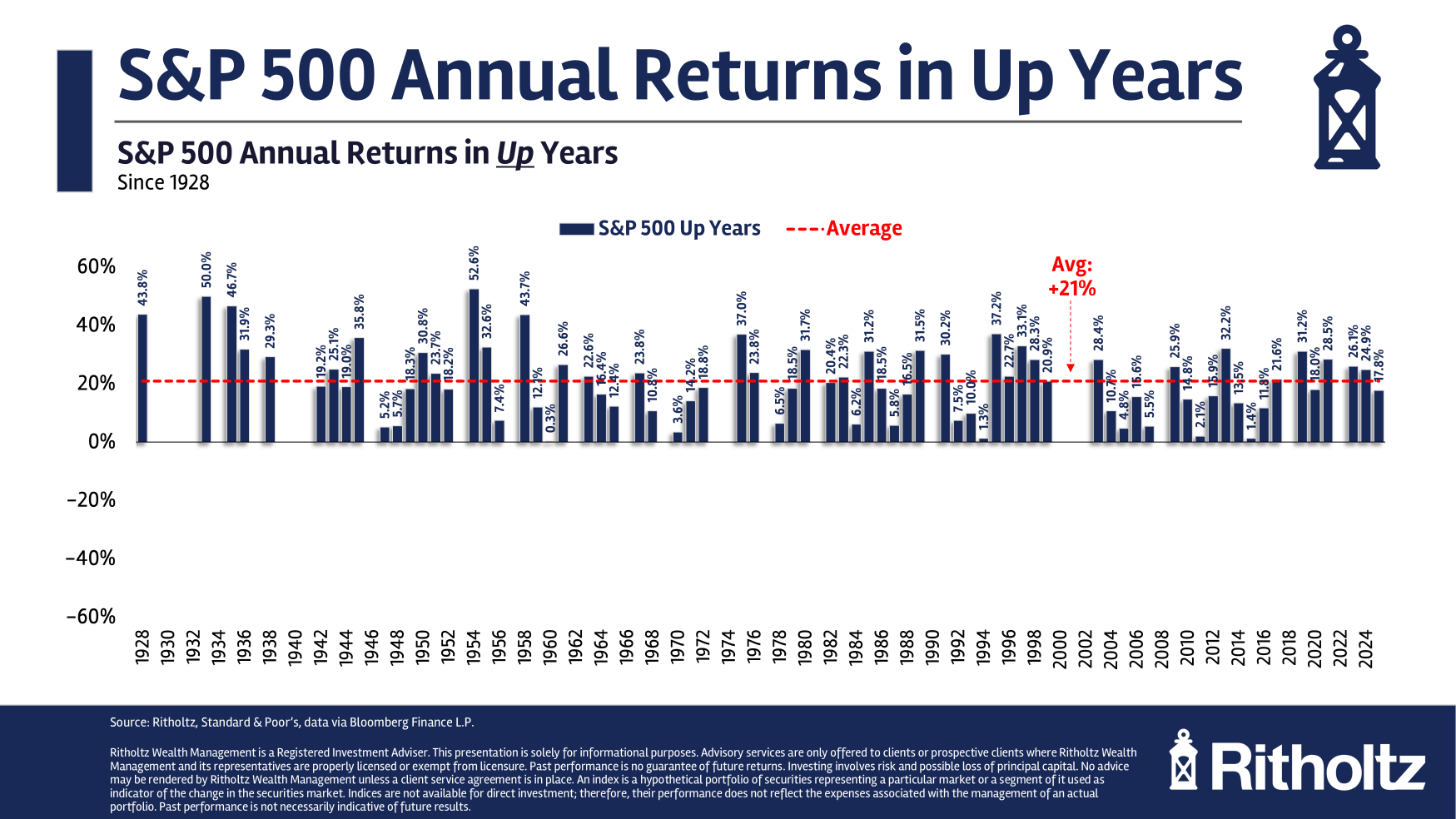
Now here’s what it looks like if you remove the up years and only show the down years:
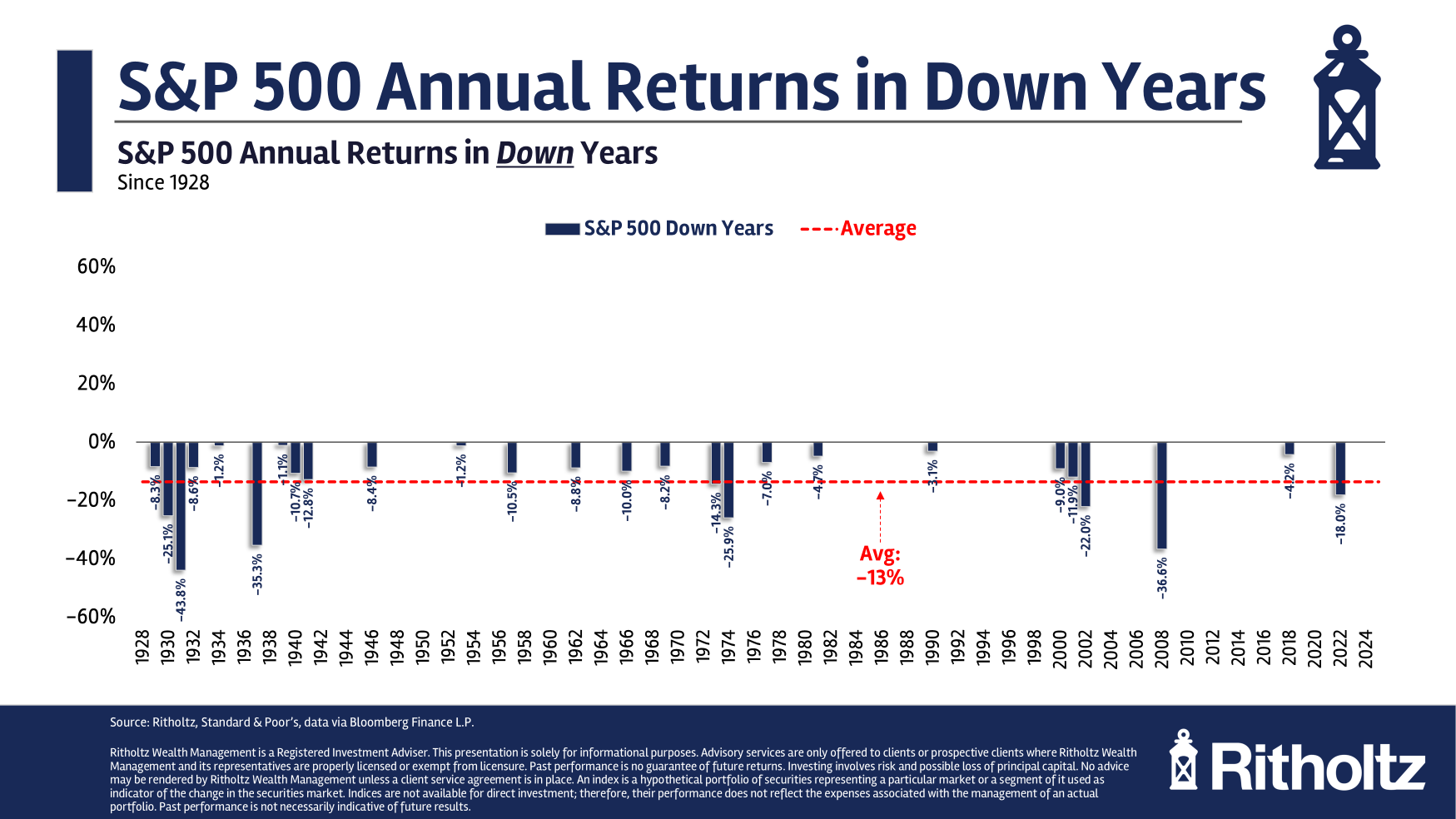
The most obvious difference between the two charts is the fact that there have been far more up years than down years. If the gains in 2026 hold, that would make it 73 out of the last 99 years finishing in positive territory.
That’s a pretty good win rate.
It’s also true that there have been far more big up years than big down years. What do you consider big when it comes to gains and losses?
My unscientific definition would be 25% or better (worse).
These the years with gains of 25% or more since 1928: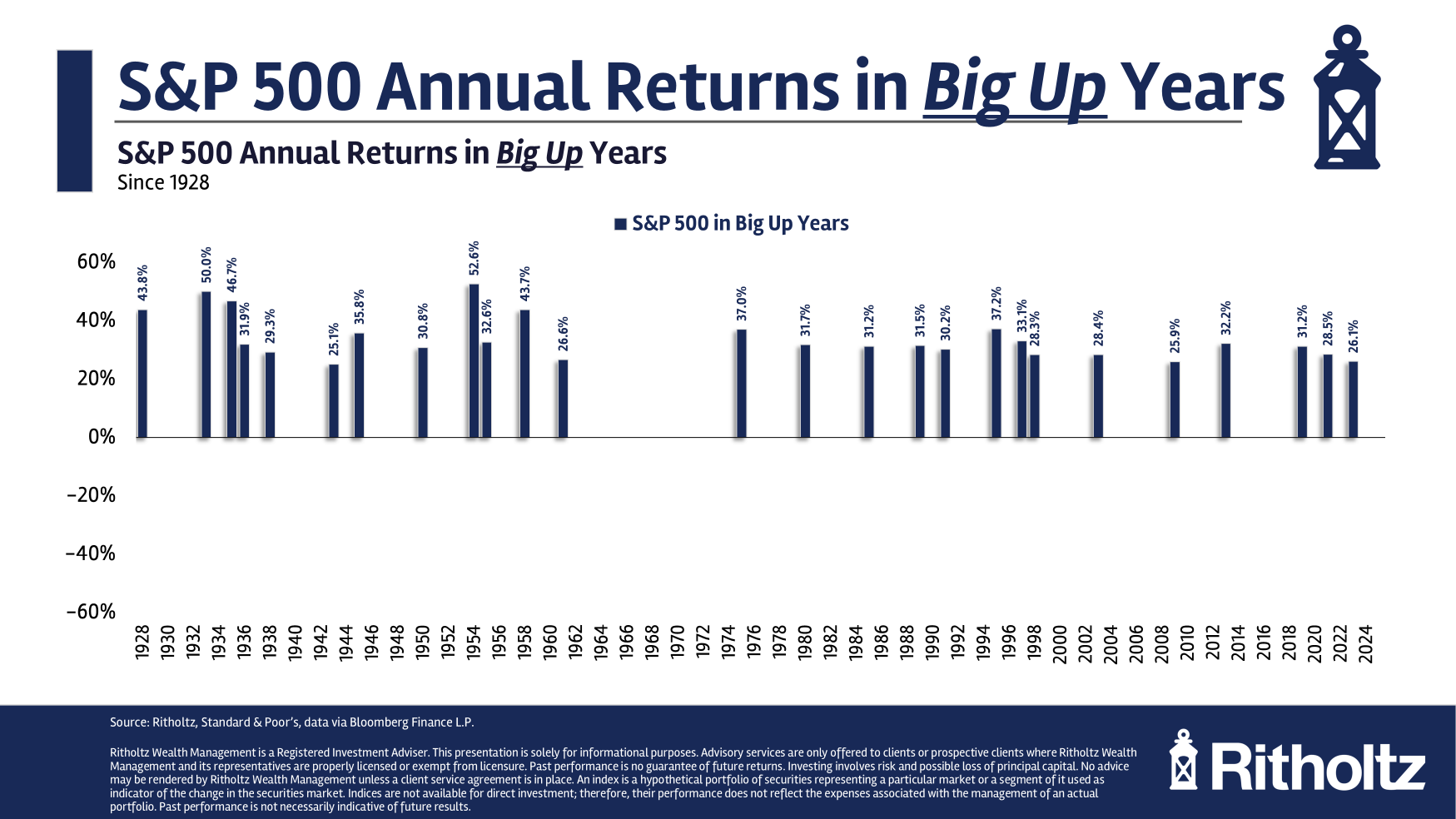
Big up years happen quite frequently.
Now these are the years with losses in excess of 25%:
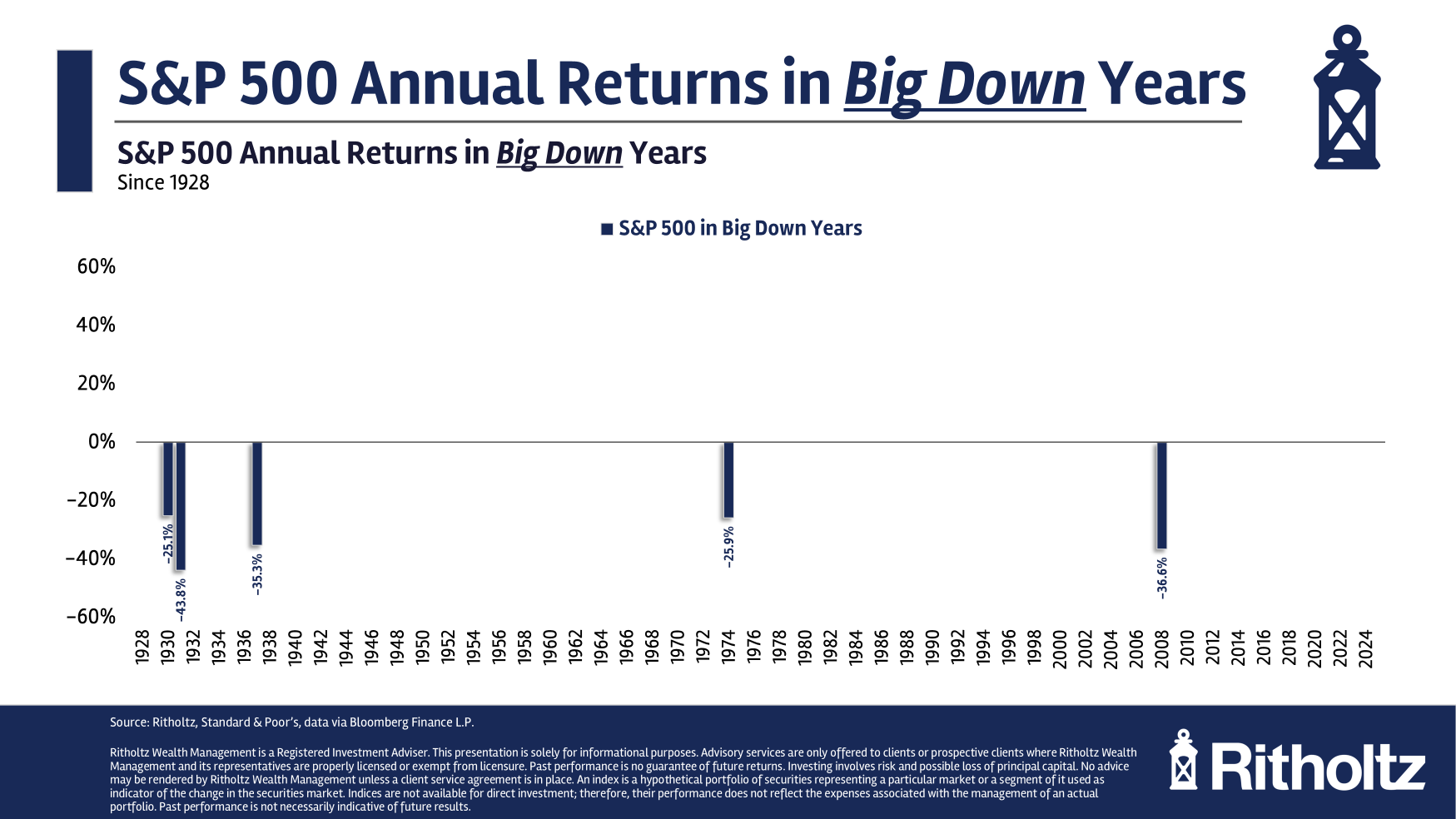
It’s a very small number.
There have been 26 calendar years that have ended with gains of 25% or more, including 18 up years with returns of 30% or higher.
On the other hand, the stock market has produced just 5 big down years and 3 of them happened in the 1930s. Since the end of WWII it’s only happened twice.
Of course, this is what makes the big down years so difficult to stomach. It’s no fun dealing with losses when gains occur more often.
Predicting stock market returns is basically impossible. There is no rhyme or reason in returns from one year to the next.
But as a general rule of thumb:
Sometimes the stock market goes down but most of the time it goes up.
Further Reading:
Risk & Reward
1I can’t believe this is the word we settled on for this.