A reader asks:
Investing during the boom times seems like it should be easy. But investors are dealing with the opposing forces of FOMO and loss aversion. On the one hand, no one wants to leave the party too early. On the other hand, most booms are followed by a bust. How do you balance staying invested during a bull market with the understanding that trees don’t grow to the sky?
I’ve been having a lot of conversations surrounding this topic lately.
In the boom times you’re balancing the desire to stay invested with the fear of the pain that could be waiting for you just around the corner when it ends.
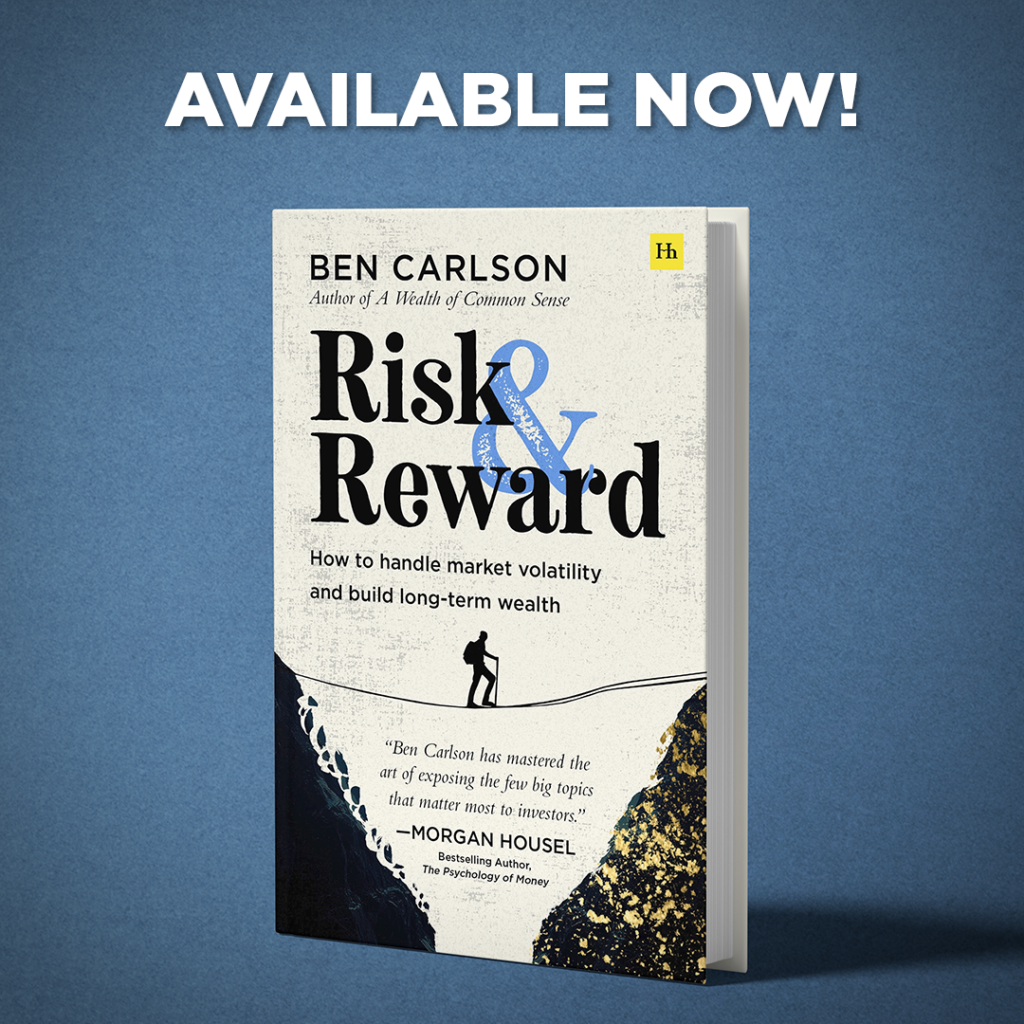
This is actually one of the reasons I wrote Risk & Reward in the first place. Investing is a balancing act.
I like to Charlie Munger this kind of topic by inverting to discuss what you don’t want to do while investing in a boom.
Warren Buffett once said, “You don’t find out who’s been swimming naked until the tide goes out.”
If that’s the case, there are a lot of underwater nude beaches in South Korea. The FOMO for the AI trade in South Korea has been off the charts.
It’s one of the hottest, most volatile markets on the planet right now as companies like SK Hynix and Samsung — which make up roughly 50% of South Korea’s stock market — have gone vertical.
Now they’ve come back to Earth a bit. The stock market in South Korea is up more than 130% in the past 12 months but has fallen as much as 25% in the past month or so.
Those kinds of losses should be expected when the gains have been so strong. But you can turn uncomfortable losses into margin calls when you add leverage to the equation. Many investors in South Korea have done just that.
Margin debt has exploded to all-time highs. The use of leveraged ETFs has been so rampant that regulators had to triple the margin requirements to rein them in.
Reuters recently profiled a handful of new traders in South Korea. I pulled my favorite one:
Lee Seung-ho watched the nearly 300 million won ($202,515) stock trading fortune he built with a 500% margin loan evaporate in just four weeks in May, but he plans to borrow again and return to the market the moment he has enough capital.
The 24-year-old South Korean university student in Seoul briefly turned the 20 million won he saved during mandatory military service into a 15-fold windfall, all by tapping a “tiny circle button” on his trading app that instantly unlocked five-times leverage.
Five times leverage!
This is what happened next when the market turned:
Violent swings in South Korean stocks triggered a cascade of forced liquidations by his brokerage, wiping out the gains. Within weeks, his account had fallen below his initial investment, leaving him under such strain that he said: “I literally could not breathe.”
Did he learn his lesson? In a word…no:
“But I’m sticking to margin loans,” Lee said from his studio apartment, barely larger than a parking space, next to an empty Hibiki whisky and an unboxed electric fan gifted by his brokerage after he qualified as a VIP client.
“Since stocks are volatile assets, that volatility, if it moves upward, allows for rapid wealth creation,” Lee said. “If I add five times leverage, I can build wealth five times faster than others,” he added, when asked why he would take on more debt despite the stress he had endured.
Ah, leverage springs eternal.
Rule number one when investing during boom times is do not put yourself in position to become a forced seller when the good times come to an end.
Here are some questions to consider when navigating a boom:
Are you diversified? Tech stocks make up an increasingly large share of the U.S. and global stock market.
However, if you’re worried about the AI trade there are plenty of other stocks, asset classes and strategies to invest in.
Diversification is much easier to pull off than market timing.
Do you have a plan in place? The beauty of setting investment guidelines in advance is that it takes the guessing out of your investment process?
If A happens, I’ll do B. If X comes out of nowhere, I’ll do Y.
If this happens, I’ll do nothing. If that happens, I’ll do something.
If the boom keeps going, this is what I’ll do.
If the boom turns into a bust, I’ll do this instead.
Having rules in place won’t help you expertly navigate whatever happens next. But it can lead to a better decision-making process.
Are you taking too much risk? The stock market is still within 2-3% of all-time highs. Now is a great time to reassess your asset allocation and risk appetite.
Did your 60/40 portfolio turn into a 75/25 portfolio because of the bull market? Did your 80/20 portfolio move to 90/10?
Are you 100% invested in equities? Can you handle that much risk during a bear market?
You want to answer these questions while stock prices are still high.
Can you balance your emotions? I like how Jurrien Timmer put this in his latest piece:
The first topic regarding the paradox of profiting from a boom while protecting from a bubble is of course an existential one and reflects the duality of the profit seeking polarity juxtaposed against loss aversion.
However this cycle turns out, it will look obvious with the benefit of hindsight.
It’s almost impossible to figure out how long the boom times will last when you are in them.
A little humility goes a long way.
Jurrien joined me on Ask the Compound this week to tackle this question:
We also discussed stock market concentration, the two biggest market risks right now, earnings growth and where the fast money will go next.
Further Reading:
How Do You Invest During a Bubble?