I got a text from my wife this week that read:
Holy crap gas is five dollars a gallon!
Round numbers have a psychological impact for some reason. This is especially true when the prices are advertised in massive bright signs on the side of the road.
The Wall Street Journal highlighted some research on this idea when it comes to gas prices:
Economists have found that round-number prices for retail items have salience with consumers. A 2010 Brookings Institution paper found people were unhappier on days when gasoline rose above $3.50 and $4.00 a gallon.
Why does does $4 or $5 a gallon matter more than $4.07 or $5.09? I don’t know.
Gas prices have a hold on our psyche because they’re so visible. But they also seemingly march to their own drummer.
When oil prices go up, gas prices go up quickly.
When oil prices go down, gas prices go down slowly.
Rise like a rocket, fall like a feather.
Can I prove this? Not necessarily but it sure does feel like that’s the case.
Gas prices have been rising like a rocket in recent months:
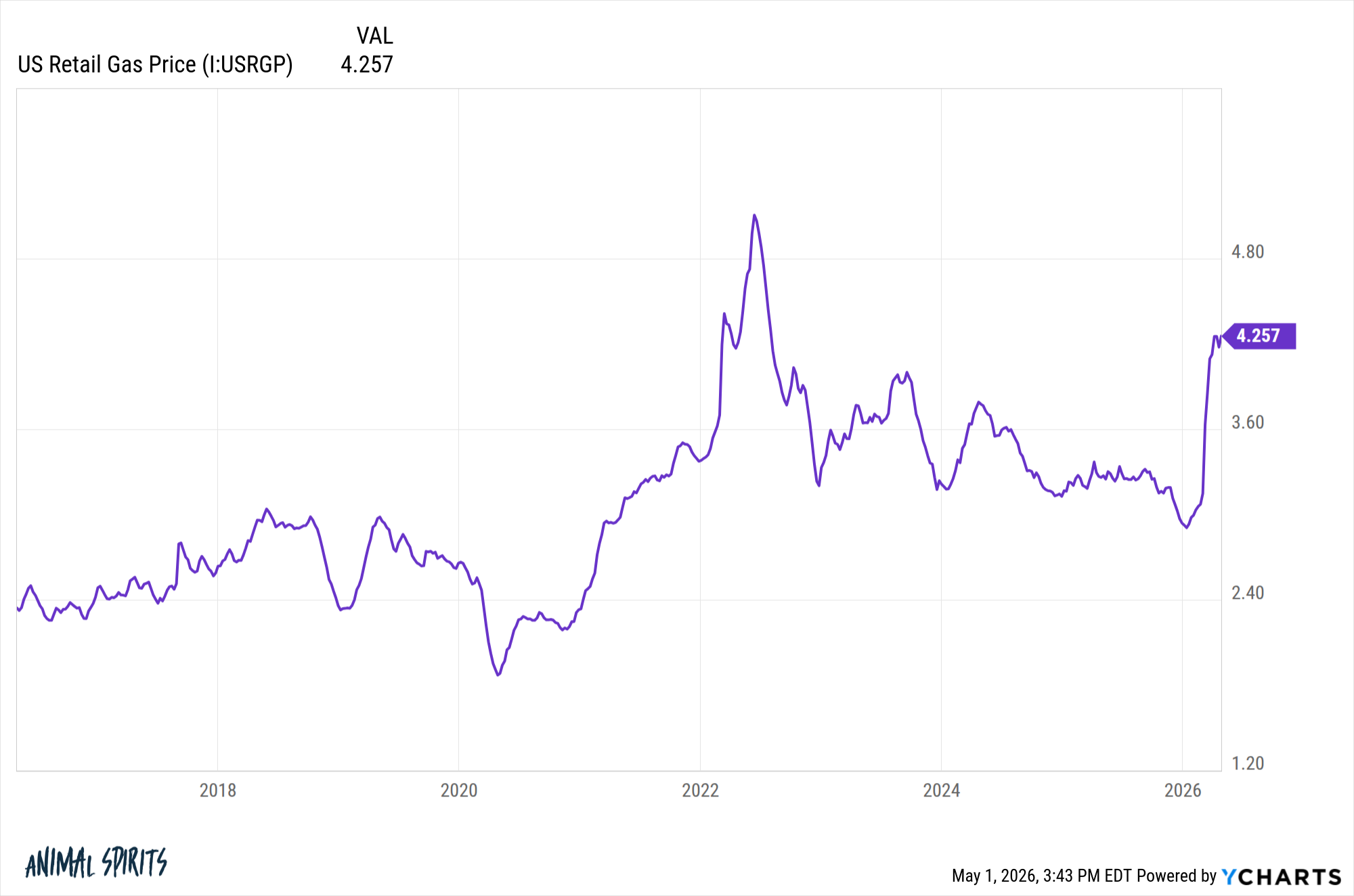
That’s now two big spikes this decade, both caused by acts of war.
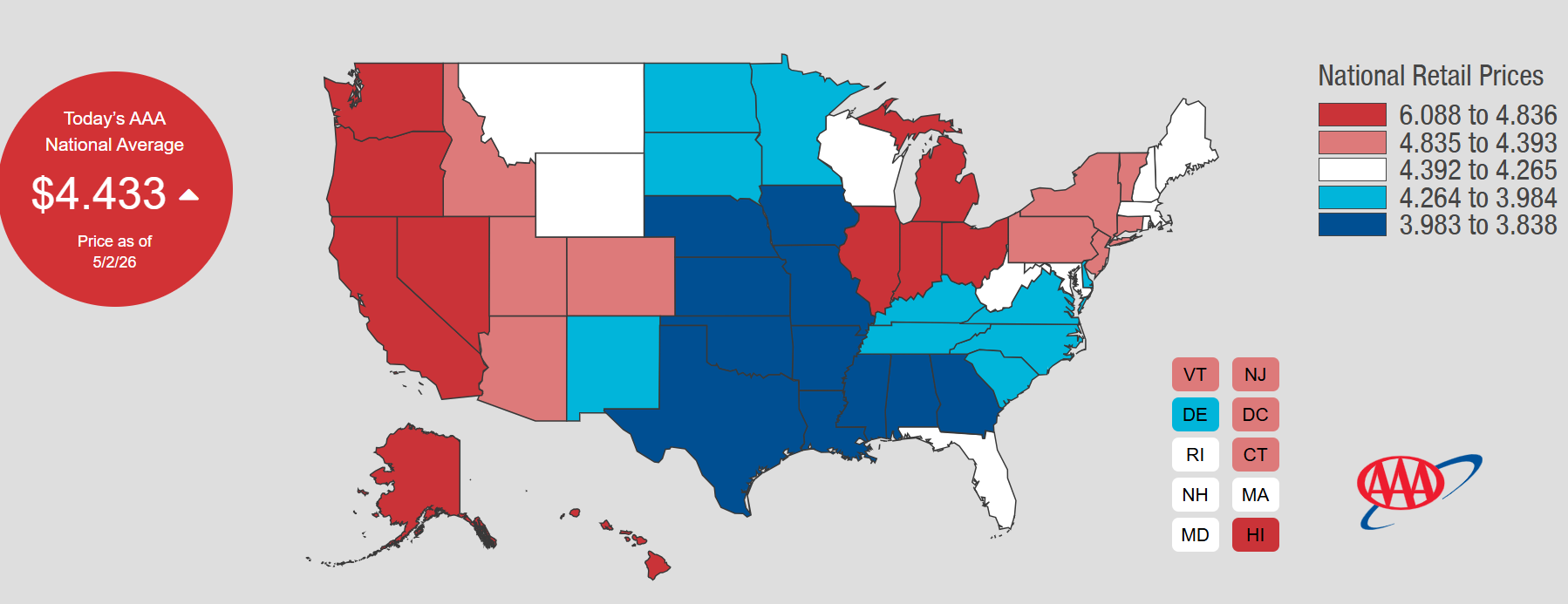
Prices differ by state but they’re high to quite high in many areas:
The crazy thing about gas prices is that they’ve been relatively stable for a long time now, despite two big spikes in the 2020s.
If you in inflation adjust gas prices they really don’t look that bad:
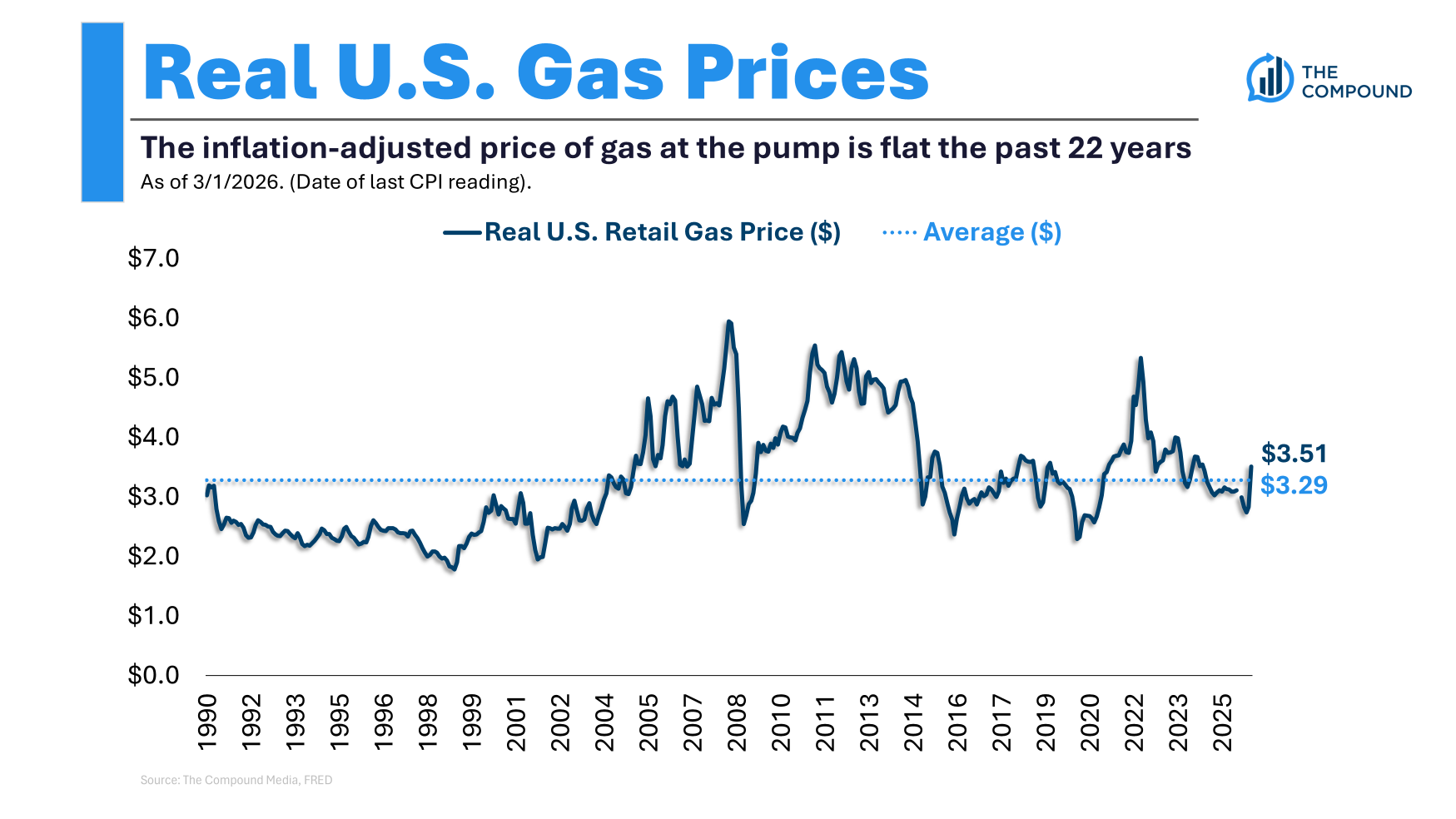
Real (inflation-adjusted) gas prices are basically on par with prices in 1990! That’s insane.
But we don’t adjust gas prices for inflation. We tend to inflation-adjust GPP, wages, sometimes interest rates and stock market returns. Why not gas prices? I don’t know. That’s just how we do it.
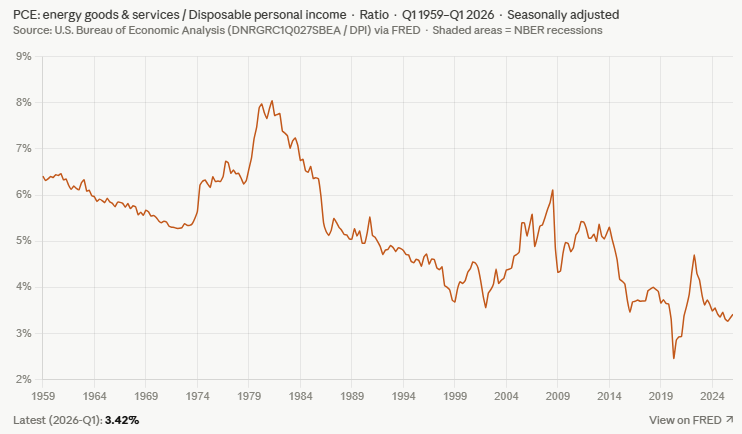
Energy spending as a percentage of disposable income has been falling for years now:
I have to be honest — I’m not sure what to think about rapidly rising oil and gas prices right now.
Every energy analyst is freaking out about the disruption being caused by the closure in the Strait of Hormuz. The way they explain it feels like the steamroller scene in Austin Powers.
The oil people can see what’s coming based on how disrupted energy markets are right now.
The Financial Times shows how large the current disruption is relative to previous oil shocks:
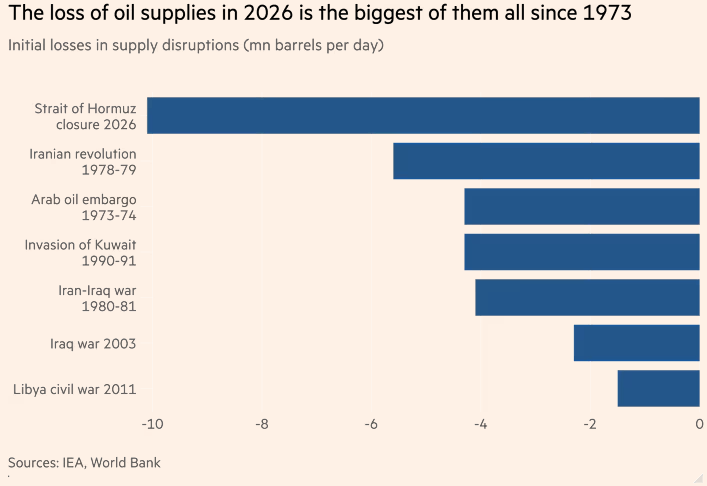
It seems bad.
Gas at $6 a gallon feels like it’s not out of the realm of possibility if we don’t get this stuff figured out in short order.
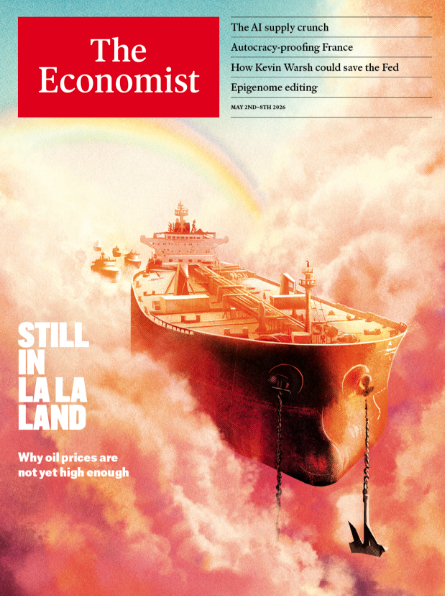
The Economist seems to think we need more pain before energy prices make a big impact:
The stock market obviously doesn’t seem to care. Yes, there was a minor flesh wound of a correction but there have been new all-time highs in 8 of the past 14 trading sessions.
It’s abundantly clear that earnings and AI matter much more to the stock market than oil and gas prices do right now.
Will this dynamic last if the war drags on and gas prices continue rising?
Will households eventually cut back elsewhere or keep spending?
Will the stock market care about much higher oil prices at some point?
I DON’T KNOW!
Here’s what I do know.
Making portfolio decisions based on geopolitical forecasts is a fool’s errand. Many will try. Most will fail.
Predicting economic outcomes is hard. Predicting geopolitical outcomes is hard.
It’s even harder to predict how these outcomes will impact the financial markets.
Sometimes you have to be willing to admit there are certain things that are beyond your control.
I prefer to focus on the things I do control.
How much I save. My asset allocation. The costs I pay. My time horizon. My risk profile. My investment plan.
It’s fun to predict things you can’t control, but it’s not very helpful to your investment process.
Further Reading:
Don’t Fight the Stock Market