Author James Playsted Wood once wrote, “The thing that most affects the stock market is everything.”
The list does seem endless when you start ticking off the factors that influence stock market returns over time.
Headlines, geopolitical events, economic growth, government policies, human emotions, investor positioning, interest rates, inflation, risk appetite, demographics, quarterly earnings reports and the list could go on.
In the 2010s most people assumed low interest rates and quantitative easing were propping up the stock market. In the early-2020s it was government spending. Right now it feels like the AI boom is powering everything.
It’s always something.
But if you really want to know what’s been driving the U.S. stock market higher look no further than earnings.
This becomes apparent when you look at the composition of stock market returns by decade:
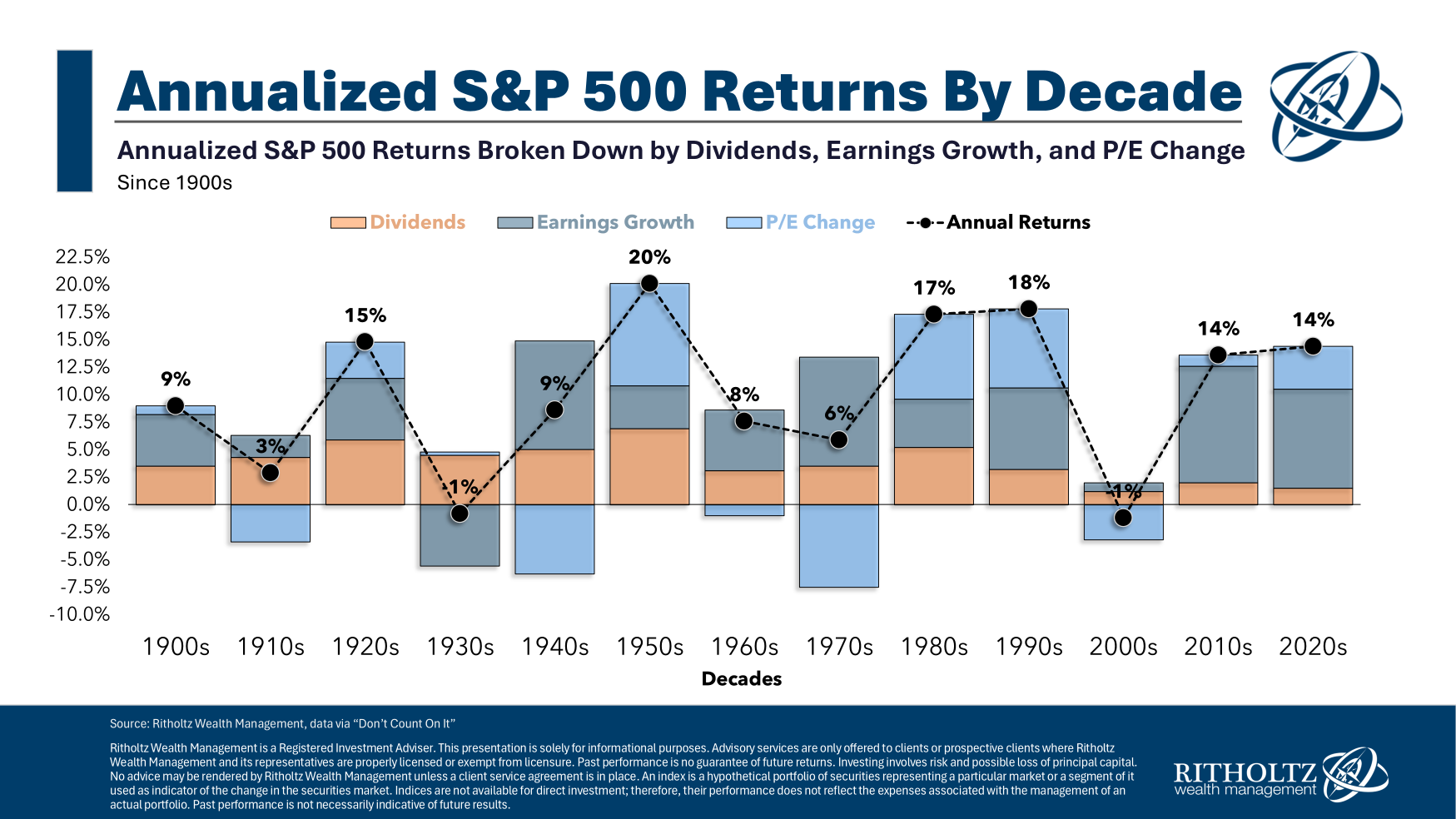
What’s driving the stock market during this bull market?
Earnings!
In the 2010s we had annual earnings growth of nearly 11%. Earnings have grown at just shy of 10% per year in the 2020s. That’s much higher than the long-term average of around 5% per year.
Consumers and businesses are spending money. That money is revenue for corporations. After subtracting costs from those sales you get profits. Those profits are higher now in part because margins are higher:
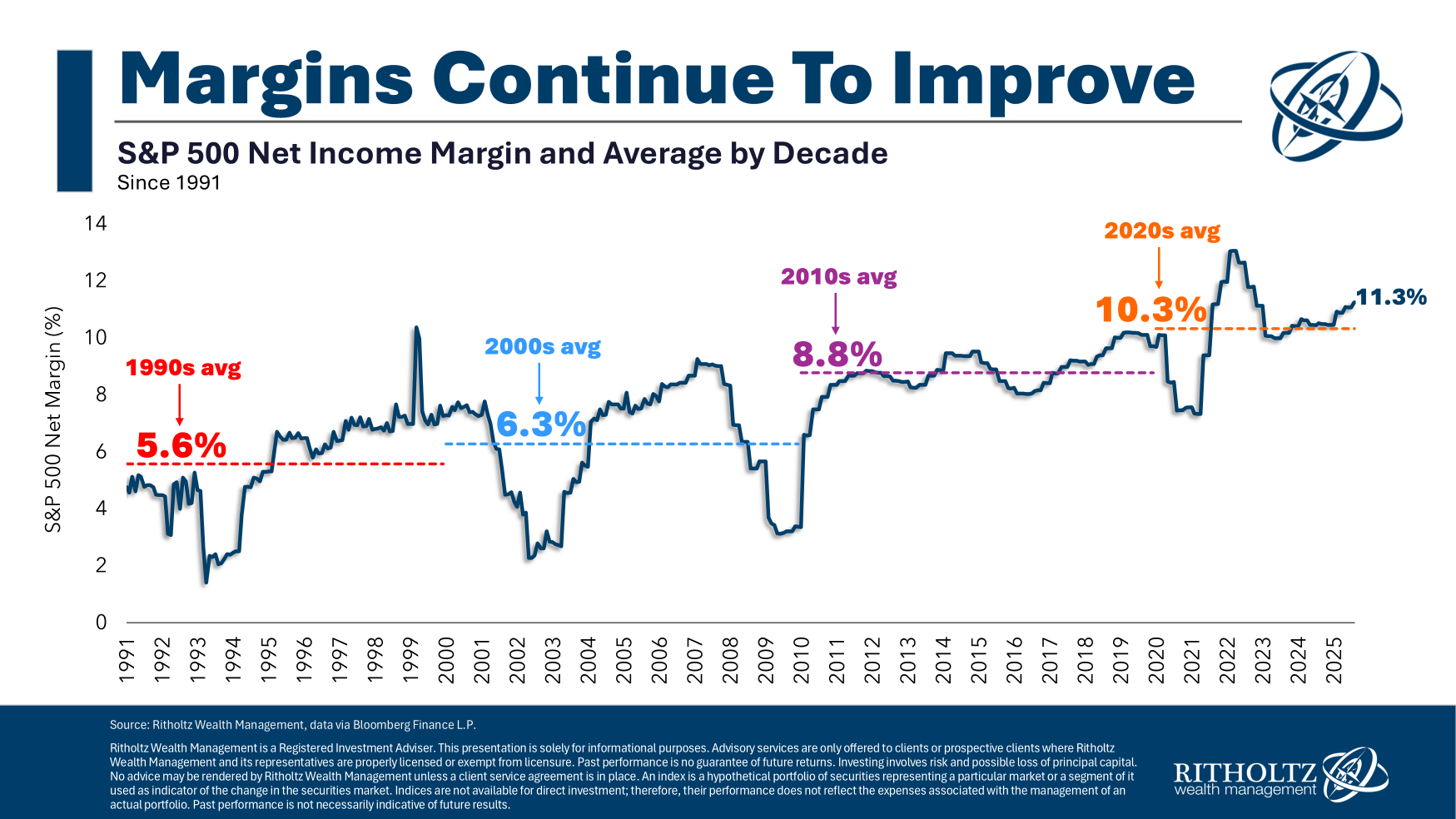
It really is that simple.
Earnings growth doesn’t guarantee high stock market returns. Earnings growth was high during the 1940s (+9.9%) and 1970s (+9.9%) but so was inflation and there were extrernal factors that caused returns to be muted in those decades.
Earnings growth wasn’t all that strong in the 1920s (+5.6%), 1950s (+3.9%) or 1980s (+4.4%) but annual returns were lights out in each of those decades.
So these relationships aren’t written in stone.
However, you can see that the lost decades of the 1930s and 2000s both had terrible earnings growth of -5.6% and +0.8%, respectively.
If you want to know why stocks are up over the past decade and a half, look no further than earnings growth.
It won’t last forever because nothing does but this bull market has been carried by strong company fundamentals.
Further Reading:
Expected Returns in the Stock Market
1It should also be noted that one of the reasons dividend yields are lower now than they were in the past is because buybacks (essentially the same thing as dividends in a different form) are more prevalent today. Share repurchases also increase earnings per share by reducing the number of shares on the open market.